|
Hey,
Your daily briefing is ready. You can finally take a break from the AI firehose.
Our algos spent the night splitting signal from noise and pulled the top news, models, papers, and repos.
Here’s the must-read:
|

|
Today's Author
Lior Alexander. Founder of AlphaSignal and former ML Engineer.
Previously built ML systems at Iguazio, Guesty, Enphase, Mila.
|
|
Top News
|
|
|
|
Google launches an open commerce protocol enabling AI agents to run full shopping and checkout flows.
|
|
14,693 Likes
|
|
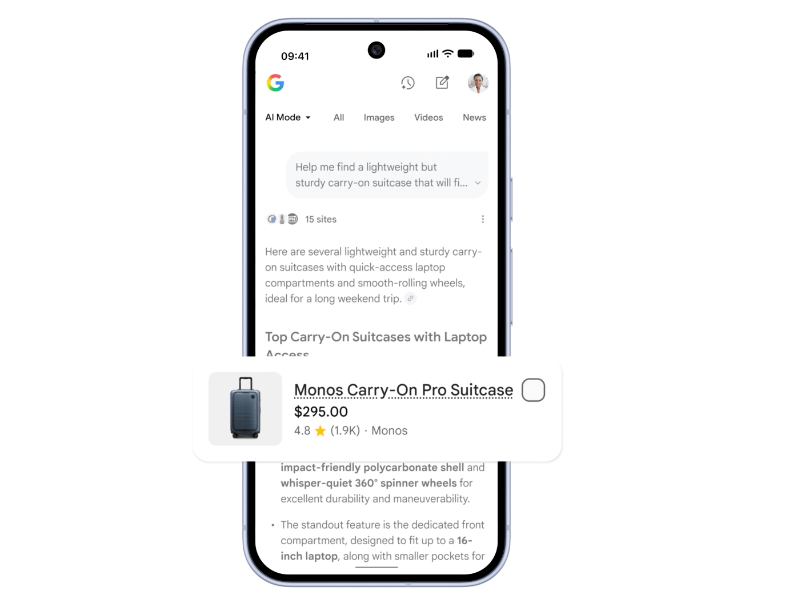
Google introduces the Universal Commerce Protocol (UCP) to prepare AI agents for real shopping tasks.
Google builds UCP with Shopify, Etsy, Wayfair, Target, and Walmart. The key shift is agents no longer stop at recommendations, they complete purchases.
Every agent-to-retailer flow needs custom APIs, cart logic, and payment handling. That setup does not scale once agents shop across many stores. Google’s insight is that agents need a shared commerce language, not more point integrations.
UCP defines that language. It standardizes how agents request products, apply offers, build carts, and trigger checkout, while retailers stay the merchant of record. UCP also plugs into existing agent standards instead of replacing them.
What UCP includes
-
Standard schemas for products, offers, carts, checkout, and post-purchase events
-
Compatibility with Agent2Agent, Agent Payments Protocol, and Model Context Protocol
-
Native checkout on Google AI surfaces, including AI Mode and the Gemini app
How you use it
-
Implement the UCP spec in your agent or backend
-
Let agents call UCP endpoints to fetch offers and initiate checkout
-
Complete payments through Google Pay without user redirection
Why it matters
-
Retailers process 90+ trillion tokens per month on Vertex AI, up 11× year over year
-
Google positions UCP as core infrastructure for agentic commerce at that scale
|
|
|
|
Top Paper
|
|
|
|
Sakana AI publishes new paper showing DroPE extends pretrained LLM context by removing positional embeddings
|
|
2,154 Likes
|
|
Researchers at Sakana AI face a common constraint: pretrained LLMs stop working once inputs exceed their context window. Engineers hit this limit when they inspect large code diffs or long legal documents.
DroPE reframes the issue by asking a simple question: what if positional embeddings matter only during pretraining, not at inference.
The problem starts with positional embeddings such as RoPE. They help Transformers learn token order and stabilize convergence. They also hard-code assumptions about maximum sequence length. Scaling tricks stretch this limit but still fail far beyond the training window.
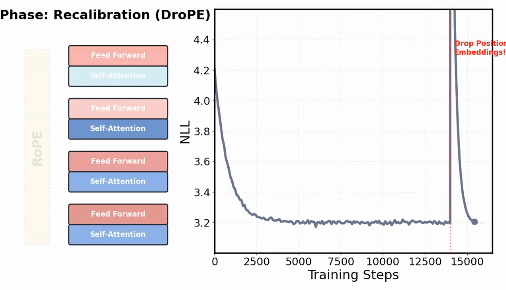
DroPE makes a clean break. You pretrain a model as usual with positional embeddings. You then remove them and run a short recalibration step so the model adapts.
Attention now relies on token content rather than explicit position signals.
Key features and results
-
Zero-shot context extension beyond the original training length
-
Recalibration cost below 1% of original pretraining compute
-
Higher scores than RoPE scaling on LongBench and RULER
-
No accuracy loss on short-context or instruction-following tasks
How you use it
-
Start from a pretrained Transformer LLM with positional embeddings
-
Drop the positional embedding module
-
Run brief recalibration on standard data
-
Run inference at extended context lengths, limited by memory and compute
|
|
|
|
Top Repo
|
|
|
|
Anthropic’s Ralph Wiggum Plugin creates a self-looping Claude Code cycle that reruns tasks until completion
|
|
13,621 Likes
|
|
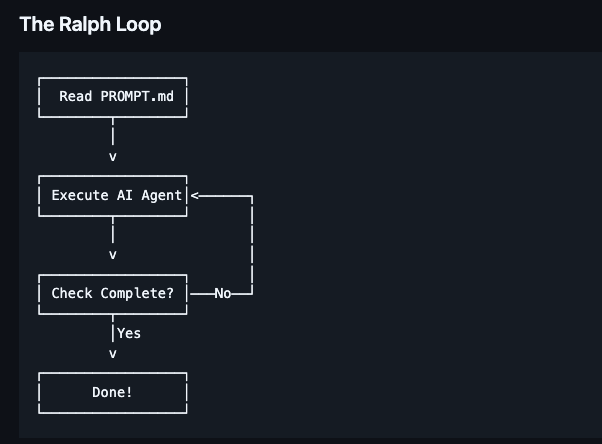
Ralph Wiggum Plugin gains attention as a Claude Code plugin that runs self-referential AI development loops. The plugin implements a technique described by Geoffrey Huntley and operates natively inside Claude Code without external orchestration.
The most notable aspect is a Stop hook that blocks exit and forces repeated execution in a single session.
How the loop works
A Stop hook intercepts exit attempts and restarts execution with the same prompt.
-
You start the loop once using /ralph-loop inside a Claude Code session.
-
The agent attempts to exit; the Stop hook blocks termination and re-runs execution.
-
Files persist across iterations, exposing prior outputs to subsequent runs.
-
Git history persists when commits occur, creating cumulative state across iterations.
Control and termination
Ralph relies on explicit stopping rules defined at invocation time.
-
--completion-promise stops the loop via exact string matching in model output.
-
An early match ends execution immediately without secondary validation.
-
--max-iterations enforces a hard upper bound on loop length.
-
Cost scales linearly with iteration count and per-iteration token usage.
Supported task profile
The approach targets tasks with deterministic verification.
-
Works with test suites, linters, and build checks that emit machine-readable failures.
-
Supports unattended execution until automated checks pass.
-
Stalls on tasks with ambiguous goals or missing objective completion signals.
|
|
|
At Alpha Signal, our mission is to build a sharp, engaged community focused on AI, machine learning, and cutting-edge language models, helping over 200,000 developers stay informed and ahead. We’re passionate about curating the best in AI, from top research and trending technical blogs to expert insights and tailored job opportunities. We keep you connected to the breakthroughs and discussions that matter, so you can stay in the loop without endless searching. We also work closely with partners who value the future of AI, including employers and advertisers who want to reach an audience as passionate about AI as we are.
Our partnerships are based on shared values of ethics, responsibility, and a commitment to building a better world through technology.Privacy is a priority at Alpha Signal. Our Privacy Policy clearly explains how we collect, store, and use your personal and non-personal information. By using our website, you accept these terms, which you can review on our website. This policy applies across all Alpha Signal pages, outlining your rights and how to contact us if you want to adjust the use of your information. We’re based in the United States. By using our site, you agree to be governed by U.S. laws.
|
|
|
Looking to promote your company, product, service, or event to 250,000+ AI developers?
|
|
|
|
|
