|
Hey,
Your daily briefing is ready. You can finally take a break from the AI firehose.
Our algos spent the night splitting signal from noise and pulled the top news, models, papers, and repos.
Here’s the must-read:
|

|
Today's Author
Lior Alexander. Founder of AlphaSignal and former ML Engineer.
Previously built ML systems at Iguazio, Guesty, Enphase, Mila.
|
|
Top News
|
|
|
|
Anthropic introduces Cowork to bring Claude Code like agent execution to everyday file-based workflow
|
|
64,283 Likes
|
|
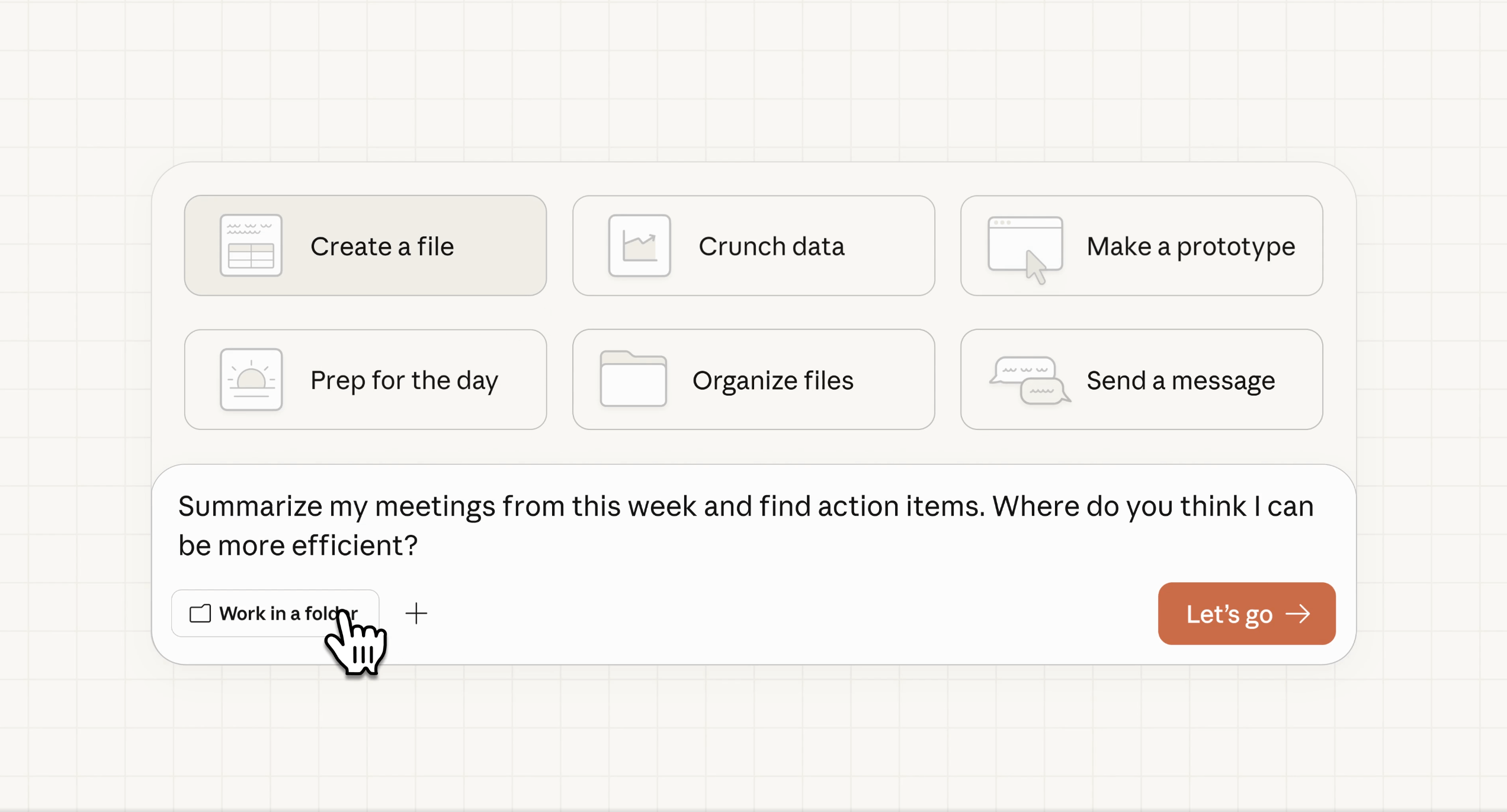
Anthropic built Claude Code for developers, but users quickly pushed it beyond code. They used it for notes, files, spreadsheets, and reports. This led to Cowork, which applies the same agent system to everyday work.
The problem is not intelligence but friction. Chat-based assistants require constant prompting, manual context setup, and copy-paste across files.
Cowork changes the interaction model. You give Claude access to a specific local folder, assign a task once, and let it execute autonomously across real files.
Cowork works like an agent rather than a chat. An agent plans steps, performs actions, and reports progress while it works. This matters because many knowledge tasks span dozens of files and require consistent state.
Key capabilities
-
Reads, creates, edits, renames, and deletes files inside an approved local folder
-
Plans and executes multi-step tasks without repeated prompts
-
Queues and runs multiple tasks in parallel
-
Uses existing Claude connectors for external data
-
Pairs with Claude in Chrome for browser-dependent workflows
How you use it
-
Select a folder in the Claude macOS app
-
Describe the outcome, not the steps
-
Review progress updates and approvals during execution
Cowork ships as a research preview for Claude Max users on macOS.
|
|
|
|
Top Paper
|
|
|
|
DeepSeek adds constant-time memory lookup to Transformers using the new Engram module
|
|
3,532 Likes
|
|
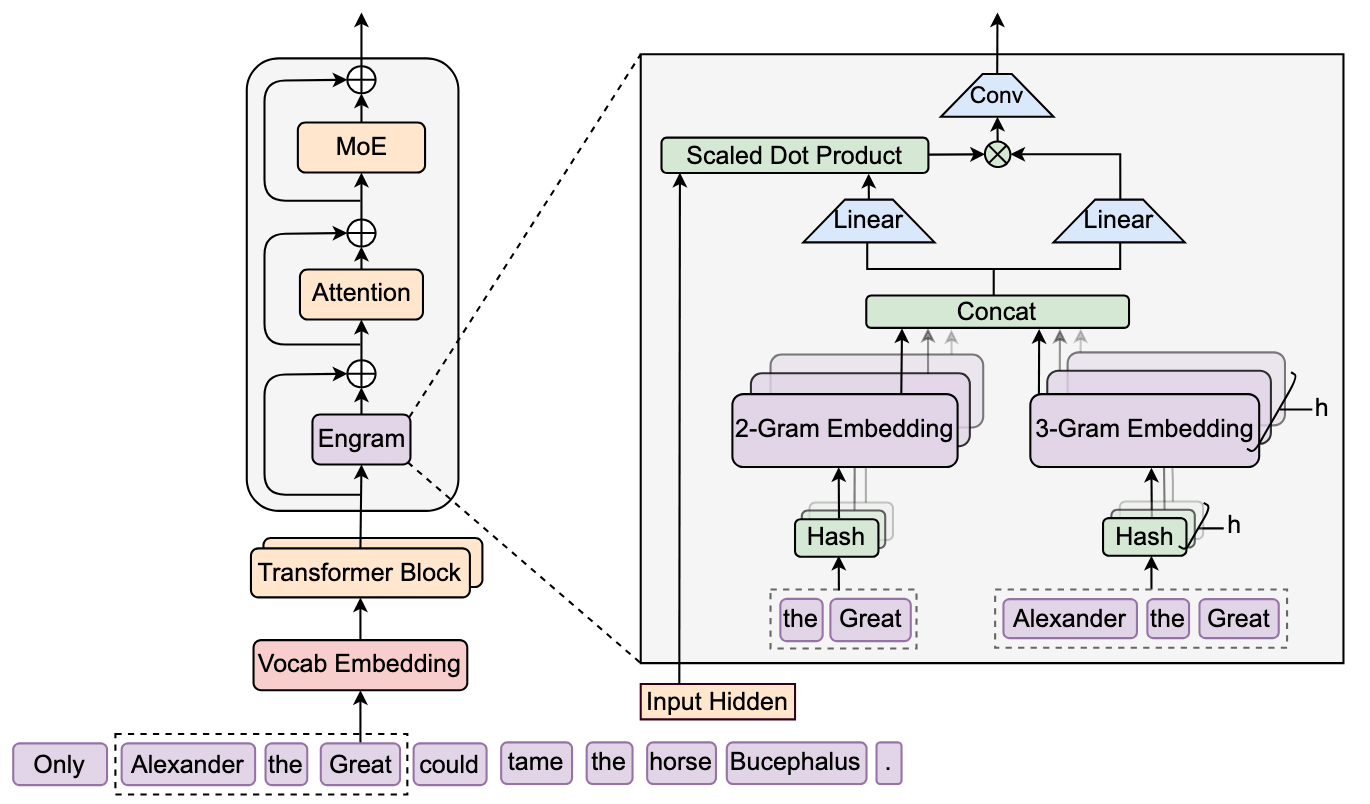
DeepSeek presents a new idea for large language models: Engram, a built-in memory module that gives Transformers direct access to stored patterns instead of forcing them to recompute everything from scratch.
Modern LLMs spend early layers rebuilding common token patterns with compute. That approach works, but it consumes depth that later layers need for reasoning. Engram changes that balance by adding constant-time memory lookup inside the model itself.
The key insight is simple. Some information stays static and repeatable. The model should fetch it, not relearn it every time.
Engram stores frequent token N-grams, short token sequences, in a hash table and retrieves them in O(1) time during the forward pass. The model then fuses this memory with normal hidden states.
Key features
-
Deterministic hashed N-gram lookup integrated into early and middle Transformer layers
-
Separate sparsity axis from MoE, with memory capacity independent of compute
-
Host-memory offloading with negligible inference overhead
Results
-
Improves factual recall on knowledge benchmarks, with +3.4 MMLU and +4.0 CMMLU
-
Raises multi-step reasoning accuracy, scoring +5.0 on BBH and +3.7 on ARC-Challenge
-
Increases code and math correctness, with +3.0 HumanEval and +2.4 MATH
-
Strengthens long-context retrieval, lifting Multi-Query NIAH from 84.2 to 97.0
The released code from DeepSeek shows how to integrate it alongside standard Transformer blocks.
|
|
|
|
Top News
|
|
|
|
OpenAI incorporates Torch technology so ChatGPT Health can reference long-term medical data during queries
|
|
7,294 Likes
|
|
OpenAI adds a new piece to ChatGPT Health by acquiring Torch Health. The move targets a common failure mode in health AI: fragmented data.
The most striking part is scope is Torch treats medical history as a single, persistent system rather than isolated files.
Health data rarely lives in one place. Labs, medications, visit notes, wearables, and consumer apps all sit in separate systems. Models see only snapshots, so reasoning stops at the document boundary.
Torch addresses this by acting as a medical memory for AI. In simple terms, it collects health records from many sources and stores them as one continuous timeline a model can query.
Key features
-
Unifies records from hospitals, labs, wearables, and consumer health services
-
Maintains longitudinal context across visits, tests, and medication changes
-
Feeds consolidated health history into ChatGPT Health as structured context
This integration shifts ChatGPT Health from stateless Q&A to history-aware reasoning.
|
|
|
At Alpha Signal, our mission is to build a sharp, engaged community focused on AI, machine learning, and cutting-edge language models, helping over 200,000 developers stay informed and ahead. We’re passionate about curating the best in AI, from top research and trending technical blogs to expert insights and tailored job opportunities. We keep you connected to the breakthroughs and discussions that matter, so you can stay in the loop without endless searching. We also work closely with partners who value the future of AI, including employers and advertisers who want to reach an audience as passionate about AI as we are.
Our partnerships are based on shared values of ethics, responsibility, and a commitment to building a better world through technology.Privacy is a priority at Alpha Signal. Our Privacy Policy clearly explains how we collect, store, and use your personal and non-personal information. By using our website, you accept these terms, which you can review on our website. This policy applies across all Alpha Signal pages, outlining your rights and how to contact us if you want to adjust the use of your information. We’re based in the United States. By using our site, you agree to be governed by U.S. laws.
|
|
|
Looking to promote your company, product, service, or event to 250,000+ AI developers?
|
|
|
|
|
