|
Hey,
Your daily briefing is ready. You can finally take a break from the AI firehose.
Our algos spent the night splitting signal from noise and pulled the top news, models, papers, and repos.
Here’s the must-read:
|

|
Today's Author
Lior Alexander. Founder of AlphaSignal and former ML Engineer.
Previously built ML systems at Iguazio, Guesty, Enphase, Mila.
|
|
Top News
|
|
|
|
OpenAI launches Frontier, a production platform for deploying governed AI agents across enterprises
|
|
3,183 Likes
|
|
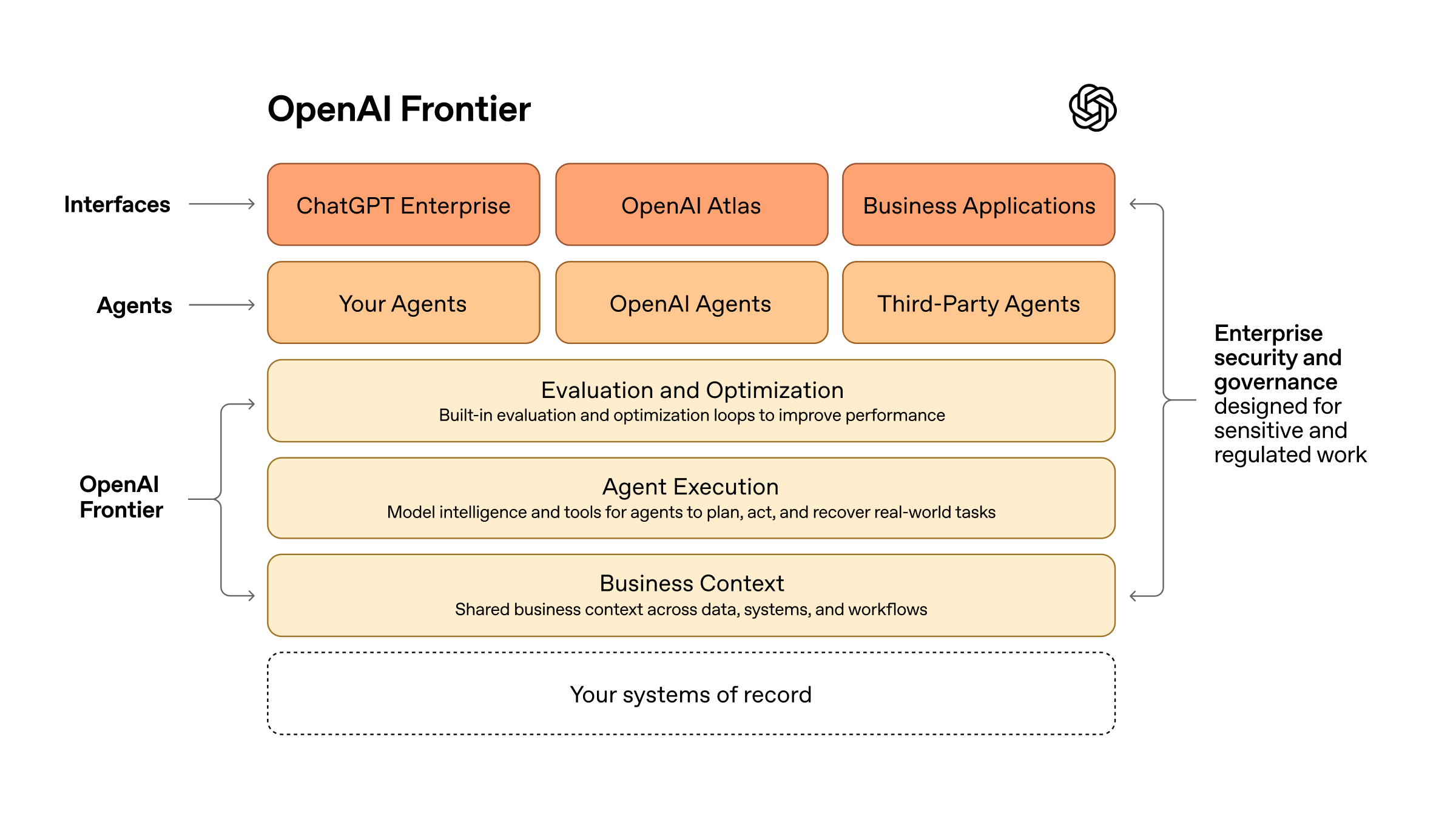
Enterprises already know AI agents can reason well. The problem is not intelligence. The problem is deployment. Agents stall at demos because they lack context, permissions, and a way to operate across real systems. OpenAI built Frontier to close that gap.
Frontier is a platform to build and run AI coworkers that do actual work inside organizations. Think of it as the infrastructure layer agents need to behave like employees: they know where data lives, they can use tools, they improve with feedback, and they operate inside clear boundaries.
OpenAI shaped Frontier using lessons from over 1 million businesses and real deployments that cut multi-week workflows down to one day.
What Frontier does
-
Connects business data into a shared semantic layer agents can query
-
Runs agents that use files, code, tools, and computers
-
Evaluates output quality and feeds structured feedback back into agents
-
Assigns identities, permissions, and auditability to each agent
-
Deploys agents locally, in enterprise clouds, or on OpenAI-hosted runtimes
How teams use it
-
Connect existing systems and data
-
Define agent roles, access, and tasks
-
Deploy agents into workflows and applications
-
Measure results and iterate based on evaluations
Reported results
-
Production optimization drops from six weeks to one day
-
Sales teams recover over 90% of customer-facing time
-
Industrial output increases up to 5% in large deployments
|
|
|
|
Top News
|
|
|
|
Mistral AI releases Voxtral Transcribe 2 with sub-200 ms realtime transcription and open weights for Voxtral Realtime
|
|
3,932 Likes
|
|
Mistral AI introduces Voxtral Transcribe 2 at a time when speech-to-text systems struggle with either latency or cost. Most models trade real-time speed for accuracy or lock strong performance behind high prices.
Voxtral Transcribe 2 targets both problems with a split design: one model for batch jobs and one built from the ground up for live audio. The key shift is a native streaming architecture that transcribes audio as it arrives, not after chunks accumulate.
Voxtral Transcribe 2 solves two common workflows: large-scale transcription and low-latency voice interaction. Batch users process long recordings cheaply, while realtime users power voice agents and live captions without long delays.
You access both through API or test them in Mistral Studio.
Models and features
-
Voxtral Mini Transcribe 2 handles batch transcription and long audio workloads.
-
Voxtral Realtime processes live audio with configurable sub-200 ms latency.
-
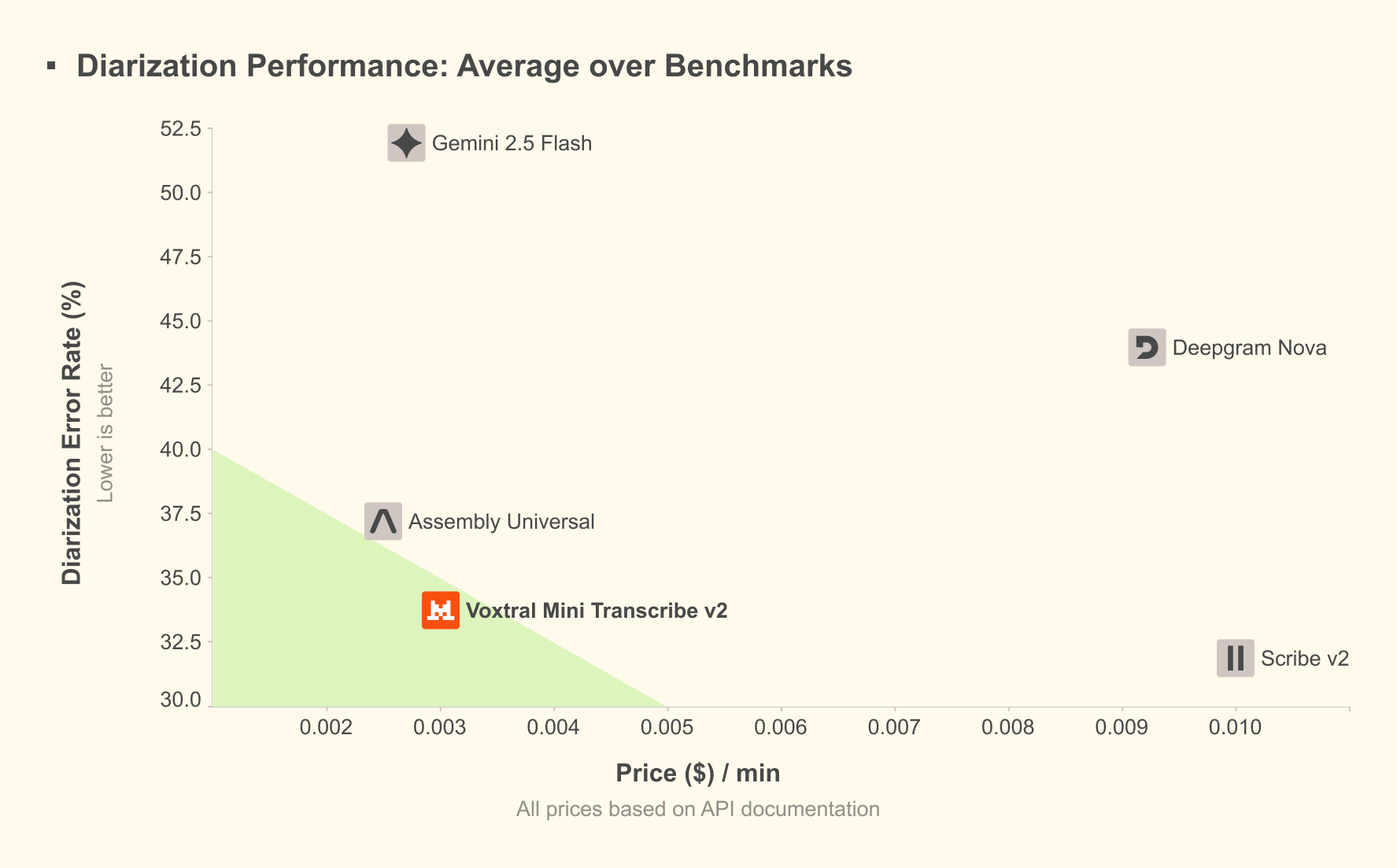
Speaker diarization labels who speaks and when in multi-speaker audio.
-
Context biasing steers decoding toward correct names or technical terms.
-
Word-level timestamps align text precisely with audio.
Performance and usage
-
Mini reports ~4% WER on the FLEURS benchmark.
-
Realtime stays within 1–2% WER of offline at 480 ms delay.
-
Pricing starts at $0.003 per minute for batch and $0.006 per minute realtime.
-
Realtime weights ship under Apache 2.0 for local or edge deployment.
|
|
|
|
Top Paper
|
|
|
|
Perplexity pairs Opus 4.5 with Deep Research and releases DRACO for agent evaluation
|
|
2,528 Likes
|
|
Perplexity builds Deep Research for questions that do not fit into a single prompt or answer. The system treats research as a process: plan the work, search across sources, compare evidence, and write a cited report.
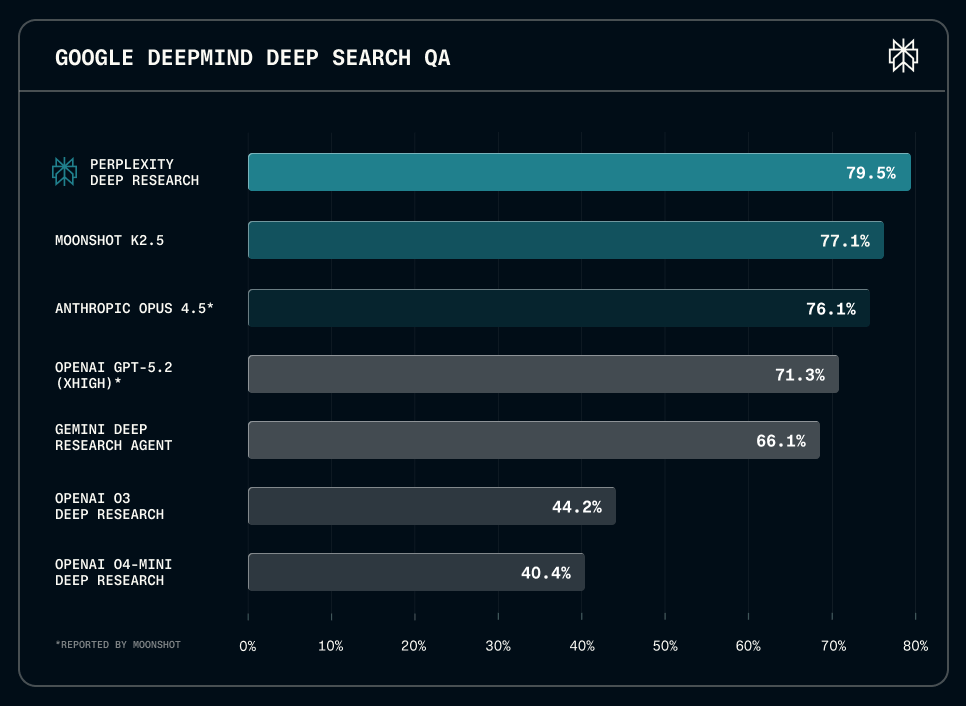
The latest update raises system capability by running Deep Research on Claude Opus 4.5 and by releasing DRACO, an open benchmark that measures real research quality.
Deep Research functions as an agent rather than a chatbot. It splits a complex query into steps, retrieves information iteratively, resolves contradictions, and produces a structured output with citations.
Agentic means the system controls the sequence of searches and analysis instead of responding once.
Core features
-
Multi-step planning, iterative retrieval, synthesis, and citation-backed report generation
-
Supports academic, legal, medical, financial, and technical research tasks
DRACO benchmark
-
100 complex tasks across 10 domains from anonymized real Deep Research requests
-
Expert rubrics score factual accuracy, analysis depth, presentation quality, citation quality
Reported results
How you use it
|
|
|
At Alpha Signal, our mission is to build a sharp, engaged community focused on AI, machine learning, and cutting-edge language models, helping over 200,000 developers stay informed and ahead. We’re passionate about curating the best in AI, from top research and trending technical blogs to expert insights and tailored job opportunities. We keep you connected to the breakthroughs and discussions that matter, so you can stay in the loop without endless searching. We also work closely with partners who value the future of AI, including employers and advertisers who want to reach an audience as passionate about AI as we are.
Our partnerships are based on shared values of ethics, responsibility, and a commitment to building a better world through technology.Privacy is a priority at Alpha Signal. Our Privacy Policy clearly explains how we collect, store, and use your personal and non-personal information. By using our website, you accept these terms, which you can review on our website. This policy applies across all Alpha Signal pages, outlining your rights and how to contact us if you want to adjust the use of your information. We’re based in the United States. By using our site, you agree to be governed by U.S. laws.
|
|
|
Looking to promote your company, product, service, or event to 250,000+ AI developers?
|
|
|
|
|
