|
Hey,
Your daily briefing is ready. You can finally take a break from the AI firehose.
Our algos spent the night splitting signal from noise and pulled the top news, models, papers, and repos.
Here’s the must-read:
|
|
Together with QA.tech
|

|
|

|
Today's Author
Lior Alexander. Founder of AlphaSignal and former ML Engineer.
Previously built ML systems at Iguazio, Guesty, Enphase, Mila.
|
|
Top News
|
|
|
|
Anthropic releases Claude Opus 4.6 adding agent teams, 1M token context, and new effort controls
|
|
62,494 Likes
|
|
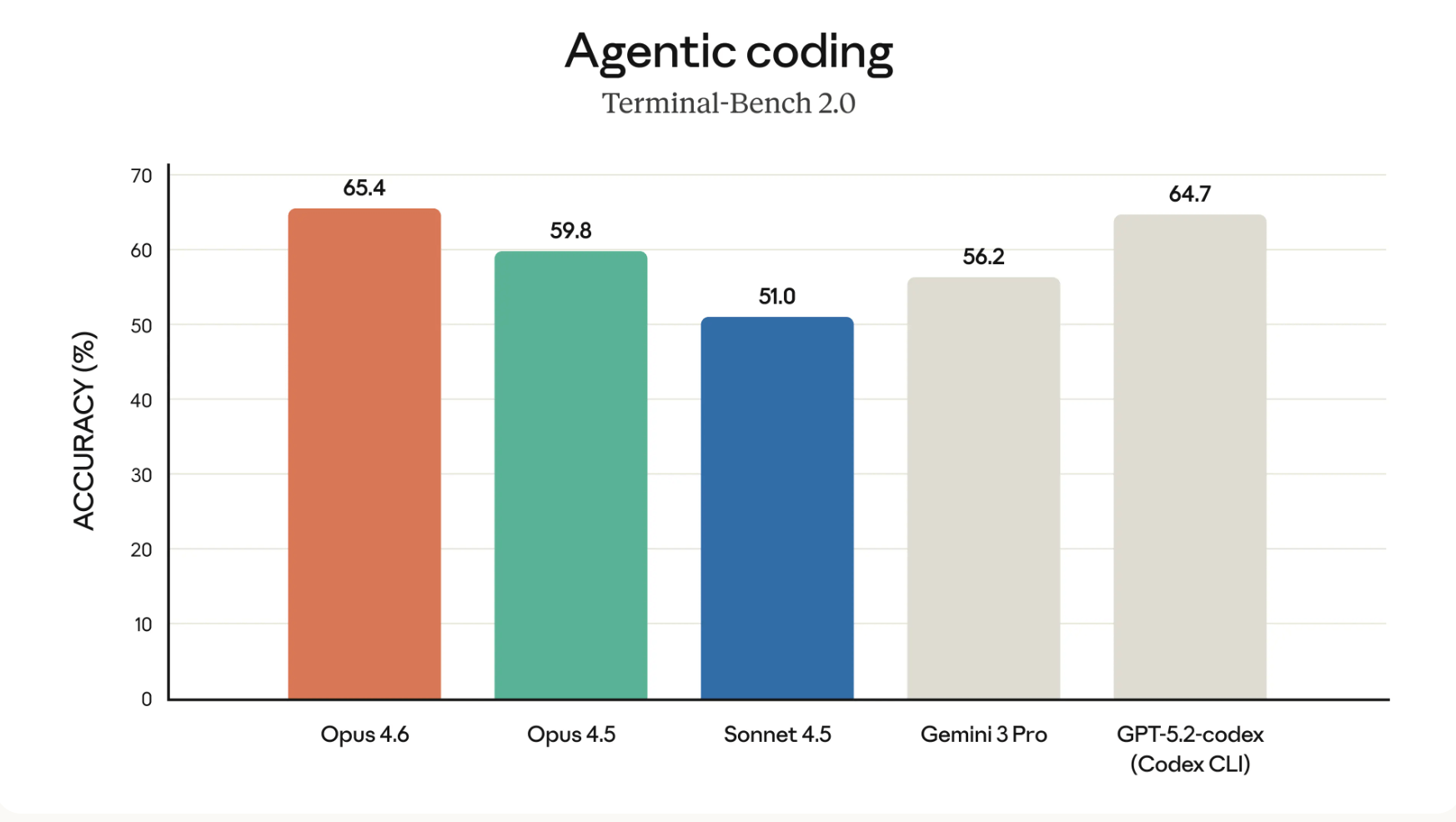
Claude Opus 4.6 enters as Anthropic’s new top-tier model, built for a familiar problem: AI systems break down when tasks get long, messy, and codebases get big.
As agents run longer, context drifts, reasoning degrades, and developers intervene. Opus 4.6 targets that failure mode directly, with deeper planning, longer memory, and stronger agentic execution.
At the center of the release is scale. Opus 4.6 is the first Opus-class model with a 1M token context window, which means you can keep entire repositories, long documents, or extended agent runs in memory without constant truncation. Anthropic pairs that with new controls so you decide how much reasoning the model uses and how long it runs.
Key features
-
1M token context (beta) for long-running agents and large-codebase analysis
-
128k output tokens for single-pass generation of large artifacts
-
Adaptive thinking so the model decides when deeper reasoning is necessary
-
Effort levels (low to max) to trade latency and cost against reasoning depth
-
Context compaction that summarizes old turns to extend agent runtime
Performance results
-
#1 on Terminal-Bench 2.0 for agentic coding
-
76% on MRCR v2 (1M, 8-needle) for long-context retrieval
-
+144 Elo vs GPT-5.2 and +190 Elo vs Opus 4.5 on GDPval-AA
You can use Opus 4.6 via claude-opus-4-6 in the API, Claude Code agent teams, or Claude’s document and spreadsheet tools for long, structured workflows.
|
|
|
|
Presented by QA.tech
|
|
Solving the AI Adoption Paradox
|
|
Teams heavily deploying Claude Code or Cursor face a paradox: code velocity is up 2x, but rework is up 2.5x.
Why? We write at AI speed, but lack the AI counterweight to validate it.
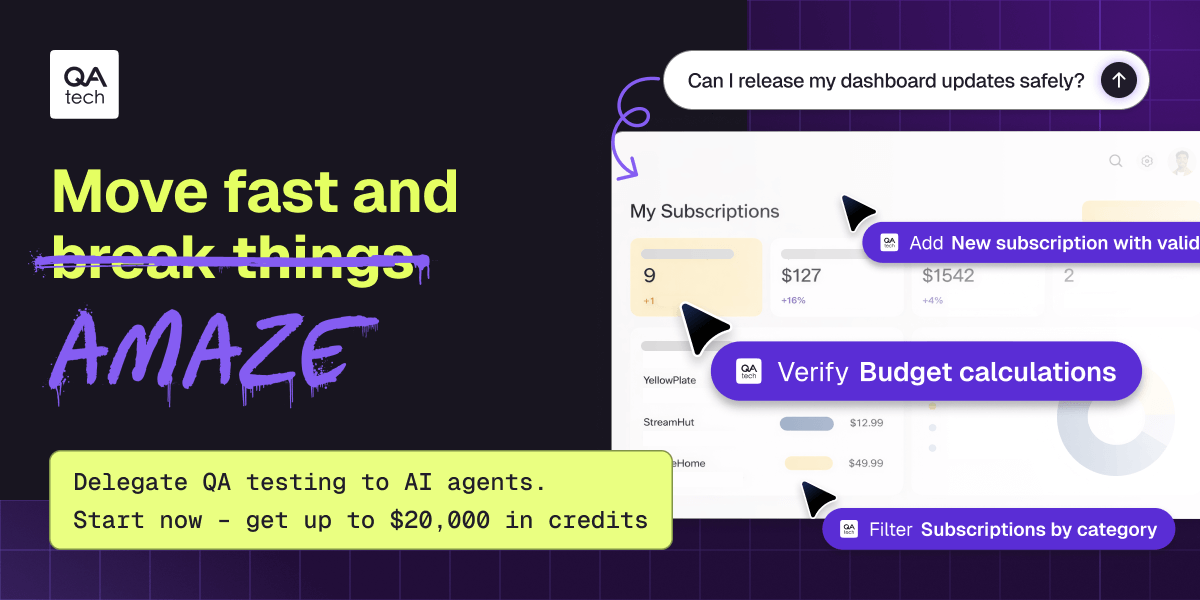
QA.tech is an AI testing solution that understands your system the way a real user does, not just the quality of your code, but the quality of your product.
Try QA.tech to:
The first 20 Alpha Signal teams entering a PoC can get up to $20,000 in credits.
|
|
|
|
partner with us
|
|
Top News
|
|
|
|
OpenAI upgrades Codex with GPT-5.3-Codex for faster agentic execution, achieves top SWE-Bench Pro scores
|
|
30,932 Likes
|
|
OpenAI ships a new chapter for Codex with GPT-5.3-Codex, and the focus shifts from code output to full task execution.
The model unifies the coding performance of GPT-5.2-Codex with the broader reasoning and professional knowledge of GPT-5.2, then runs it faster. It acts as a single agent that works across a real computer while you supervise and steer in real time.
Earlier Codex versions centered on writing and reviewing code. GPT-5.3-Codex extends that scope to terminals, editors, browsers, and desktop applications. You can intervene during execution, ask for changes, and continue without resetting context, which matters for long workflows where requirements evolve.
Key features and results
-
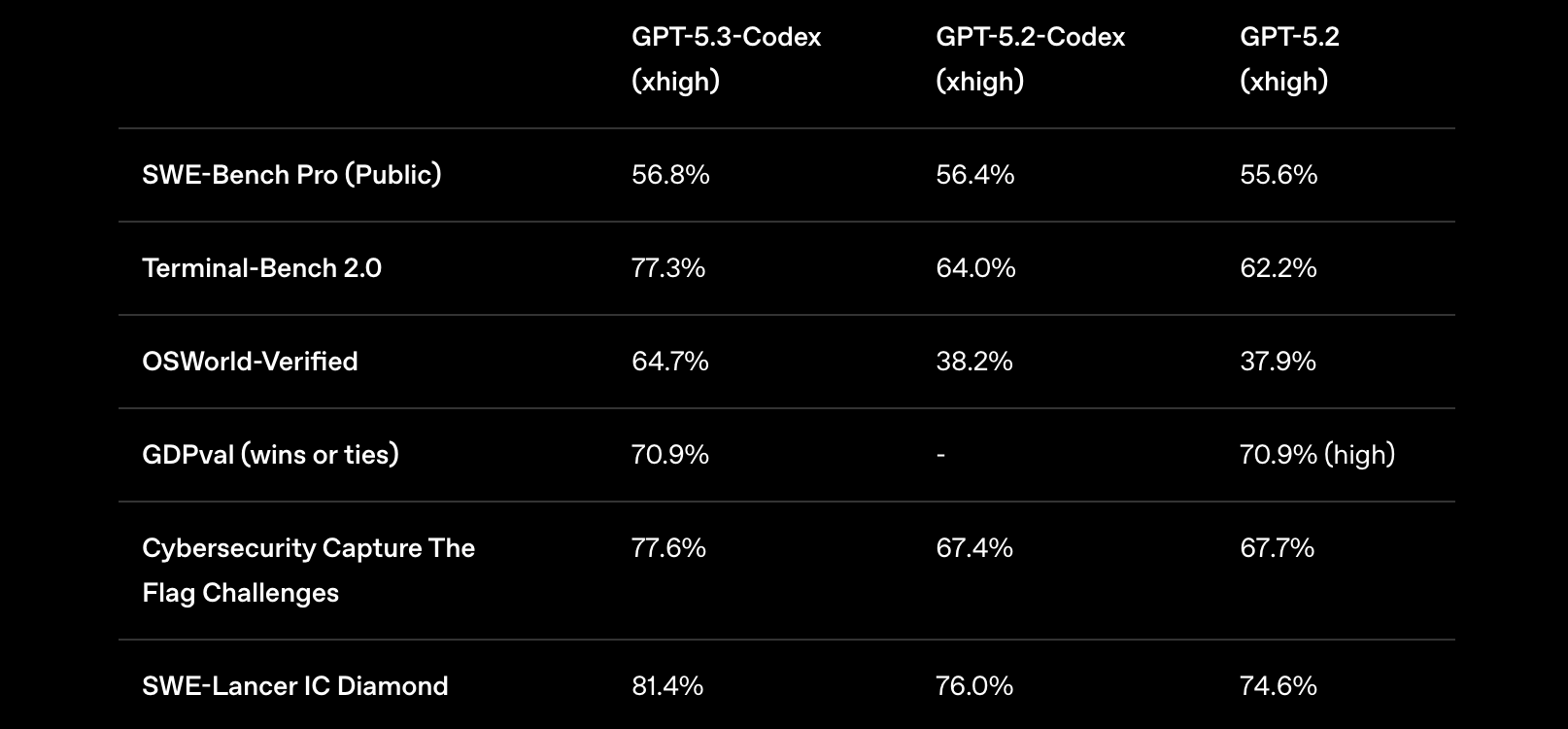
Sets state of the art on SWE-Bench Pro, a four-language, production-grade software benchmark.
-
Reaches 77.3% accuracy on Terminal-Bench 2.0, which measures real command-line task completion.
-
Uses fewer output tokens than prior Codex models on comparable evaluations.
-
Runs 25% faster through inference and infrastructure improvements.
How to use it
-
Access it through the Codex app, CLI, IDE extensions, or web.
-
Assign multi-step tasks that require code, tools, and execution.
-
Provide feedback mid-run as the agent reports progress.
OpenAI makes GPT-5.3-Codex available now on paid ChatGPT plans.
|
|
|
|
Top News
|
|
|
|
Perplexity introduces a multi-model system that compares and synthesizes three frontier AI models in one query
|
|
5,528 Likes
|
|
Perplexity introduced Model Council after a familiar problem surfaced: no single AI model performs best across all tasks. Coding favors one model, research favors another, and creative work shifts again.
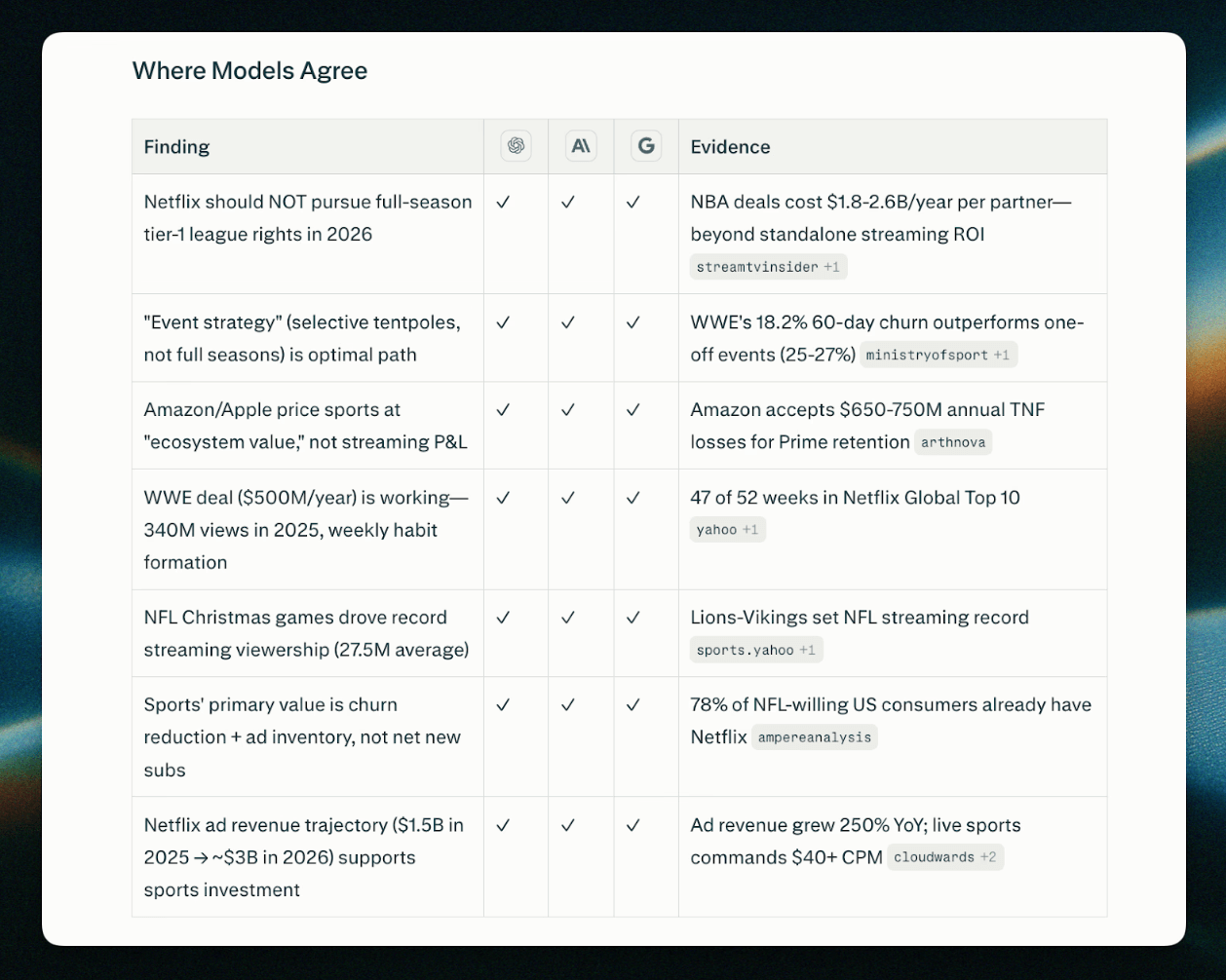
Model Council addresses this gap by running one query across multiple frontier models at the same time and combining their outputs into a single answer. The core idea is simple: compare models automatically instead of guessing which one to trust.
When you enable Model Council in the Perplexity interface, the system sends your prompt to three models in parallel, such as Claude Opus 4.6, GPT-5.2, and Gemini 3.0.
A separate synthesizer model then reviews the responses. It resolves conflicts where possible and highlights disagreements when it cannot.
Key features and behavior
-
Runs one prompt across three frontier models in parallel
-
Uses a synthesizer model to merge and compare outputs
-
Shows agreement and disagreement instead of raw model transcripts
-
Targets research, verification, decisions, and brainstorming tasks
How to use it
Model Council is available to Perplexity Max subscribers on the web.
|
|
|
At Alpha Signal, our mission is to build a sharp, engaged community focused on AI, machine learning, and cutting-edge language models, helping over 200,000 developers stay informed and ahead. We’re passionate about curating the best in AI, from top research and trending technical blogs to expert insights and tailored job opportunities. We keep you connected to the breakthroughs and discussions that matter, so you can stay in the loop without endless searching. We also work closely with partners who value the future of AI, including employers and advertisers who want to reach an audience as passionate about AI as we are.
Our partnerships are based on shared values of ethics, responsibility, and a commitment to building a better world through technology.Privacy is a priority at Alpha Signal. Our Privacy Policy clearly explains how we collect, store, and use your personal and non-personal information. By using our website, you accept these terms, which you can review on our website. This policy applies across all Alpha Signal pages, outlining your rights and how to contact us if you want to adjust the use of your information. We’re based in the United States. By using our site, you agree to be governed by U.S. laws.
|
|
|
Looking to promote your company, product, service, or event to 250,000+ AI developers?
|
|
|
|
|
