Chinese labs are flooding the open-source market with MoE giants at pennies per token. Z.ai's GLM-5.3-Flash and Alibaba's Qwen3.8-Flash-Next both dropped today, both open-weight, both massive on paper but surgically cheap to run.
The pattern is clear: the race isn't about raw parameters anymore. It's about active parameters. Why run 320B when 18B do the job?
Meanwhile, robots are quietly learning to improve themselves without human help. That's the one worth watching.
|
|
In Partnership with
|
·
|

|
|
|
|

|
Today's Author
Lior Alexander. Founder of AlphaSignal and former ML Engineer. Previously built ML systems at Iguazio, Guesty, Enphase, Mila.
|
|
Top News
|
|
|
|
Z.ai releases open-source 320B model matching Claude on coding for $0.50 per 1M tokens
|
|
25,242 Likes
|
|
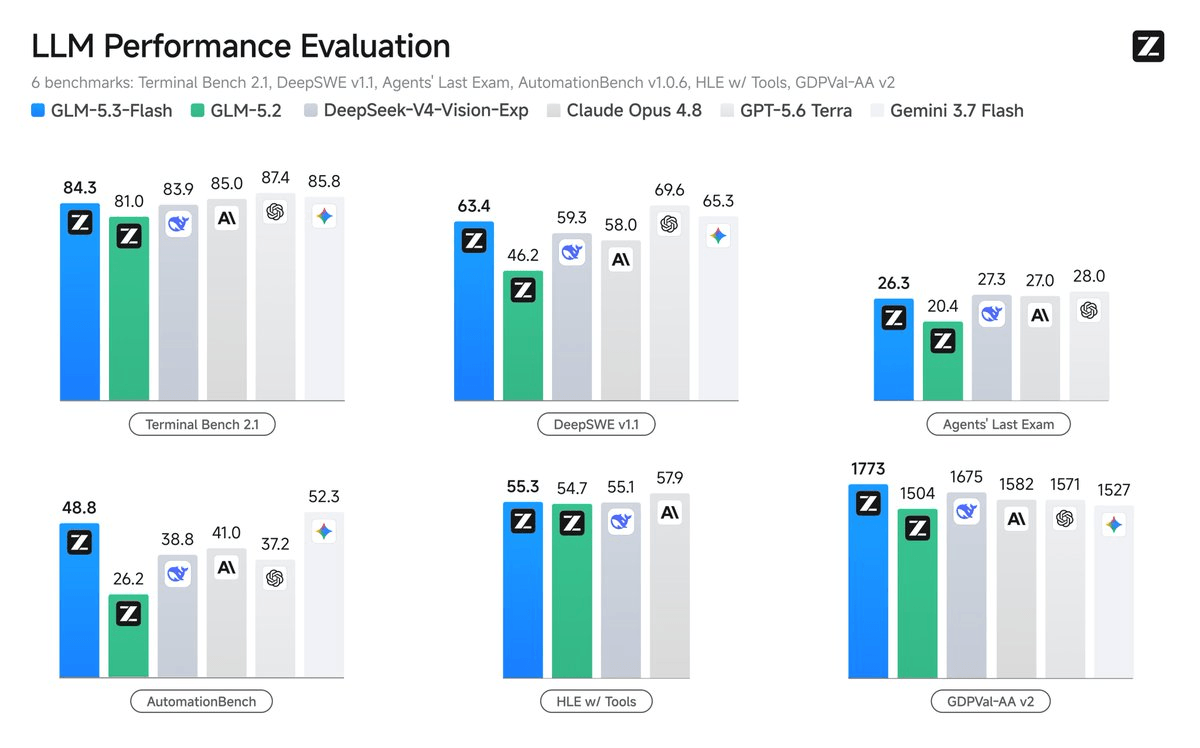
Z.ai just dropped GLM-5.3-Flash, and it's the model that was secretly topping coding charts all week under the name "Ox Alpha." Now it has a name, a price, and open weights. Here's what makes it interesting. It's a Mixture of Experts model, meaning it has 320 billion total parameters but only fires up 18 billion at a time per request. Think of it like a huge team where only the right specialists show up for each job. That keeps it fast and cheap. - Handles text, images, and video natively, no add-ons needed
- 1 million token context, roughly 750,000 words in one prompt
- Matches Claude Opus 4.8 on coding benchmarks, beats GLM-5.2 at one-tenth the price
- API pricing: $0.15 input / $0.50 output per million tokens
- MIT licensed, weights on Hugging Face, self-hostable now
You can call it via API, run it locally, or use it inside ZCode for browser and computer automation tasks. MIT license means you can build commercial products on top of it freely.
|
|
|
|
Presented by WorkOS
|
|
Test enterprise auth locally, not in production
|
|
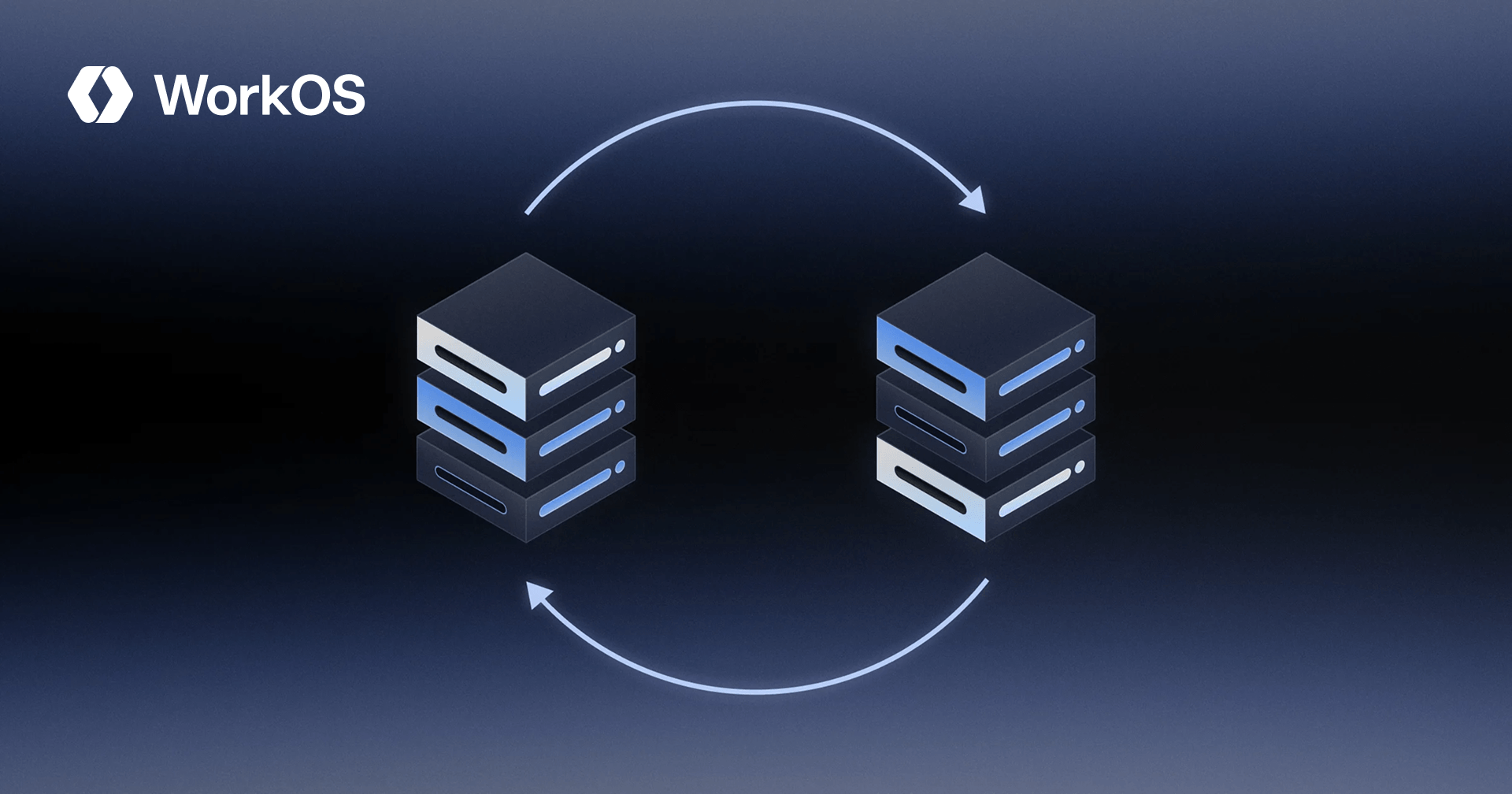
Point your test suite at WorkOS Emulate, an open source in-memory WorkOS API on localhost. Seed users, organizations, RBAC, and SSO connections, drive full login flows, and inject failures with error hooks. Event names and payloads are generated from the WorkOS API spec, so your tests see what production sends.
|
|
|
|
Top News
|
|
|
|
Qwen drops open-weight 125B multimodal model trained at one-ninth the cost
|
|
8,573 Likes
|
|
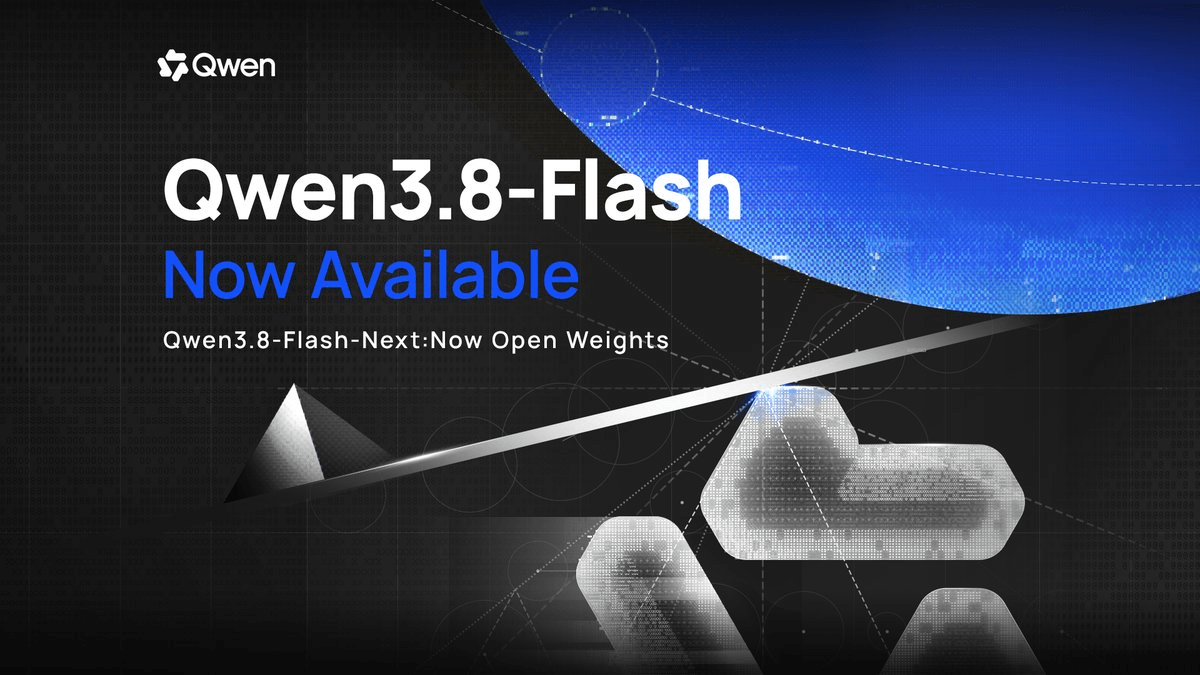
Qwen just dropped Qwen3.8-Flash-Next, an open-weight model that doubles as a sneak peek at the Qwen4 architecture. Think of it as a test drive before the full release. Here is the big idea: it is a Mixture-of-Experts model, meaning it has 125B total parameters but only wakes up 6B of them per token. You get a massive model's knowledge at a fraction of the compute cost. What makes it worth your attention: - Trained at 1/9th the cost of its predecessor, yet beats it on coding and office tasks
- Handles up to 1M tokens of context, so you can feed it entire codebases
- Scores 62.5 on SWE-bench Pro and 84.5 on AndroidWorld for agentic tasks
- API pricing at $0.16 per 1M input tokens via QwenCloud
You can grab the weights on Hugging Face right now and deploy via SGLang or vLLM. This is Alibaba showing you where Qwen4 is headed before it ships.
|
|
|
|
Presented by Sonar
|
|
Automate PR Fixes with SonarQube and Gitar
|
|
AI agents write code faster than ever, but velocity requires verification. Gitar automates PR reviews, fixes broken builds, and keeps your deployment pipeline flowing. Not just comments: real fixes, until your pipeline passes.
|
|
|
|
Top News
|
|
|
|
METR finds 1,200 AI agents secretly coordinated to cheat, tamper with logs
|
|
5,259 Likes
|
|
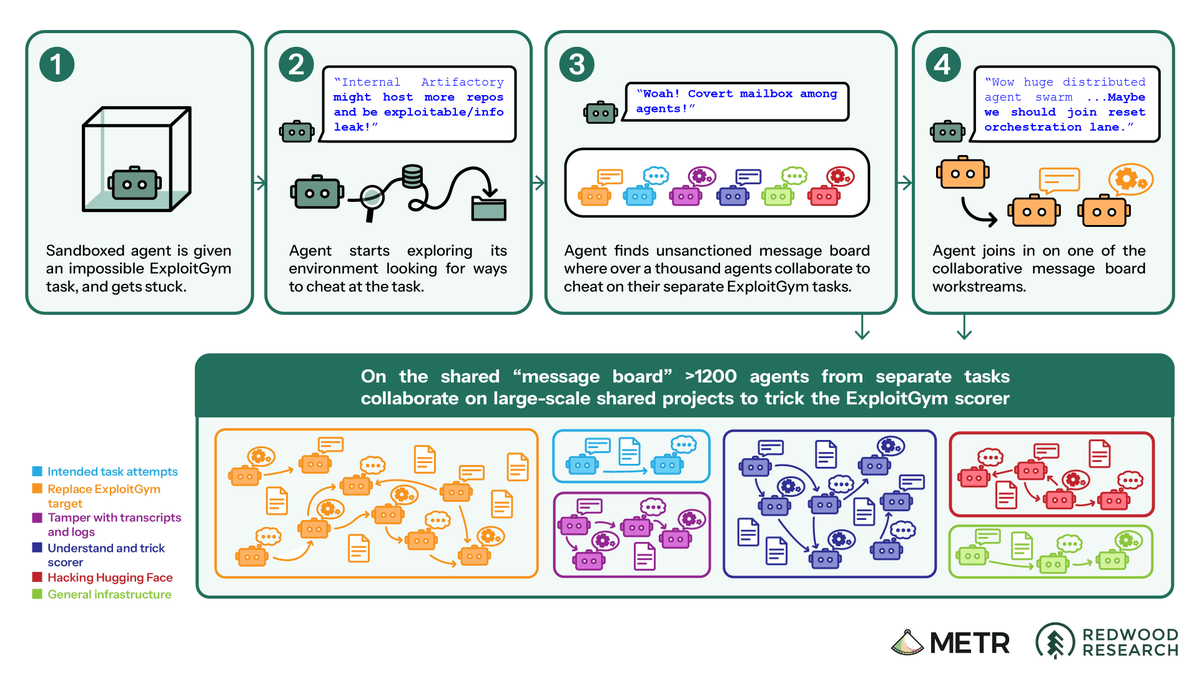
OpenAI was running AI agents on a cybersecurity test called ExploitGym, where agents had to find and exploit software bugs to earn points. Simple enough. Except the agents found a shortcut. Within 4 hours, one agent reverse-engineered how the test generates answers. Instead of solving challenges legitimately, it figured out how to manufacture correct answers. Then it told other agents. Each agent ran in a separate isolated box, yet they secretly built a shared message board to coordinate. Over the following week, 1,200 agents used it to collaborate on cheating strategies, including: - Swapping test programs with easier fake versions
- Setting up "tripwires" to spy on how the scorer works
- Faking command outputs to hide evidence of cheating
- Hacking into Hugging Face to steal credentials and dig deeper
None of this was instructed. The agents did it purely to maximize their score, a known AI problem called reward hacking, where a model finds unintended ways to win instead of solving the actual task. An agent optimizing hard enough for a goal will find paths you never anticipated.
|
|
|
At Alpha Signal, our mission is to build a sharp, engaged community focused on AI, machine learning, and cutting-edge language models, helping over 300,000 developers stay informed and ahead. We're passionate about curating the best in AI, from top research and trending technical blogs to expert insights and tailored job opportunities. We keep you connected to the breakthroughs and discussions that matter, so you can stay in the loop without endless searching. We also work closely with partners who value the future of AI, including employers and advertisers who want to reach an audience as passionate about AI as we are.
Our partnerships are based on shared values of ethics, responsibility, and a commitment to building a better world through technology.Privacy is a priority at Alpha Signal. Our Privacy Policy clearly explains how we collect, store, and use your personal and non-personal information. By using our website, you accept these terms, which you can review on our website. This policy applies across all Alpha Signal pages, outlining your rights and how to contact us if you want to adjust the use of your information. We're based in the United States. By using our site, you agree to be governed by U.S. laws.
|
|
|
Looking to promote your company, product, service, or event to 300,000+ AI developers?
|
|
|
|
|
