|
Hey,
Your daily briefing is ready. You can finally take a break from the AI firehose.
Our algos spent the night splitting signal from noise and pulled the top news, models, papers, and repos.
Here’s the must-read:
|
|
Together with AssembyAI
|

|
|

|
Today's Author
Lior Alexander. Founder of AlphaSignal and former ML Engineer.
Previously built ML systems at Iguazio, Guesty, Enphase, Mila.
|
|
Top News
|
|
|
|
Anthropic ships latency-optimized Fast Mode for Claude Opus 4.6 without model changes
|
|
14,494 Likes
|
|
Anthropic ships a faster way to run Claude Opus 4.6 after internal teams rely on it for high-pressure work.
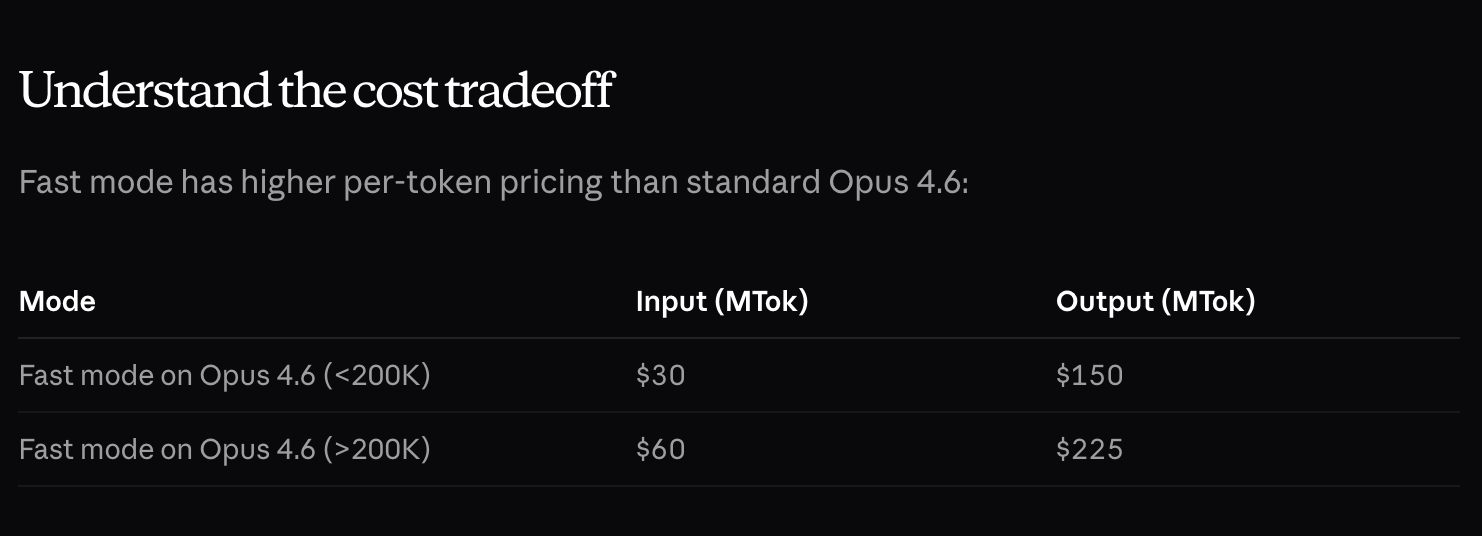
Opus-level reasoning works well, but latency slows tight feedback loops. Fast mode removes that friction by delivering up to 2.5× lower latency without changing the model itself.
Fast mode does not add new weights or training. You run the same Opus 4.6 with an API configuration that prioritizes speed over cost efficiency. This setup targets interactive workflows where each response gates progress, such as debugging or rapid iteration.
What fast mode does
-
Uses identical Opus 4.6 weights, reasoning depth, and tool access
-
Applies a latency-optimized API configuration instead of cost-optimized scheduling
-
Supports the full 1M token extended context window
How to use it
Pricing and limits
Availability
-
Ships as a research preview feature
-
Pricing, availability, and configuration may change based on feedback
-
API behavior may evolve during the preview period
|
|
|
|
Presented by AssemblyAI
|
|
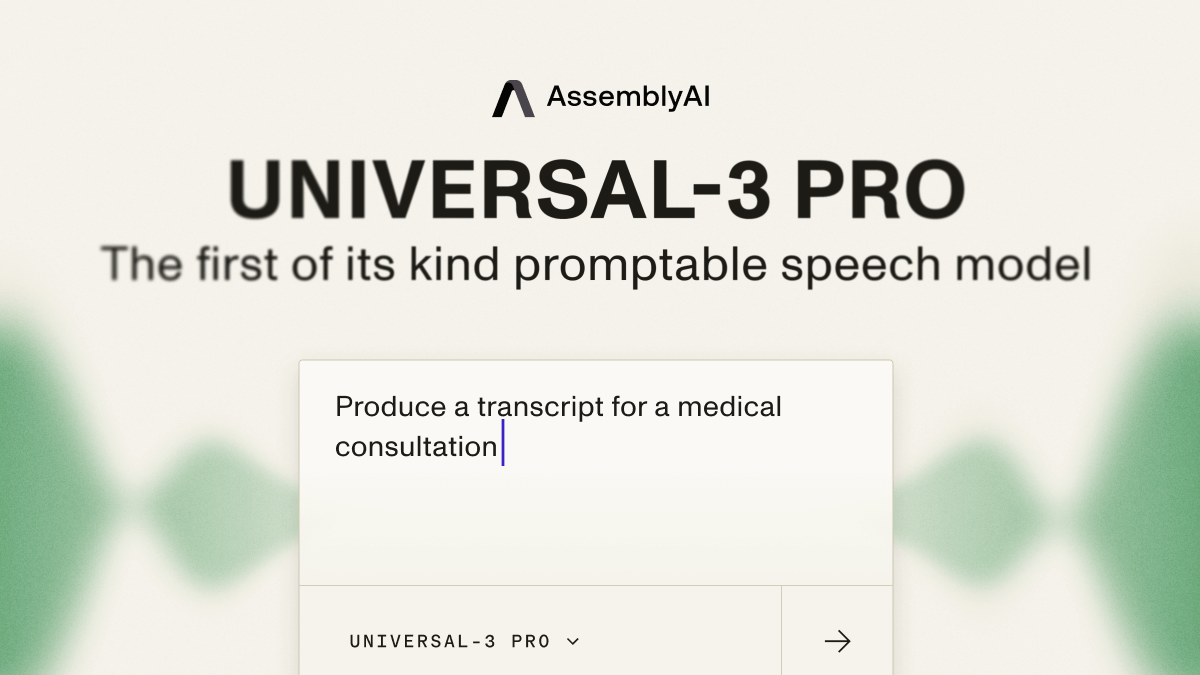
AssemblyAI Launches Speech Model You Control With Instructions
|
|
You're probably fixing audio transcripts after they come back mangled.
Universal-3 Pro from AssemblyAI works differently.
You feed it instructions before transcription starts. Provide domain context or up to 1,000 keyterms like product names, technical terminology, or industry jargon.
The model uses all of it during transcription, not after.
No custom model training. No regex cleanup pipelines. No LLM post-processing to fix mistakes.
It also tags audio events and handles 6-language code-switching in the same conversation.
Starts at $0.21/hour.
Free all February.
|
|
|
|
partner with us
|
|
Top Paper
|
|
|
|
Meta researchers explain how larger models need fewer parameters for post-training reasoning adaptation
|
|
1,932 Likes
|
|
New research from FAIR, Cornell University, and Carnegie Mellon University starts from a simple question: do language models really need massive post-training updates to learn reasoning?
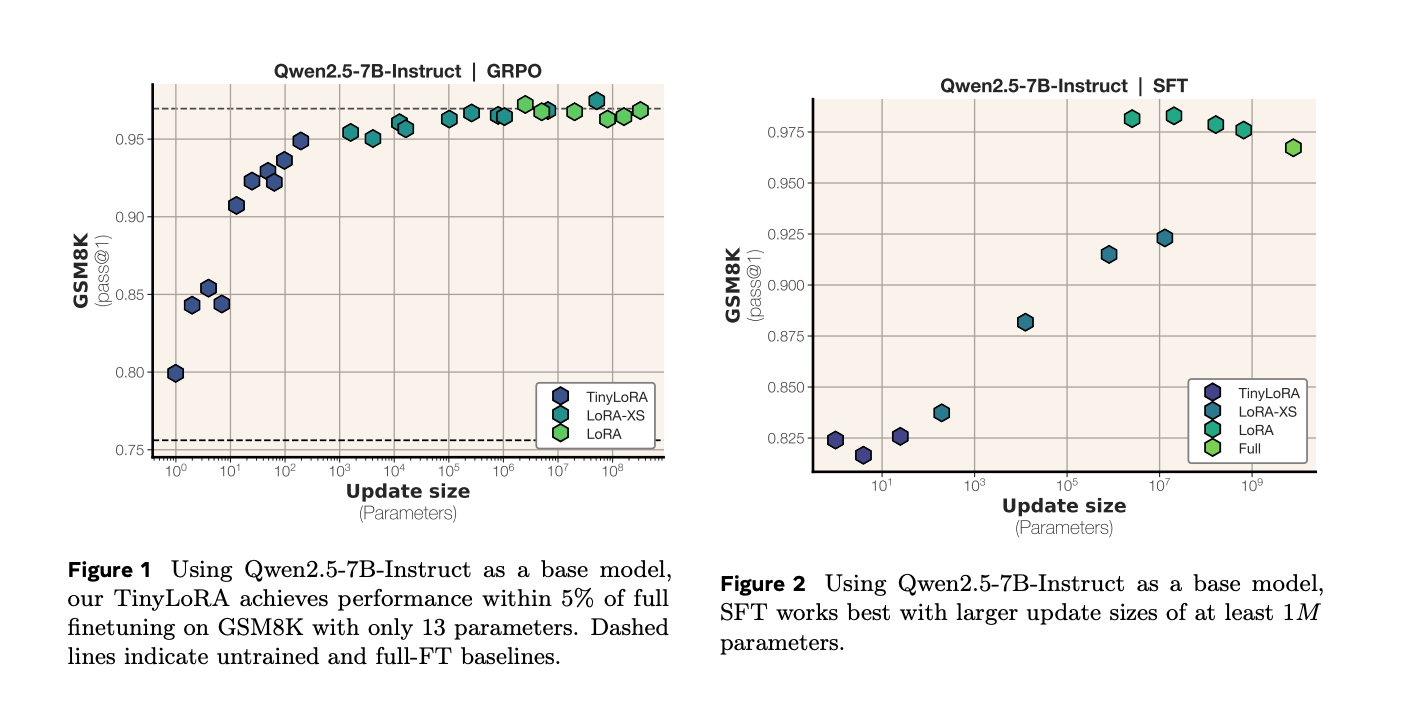
The default answer has been yes, millions or billions of parameters, carefully tuned. This paper shows that assumption breaks fast. With a method called TinyLoRA, the authors train Qwen2.5-7B to 91% accuracy on GSM8K using 13 bf16 parameters, which equals 26 bytes.
TinyLoRA works by shrinking LoRA adapters to an extreme low-dimensional form. Instead of teaching the model new knowledge, reinforcement learning nudges existing reasoning circuits already present in the pretrained weights.
RL uses rewards, correct or incorrect answers, which filter noise and amplify useful structure.
Key features
-
Freezes the base model and updates a tiny adapter inside existing weight matrices
-
Uses reinforcement learning with outcome-based rewards instead of full demonstrations
-
Trains as few as single-digit parameters without changing model architecture
Results
-
Exceeds 90% accuracy on GSM8K with fewer than 100 parameters
-
Retains 87% of absolute gains on MATH500, AIME, and AMC with 196 parameters
-
Requires 100–1000× fewer parameters than standard LoRA for similar performance
|
|
|
|
Presented by Innovative with AI
|
|
Become an AI consultant and deliver ‘ROI with AI’ to your clients
|

|
AI is transforming every workplace, but executives are terrified of becoming one of the companies that gets “no ROI on AI.” That’s where you come in, and how you can build a 6-figure consultancy with Innovating with AI’s proven methods for delivering fast ROI on AI strategy + implementation projects.
We’ve trained 1,200+ AI consultants and our consulting directory has driven Fortune 500 leads to graduates.
Turn your AI enthusiasm into marketable skills, clear services and a serious business. Enrollment in The AI Consultancy Project is opening soon – and you’ll only hear about it if you apply for access now.
|
|
|
|
partner with us
|
|
Top Paper
|
|
|
|
Harvard and Stanford introduce a new method enabling transformers to predict robot actions reliably
|
|
1,482 Likes
|
|
Researchers from Harvard University and Stanford University introduce Ordered Action Tokenization (OAT), a new way to turn continuous robot actions into discrete tokens.
The work starts from a simple problem: sequence models work well with tokens, but robot actions live in continuous space. OAT closes this gap by converting action chunks into short, ordered token sequences that autoregressive models predict reliably.
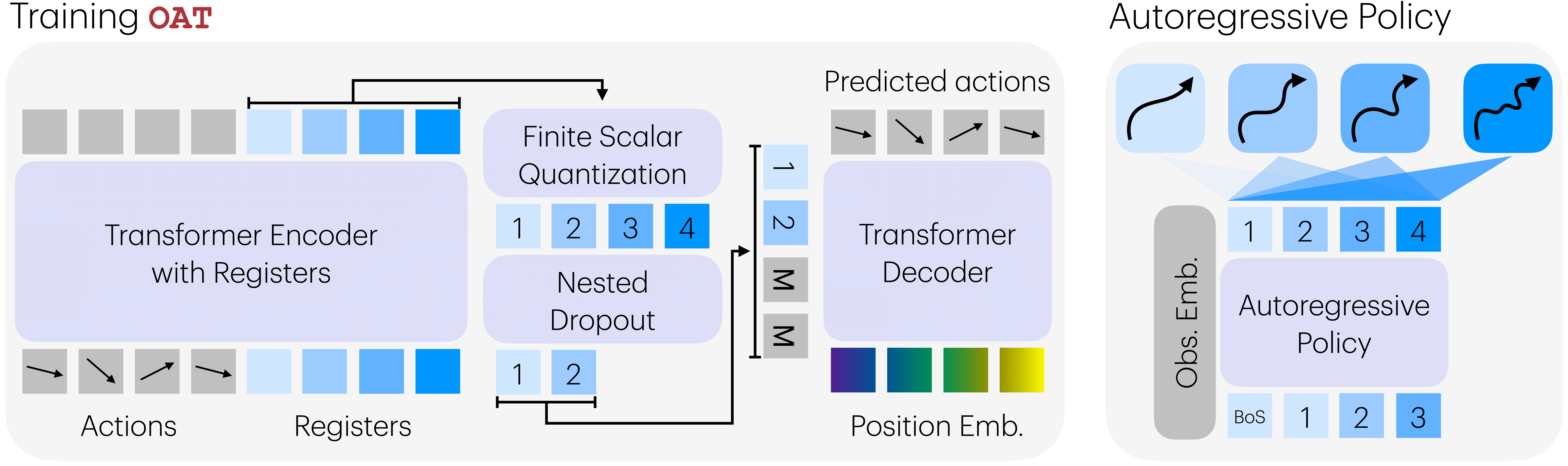
The standout idea is prefix-based decoding, where even partial token sequences decode into valid actions.
OAT targets three missing requirements in prior methods: compression, safe decoding, and left-to-right structure. Instead of hand-crafted discretization, OAT learns an ordered token space where early tokens describe coarse motion and later tokens refine details. This order matches how next-token prediction works.
Key features
-
Transformer encoder with register tokens to summarize action chunks
-
Finite Scalar Quantization to convert latents into discrete tokens
-
Neural decoder that maps any token sequence to a valid action
Results
|
|
|
At Alpha Signal, our mission is to build a sharp, engaged community focused on AI, machine learning, and cutting-edge language models, helping over 200,000 developers stay informed and ahead. We’re passionate about curating the best in AI, from top research and trending technical blogs to expert insights and tailored job opportunities. We keep you connected to the breakthroughs and discussions that matter, so you can stay in the loop without endless searching. We also work closely with partners who value the future of AI, including employers and advertisers who want to reach an audience as passionate about AI as we are.
Our partnerships are based on shared values of ethics, responsibility, and a commitment to building a better world through technology.Privacy is a priority at Alpha Signal. Our Privacy Policy clearly explains how we collect, store, and use your personal and non-personal information. By using our website, you accept these terms, which you can review on our website. This policy applies across all Alpha Signal pages, outlining your rights and how to contact us if you want to adjust the use of your information. We’re based in the United States. By using our site, you agree to be governed by U.S. laws.
|
|
|
Looking to promote your company, product, service, or event to 250,000+ AI developers?
|
|
|
|
|
