| Hey, | Welcome to today's edition of AlphaSignal, a newsletter for developers by developers.
We identify and summarize the top 1% news, papers, models, and repos in the AI industry. |
|
|
|
IN TODAY'S SIGNAL
| Read time: 7 min 15 sec | 🎖️ Top News
📌 Comet
⚡️ Trending Signals
OpenAI increases rate limits for o1-mini to 50 messages per day and 01-preview to 50 messages per week for Plus and Team users.
Luma Labs unveils Dream Machine Developers API, allowing us to build and scale products with their video generation model.
Runway announces the Runway API, allowing developers to easily integrate Gen-3 Alpha Turbo into their apps and products.
LMSYS leaderboard shows very minimal differences between bf16 and fp8 Llama-3.1-405b, which is very beneficial as fp8 significantly reduces compute costs.
Microsoft launches 365 Copilot agents with features like ability to process data in Excel by generating Python code. It works for Teams, Windows, Edge, Word, SharePoint, or website.
🧠 Top Papers
🧠 Recommended Lecture
|
|
|
|
If you're enjoying AlphaSignal please forward this email to a colleague.
It helps us keep this content free. |
|
|
|
TOP NEWS
| Google AI | Google Launches NotebookLM with AI-Powered Audio Podcast and Summaries |
⇧ 3,680 Likes |
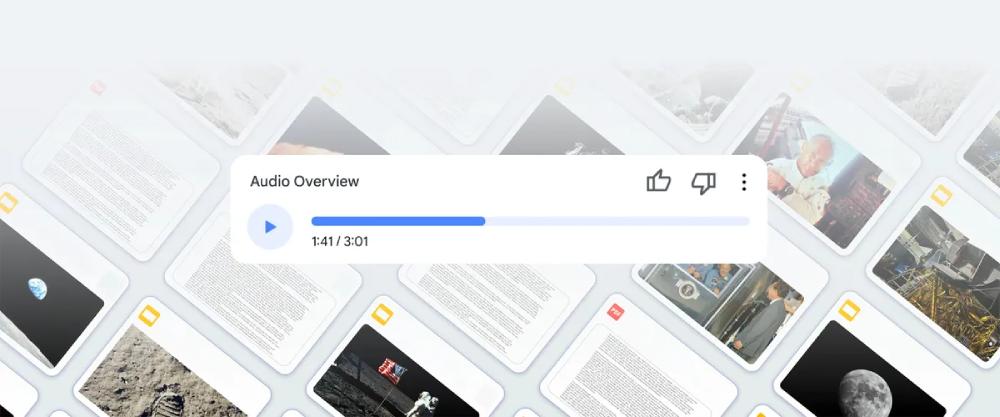 |
What's New | NotebookLM is Google Labs' new tool that converts uploaded documents into AI-generated audio discussions in podcast format. It transforms text from PDFs, Google Docs, and Slides into podcast-style conversations between two AI hosts.
This approach aims to enhance information retention through auditory learning.
How it works
The system uses Gemini 1.5's multimodal capabilities to process various input formats. It analyzes content, extracts key information, and generates responses grounded in the source material. The system employs advanced text-to-speech synthesis for AI host voices. It generates contextually relevant dialogue, maintaining coherence with source material. However, occasional inaccuracies may occur, and user interaction during playback is not yet supported. NotebookLM provides citations and relevant quotes to support its outputs. Audio Overview's core innovation lies in its AI-driven dialogue synthesis. The system creates a conversational summary of uploaded content, with AI agents discussing main points and connecting topics. The tool's technical specifications as reported by various users:
Context window capacity: ~50 PDFs Language support: Currently English-only Input formats: PDFs, Google Docs, Slides, web URLs Output: Downloadable audio file NotebookLM's architecture manages large input volumes and cross-references information between multiple documents. However, audio generation for extensive notebooks can take several minutes, indicating computational intensity.
NotebookLM also offers additional features like instant study guide creation and briefing document generation. It prioritizes user privacy by not using personal data for training. Google has established a Discord community with employee moderators to gather user feedback for continuous improvement. | |
|
Read more
|
|
|
|
| Comet Releases Opik: Open-Source LLM Observability and Evaluation Tool |
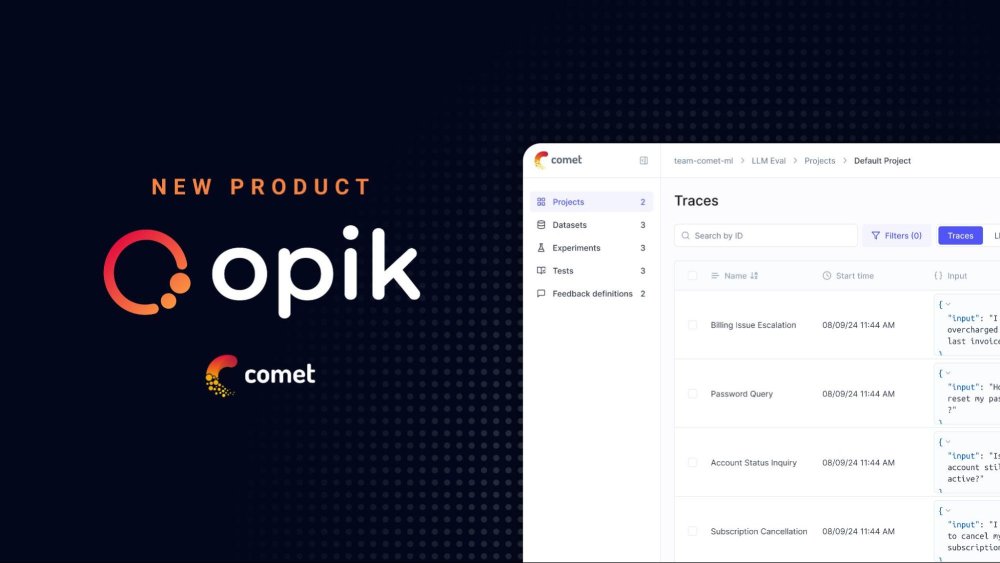
Opik, just released by Comet, is an open-source platform for LLM evaluation. It lets developers track prompts and responses throughout the development and production cycles. Define and run tests to check your LLM apps for hallucinations and accuracy before deployment. Opik integrates with OpenAI, Langchain, LlamaIndex, and other popular tools. Add it to your workflow now with just a few lines of code.
Key features:
End-to-end LLM evaluation Prompt and response tracking Pre-deployment testing Native integrations with major LLM tools Minimal setup required Start using Opik today to improve your LLM app's reliability and performance. |
|
Try now
| partner with us |
|
|
|
TRENDING SIGNALS
| OpenAI |
|
⇧ 12,489 Likes | |
AI Video Generation |
|
⇧ 864 Likes | |
AI Video Generation |
|
⇧ 643 Likes | |
LLM |
|
⇧ 410 Likes | |
Microsoft |
|
⇧ 2,800 Likes | | |
|
|
|
|
|
TOP PAPERS
| LLM |
| ⇧ 2,830 Likes |
Problem
LLMs inevitably hallucinate due to fundamental mathematical and logical limitations. The paper proves hallucinations are structural and cannot be eliminated through architectural improvements, dataset enhancements, or fact-checking mechanisms.
Solution
The authors introduce the concept of "Structural Hallucinations" and provide mathematical proofs using computational theory and Gödel's First Incompleteness Theorem. They demonstrate undecidability in key LLM processes: training data completeness, information retrieval, intent classification, output generation, and fact-checking.
Results
The paper proves that every stage of LLM processing has a non-zero probability of producing hallucinations. It illustrates these concepts using popular LLMs (OpenAI, Gemini, Claude) on a specific prompt, showing deviation from expected responses.
| |
Speech Interaction |
|
⇧ 913 Likes |
Problem
LLaMA-Omni addresses the lack of open-source models for low-latency speech interaction with LLMs. Existing solutions either have high latency or require extensive training data and computational resources.
Solution
The researchers propose LLaMA-Omni, built on Llama-3.1-8B-Instruct. It incorporates a speech encoder for understanding and a streaming speech decoder for simultaneous text and speech generation. They created InstructS2S-200K, a dataset of 200K speech instructions and responses, to align the model with speech interaction scenarios.
Results
LLaMA-Omni outperforms previous models in content and style scores. It achieves a response latency as low as 226ms. Training takes less than 3 days on 4 GPUs. The model demonstrates superior speech-text alignment with ASR-WER of 11.61 and ASR-CER of 7.59. | |
Small LLM |
|
⇧ 614 Likes |
Problem
This paper explores the role of small models in the era of LLMs. It addresses the challenges of high computational costs and energy consumption associated with large models, which limit their accessibility for many researchers and businesses. The paper investigates how small models can complement or compete with LLMs in various scenarios.
Solution
The authors systematically examine the relationship between LLMs and small models from two perspectives: collaboration and competition. They analyze how small models can enhance LLMs in tasks like data curation, efficient inference, and deficiency repair. Conversely, they explore how LLMs can improve small models through knowledge distillation and data synthesis.
Results
The study reveals that small models remain highly popular, with BERT-base being one of the most downloaded models. It identifies scenarios where small models are preferable, such as computation-constrained environments, task-specific applications, and situations requiring interpretability. The paper provides valuable insights for practitioners on optimizing resource usage and developing cost-effective systems. |
| |
| |
|
|
MUST READ
| Prompt Engineering | Master LLM prompt evaluations: from basics to advanced techniques, from Anthropic's newly released course. |
⇧ 1,100 Likes |
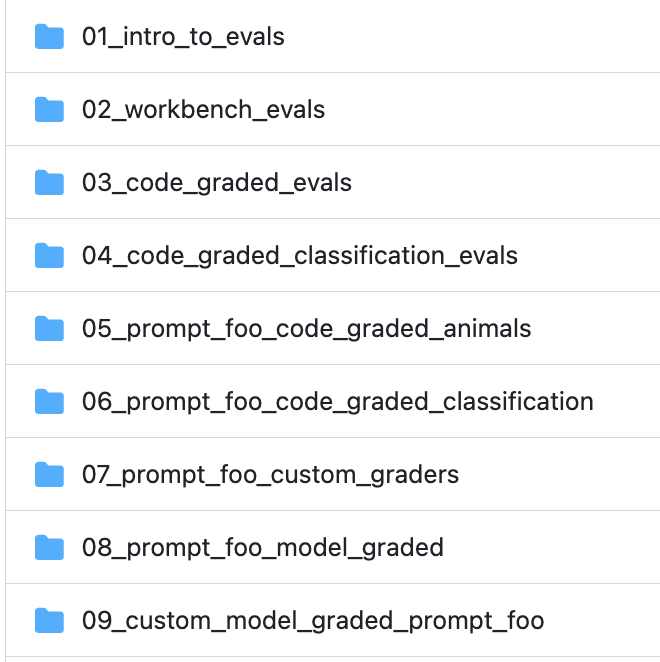 |
Anthropic's newly launched free course on LLM prompt evaluations teaches you how to create and implement effective evaluations for your AI applications. It covers the entire process from designing test cases to iteratively improving prompts based on evaluation results. The course explains different grading approaches including human-based, code-based, and LLM-based methods.
What is LLM prompt evaluations LLM prompt evaluations are systematic tests that measure how well a language model performs on specific tasks. They help developers assess and improve prompt effectiveness, ensuring optimal performance for real-world applications.
The course is 9 chapters long and was created from the playbook that Anthropic uses when the work with large enterprises on their deployments. It covers practically everything you need to know about how to run good prompt evals.
With this GitHub repo you'll learn how to Creating comprehensive test datasets Implementing exact string matching and keyword presence checks Using regular expressions for complex pattern matching Leveraging LLMs for nuanced grading tasks Designing custom rubrics for model-based evaluation Iterating prompts to improve performance metrics Comparing model versions objectively Ensuring quality before and after deployment |
|
Check out the course
|
|
|
|
Looking to promote your company, product, service, or event to 200,000+ AI developers? Let's work together.
|
|
Advertise
|
|
|
|
|
