AI is quietly collapsing into one thing. Claude now plugs into Blender, Adobe, Ableton and more, while GitHub Copilot moves to token-based billing as agentic sessions eat more compute. The tools are merging, the costs are scaling.
And MIT's Platonic Representation Hypothesis explains why: different models, trained on different data, are converging on the same internal map of reality. One backbone, many shadows.
We're not building a zoo of AI tools. We're building one mind.
|
|
Together with
|
·
|

|
|
|
|

|
Today's Author
Lior Alexander. Founder of AlphaSignal and former ML Engineer. Previously built ML systems at Iguazio, Guesty, Enphase, Mila.
|
|
Top News
|
|
|
|
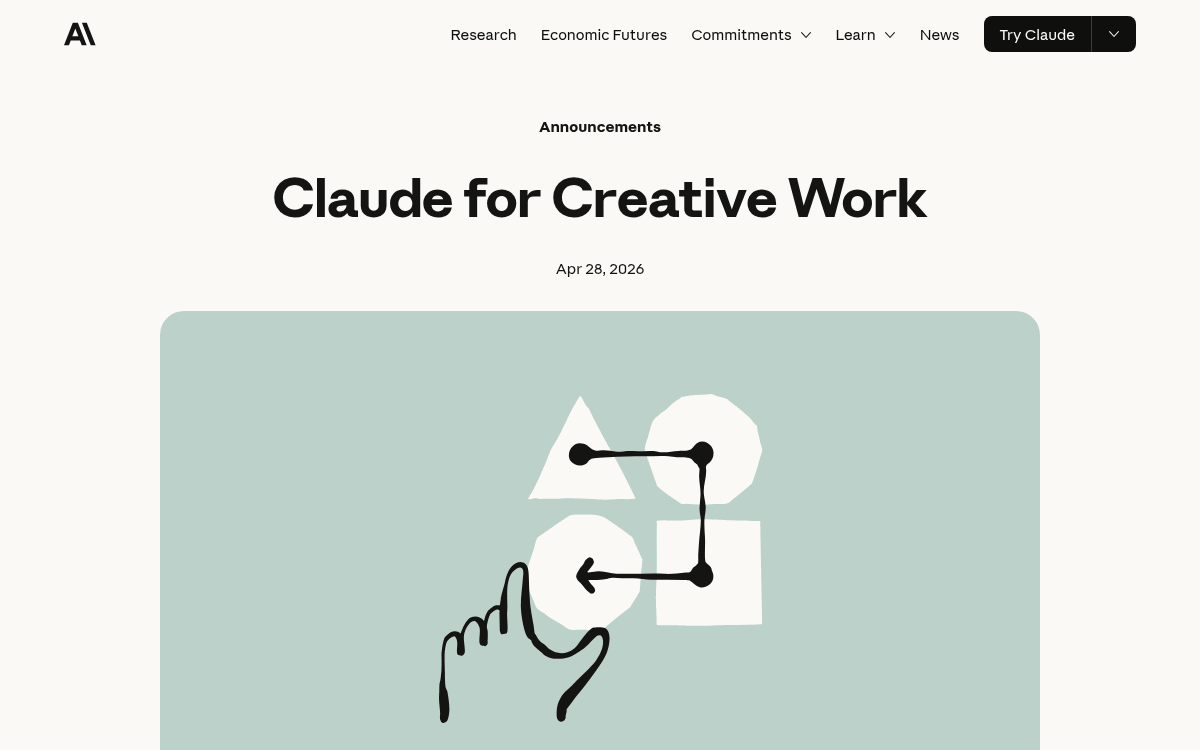
Claude now connects to Blender, Adobe, Canva, Ableton, and more creative tools
|
|
7,294 Likes
|
|
Claude just got 9 new connectors for creative tools, and this one is worth paying attention to. The idea is simple: instead of switching between apps, you stay in Claude and talk to your tools directly. The Blender connector gives you a natural-language interface to its Python API, meaning you describe what you want instead of writing scripts from scratch. You can analyze and debug entire Blender scenes, build custom scripts to batch-apply changes to objects, and add new tools directly to Blender's interface. Here's the full list of what launched: - Adobe Creative Cloud: orchestrates multi-step workflows across Photoshop, Illustrator, Firefly, Premiere, and more
- Autodesk Fusion: create and modify 3D models through conversation
- Affinity by Canva: automates batch image adjustments, layer renaming, and file export
- Splice: search its catalog of royalty-free samples from within Claude
- Ableton, SketchUp, and Resolume also included
Because the connector is built on MCP, it is accessible to other AI models too, not just Claude. To get started, install any connector from Claude's Settings under Connectors.
|
|
|
|
Presented by WorkOS
|
|
How SSO works and the fastest way to add it
|
|
SSO is table stakes for enterprise deals, but building it into your app yourself means writing SAML controllers, parsing XML assertions, and handling IdP-specific quirks for each provider.
Learn how SAML flows work, the tradeoffs between building or buying, and best practices for security, routing, and UX. Or skip the hassle and add SSO with WorkOS.
|
|
|
|
Top Repo
|
|
|
|
OpenAI ships open-source voice app built on gpt-realtime-1.5
|
|
5,755 Likes
|

|
OpenAI just dropped realtime-voice-component, an open-source React package that lets users control your app with their voice in real time. Here is the core idea. Instead of clicking buttons, users just talk. The app listens, understands the intent, and updates its own state. Your app stays in charge of what actually changes. What you can build with it: - Forms users fill out by speaking
- Theme or settings switchers triggered by voice
- Multi-step flows where voice replaces tapping through screens
It runs on gpt-realtime-1.5 under the hood. You define narrow actions your app can take, the voice layer calls them, and your existing state logic handles the rest. No rewiring your whole app. To try it: fork the repo, add your OPENAI_API_KEY, run npm run demo, and you will see a live chess and form demo instantly. The repo is Apache-2.0 licensed, so it is free to use and modify.
|
|
|
|
Presented by Agent Field AI
|
|
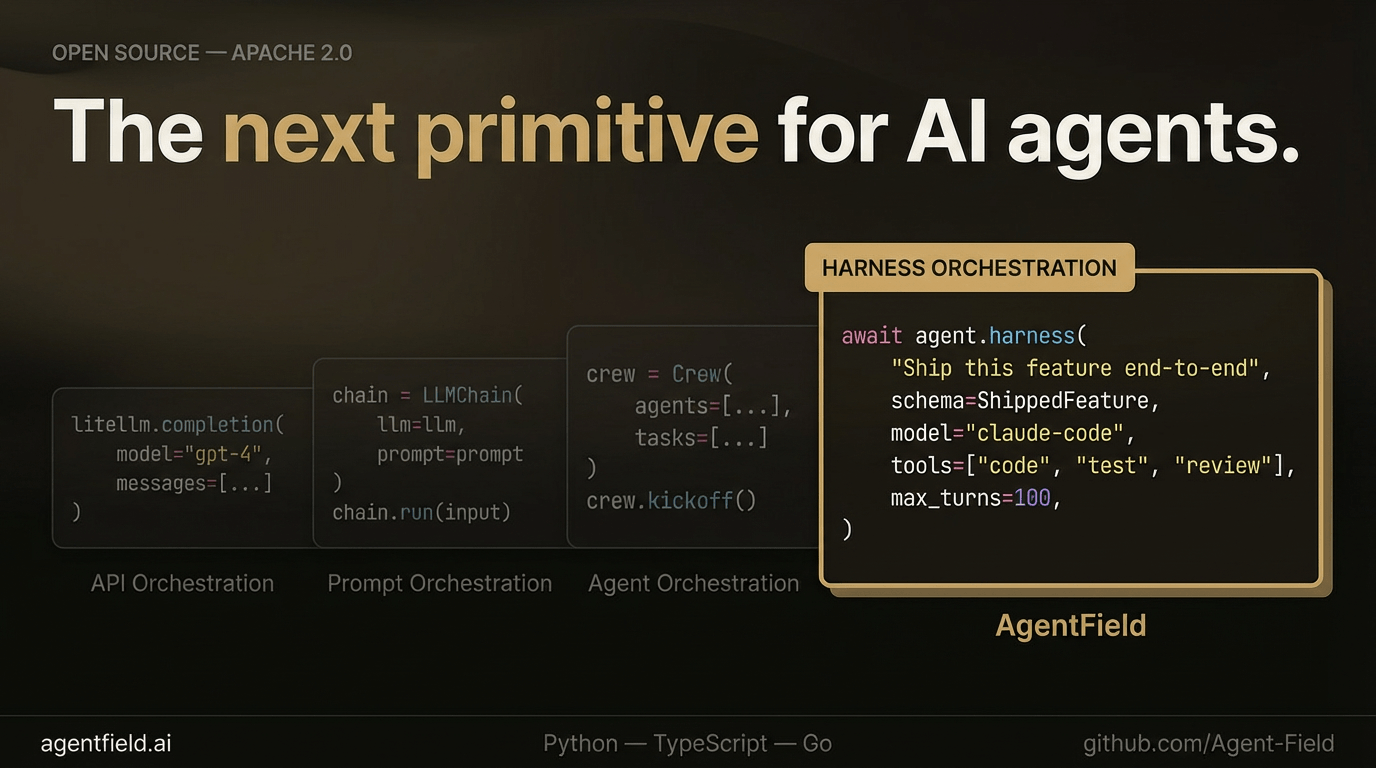
The next primitive for AI agents
|
|
Agents as APIs wasn't enough. AgentField's harness primitive composes your fav Harness systems into complex autonomous software. Fork and use SWE-AF (100+ harness software factory) or cloud-security agents out of the box. Apache 2.0, Python/TS/Go.
|
|
|
|
Top Repo
|
|
|
|
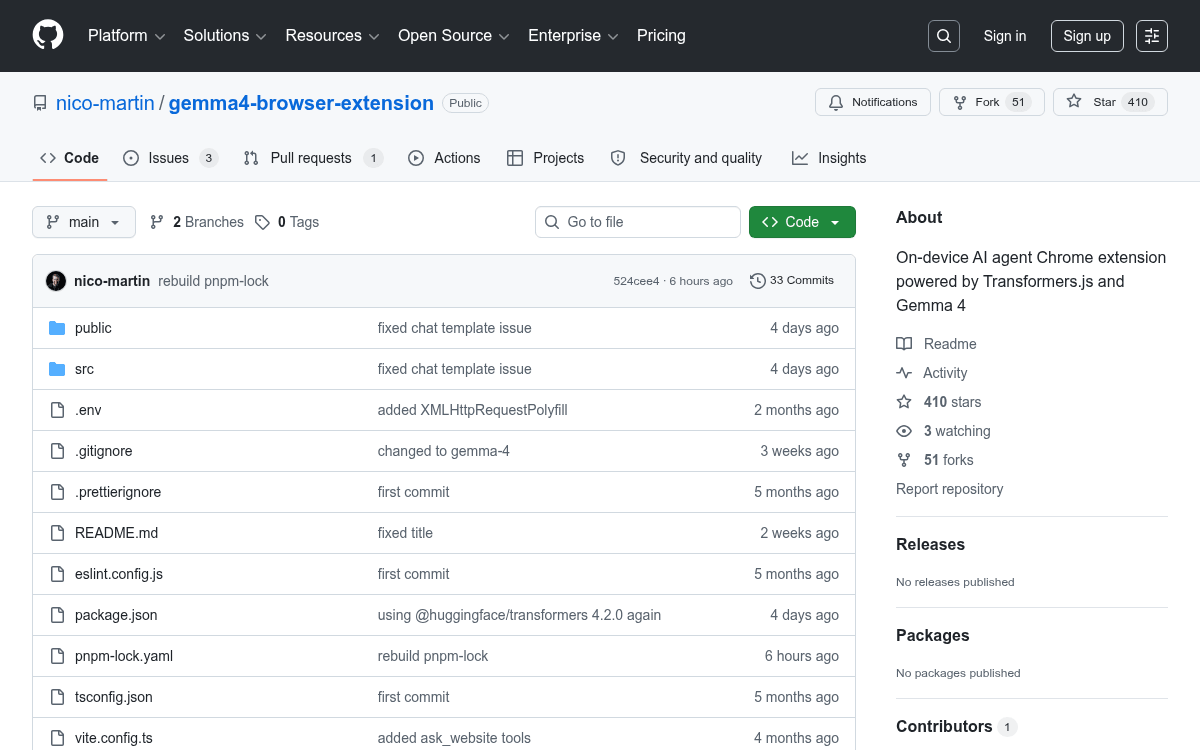
Google Gemma 4 powers a fully local browser agent that needs no server
|
|
5,422 Likes
|
|
An AI agent that lives entirely inside your browser. No cloud. No API keys. No server bills. Just your GPU doing the work, locally. It runs on Gemma 4 E2B, a small but capable AI model converted to run natively in Chrome using WebGPU (your graphics card doing AI math). Transformers.js handles the heavy lifting so the model never leaves your machine. Here is what you can actually do with it: - Ask it to find something from your browsing history using plain English, no exact keywords needed
- Ask it to summarize or search the page you are currently on
- Tell it to open, switch, or close tabs by just describing what you want
Models download once on first use, then stay cached. The privacy angle is real: your tabs, history, and page content never leave your device. To try it: install from the Chrome Web Store or clone the repo, run pnpm install and pnpm run build, then load the dist folder as an unpacked Chrome extension.
|
|
|
At Alpha Signal, our mission is to build a sharp, engaged community focused on AI, machine learning, and cutting-edge language models, helping over 200,000 developers stay informed and ahead. We're passionate about curating the best in AI, from top research and trending technical blogs to expert insights and tailored job opportunities. We keep you connected to the breakthroughs and discussions that matter, so you can stay in the loop without endless searching. We also work closely with partners who value the future of AI, including employers and advertisers who want to reach an audience as passionate about AI as we are.
Our partnerships are based on shared values of ethics, responsibility, and a commitment to building a better world through technology.Privacy is a priority at Alpha Signal. Our Privacy Policy clearly explains how we collect, store, and use your personal and non-personal information. By using our website, you accept these terms, which you can review on our website. This policy applies across all Alpha Signal pages, outlining your rights and how to contact us if you want to adjust the use of your information. We're based in the United States. By using our site, you agree to be governed by U.S. laws.
|
|
|
Looking to promote your company, product, service, or event to 250,000+ AI developers?
|
|
|
|
|
