|
Hey,
Your daily briefing is ready. You can finally take a break from the AI firehose.
Our algos spent the night splitting signal from noise and pulled the top news, models, papers, and repos.
Here’s the must-read:
|

|
Today's Author
Lior Alexander. Founder of AlphaSignal and former ML Engineer.
Previously built ML systems at Iguazio, Guesty, Enphase, Mila.
|
|
Top News
|
|
|
|
Google releases MedGemma 1.5 and MedASR as open medical AI models supporting CT, MRI, and speech
|
|
6,724 Likes
|
|
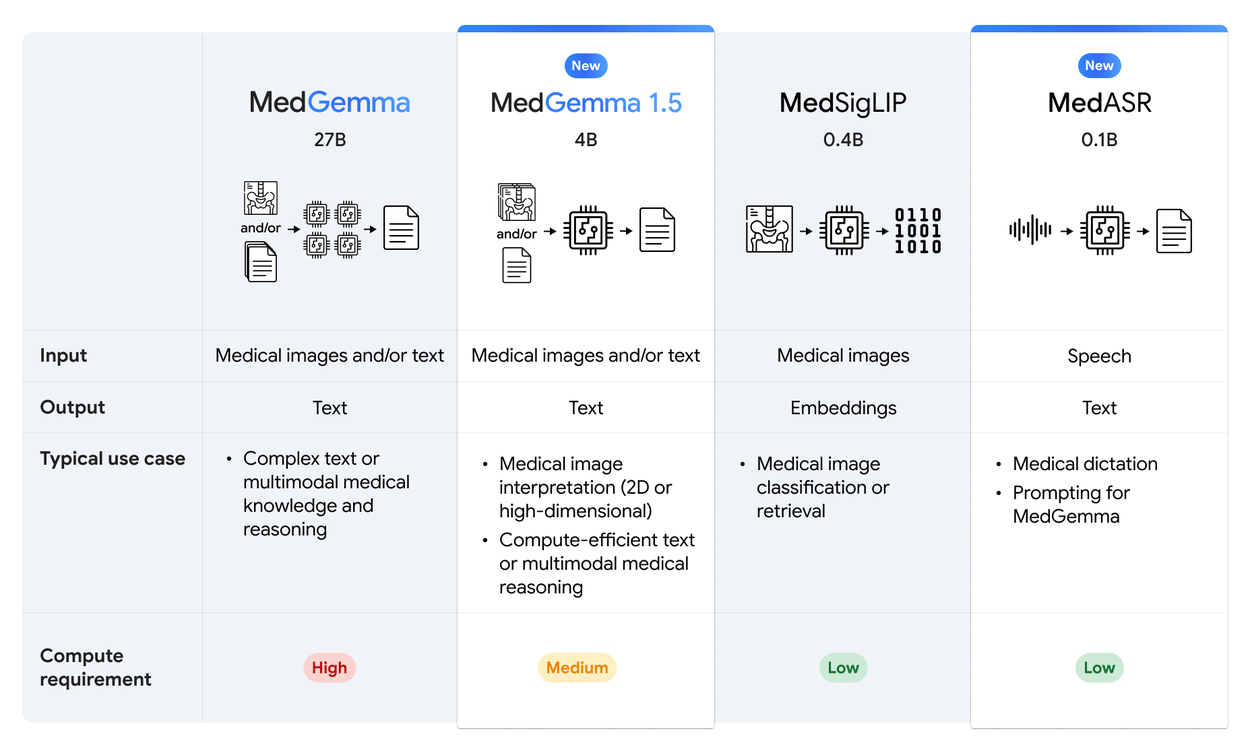
Medical data spans scans, reports, and dictation, but most models still focus on single images or plain text. The key update is a 4B multimodal model that runs offline and supports 3D CT and MRI volumes.
The core problem is mismatch between real clinical data and model inputs. MedGemma 1.5 addresses this by extending a medical foundation model to high-dimensional imaging while keeping compute requirements low.
MedASR fills the speech gap by converting medical dictation into structured text that pairs with MedGemma for reasoning.
Core features
-
3D imaging support for CT, MRI, and whole-slide histopathology
-
Offline-capable 4B model plus 27B variant for text-heavy workloads
-
Medical document extraction from lab reports and EHR-style text
-
Medical ASR tuned for clinical dictation and spoken prompts
Reported results
-
CT accuracy improves 58% → 61%, MRI accuracy 51% → 65%
-
Histopathology ROUGE-L increases 0.02 → 0.49
-
Chest X-ray anatomy IoU improves 3% → 38%
-
Medical dictation WER drops 12.5% → 5.2% versus Whisper
Availability
|
|
|
|
Presented by Shadeform AI
|
|
NVIDIA leverages Shadeform to increase GPU capacity on the Brev platform
|
|
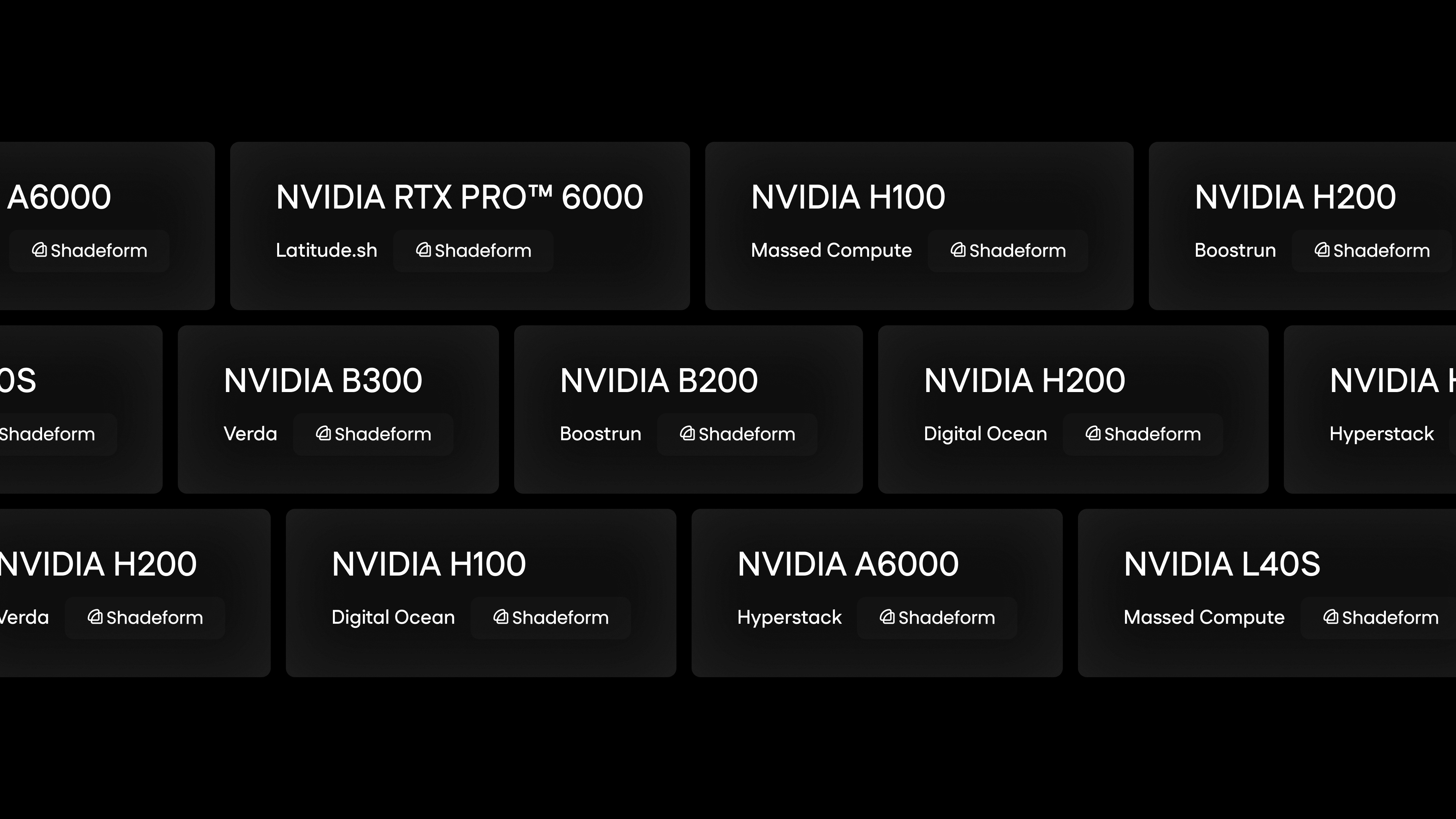
NVIDIA and Shadeform have announced a new collaboration to greatly increase GPU capacity for NVIDIA’s AI developer platform, NVIDIA Brev.
The collaboration integrates Shadeform’s unified API for compute into NVIDIA Brev, connecting the platform to GPU infrastructure from Shadeform’s network of over 20 vetted cloud providers.
With Shadeform acting as a unified infrastructure layer, NVIDIA Brev now offers:
-
Over 3.5x more capacity for the most in-demand GPUs
-
150+ new GPU offerings, including the new NVIDIA Blackwell Ultra B300
-
Significantly expanded region coverage across North America, Europe, Asia and Australia
|
|
|
|
partner with us
|
|
Top Repo
|
|
|
|
OpenCode debuts a fully open-source coding agent connecting to over 75 AI model providers
|
|
68,427 Stars
|
|
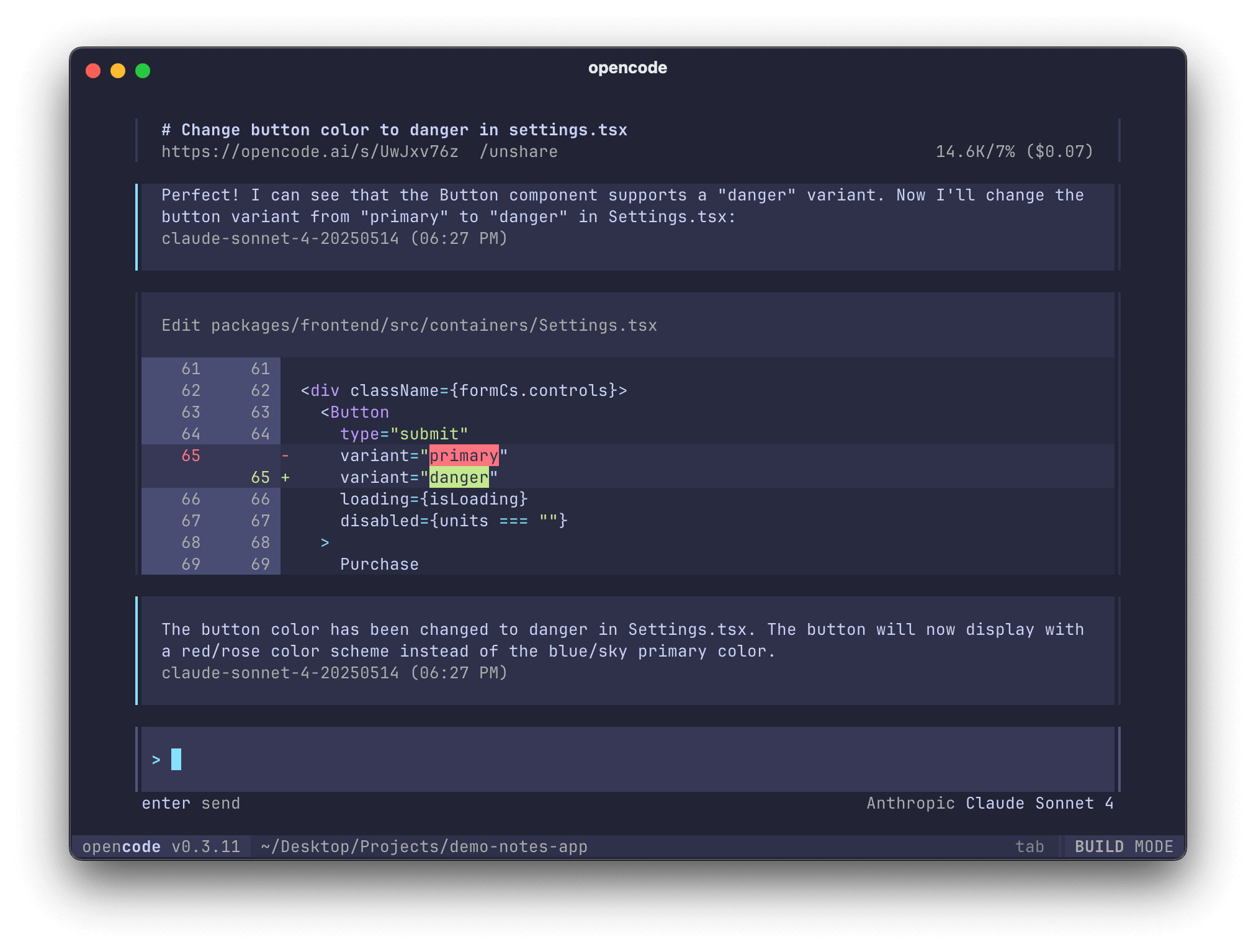
OpenCode starts from a familiar frustration: AI coding tools feel powerful, but each one locks you into a specific editor, workflow, or model provider.
Teams juggle terminals, IDE plugins, desktop apps, and multiple subscriptions, while context and tooling fragment across tools. OpenCode approaches this problem from the agent layer, not the model layer.
The key idea is simple. Run one local coding agent that works everywhere and talks to any model you choose. OpenCode executes locally, manages context itself, and delegates intelligence to external models only when needed.
Language Server Protocol support gives the agent structured access to code symbols and errors, not just raw text. Multi-session support lets you run parallel agents on the same repository without shared state conflicts.
Core features
-
Local agent process with filesystem access and isolated session context
-
Automatic LSP loading for language-aware code navigation and diagnostics
-
Multi-session agents running in parallel on a single project
-
Model-agnostic routing across 75+ providers, including local models
How to use
-
Install once via a single shell command
-
Run in terminal, desktop app, or IDE extension with identical behavior
-
Connect free models or existing Claude, ChatGPT, or other provider accounts
|
|
|
Presented by Agent Field AI
Building AI Backends for Multi-Agent Systems at Scale
Workflows chain prompts. AI backends orchestrate intelligence. 1,000 agents with identity, coordination, and audit trails need infrastructure, not pipelines.
AgentField: Open-source Kubernetes-style control plane for production AI. Learn how we scaled deep research to thousands of agents, then build your own.
|
|
|
Top Paper
|
|
|
|
NVIDIA publishes TTT-E2E, a training method allowing LLMs to train on incoming context while maintaining constant runtime
|
|
39932 Likes
|
|
Large language models now ship with huge context windows, yet they still fail to learn from what they read.
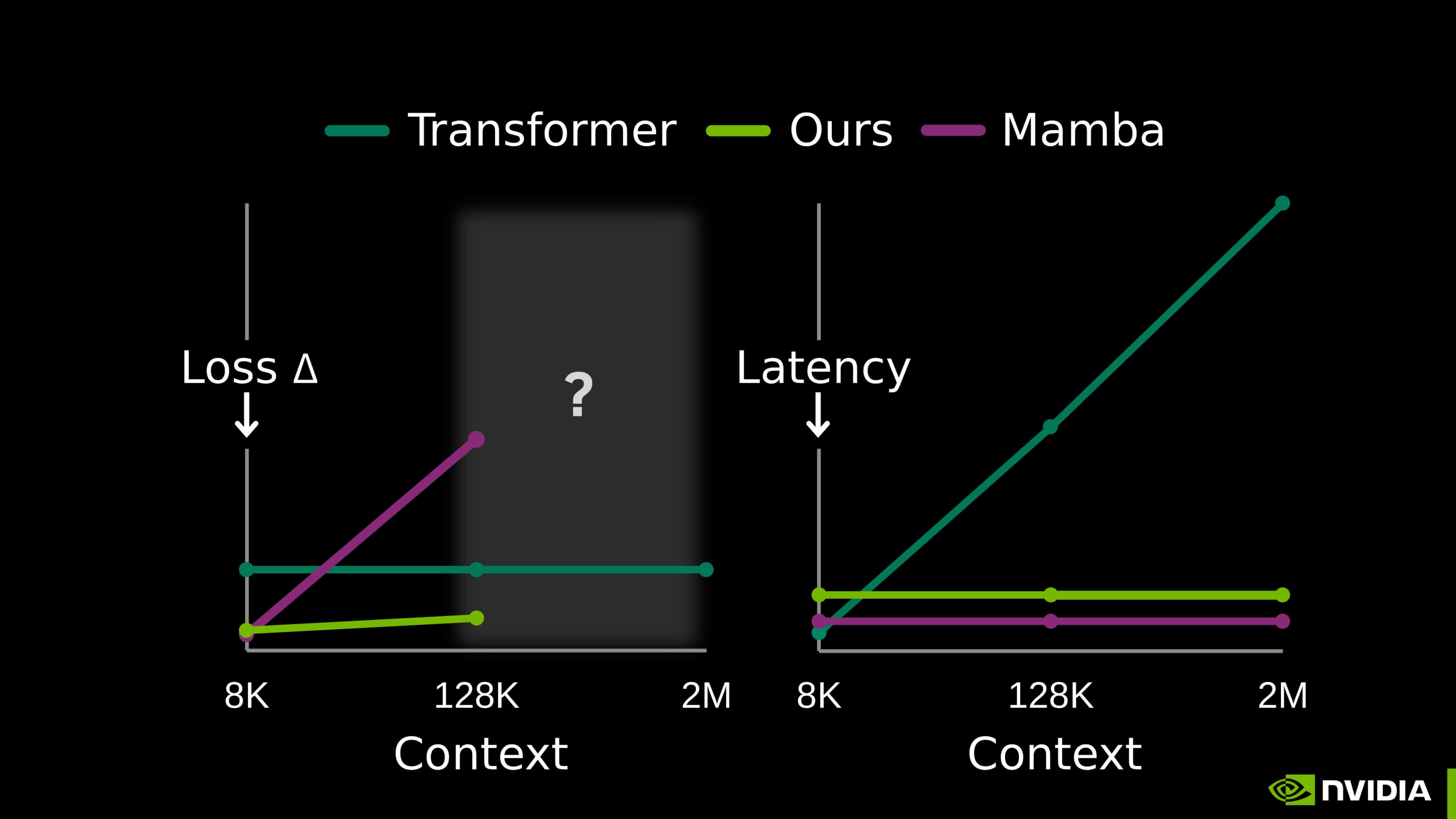
NVIDIA addresses this gap with End-to-End Test-Time Training (TTT-E2E), a method that lets LLMs keep learning during inference. The most striking result is constant inference latency at very long context lengths while matching full-attention loss.
The problem starts with how memory works in today’s models. Full-attention Transformers retain every token but slow down as context grows. Constant-time alternatives run fast but forget useful information.
NVIDIA’s insight is to treat context as training data. The model updates its own weights through next-token prediction while reading, so it compresses context into parameters instead of storing tokens.
How it works
-
Runs gradient updates at inference using next-token prediction on the current context
-
Uses meta-learning during training to prepare weights for test-time updates
-
Updates weights continuously as new tokens arrive
Results
-
Constant per-token latency regardless of context length
-
2.7× faster at 128K tokens and 35× faster at 2M tokens on NVIDIA H100
-
Uses a 3B-parameter model trained on 164B tokens with loss matching full attention
|
|
|
At Alpha Signal, our mission is to build a sharp, engaged community focused on AI, machine learning, and cutting-edge language models, helping over 200,000 developers stay informed and ahead. We’re passionate about curating the best in AI, from top research and trending technical blogs to expert insights and tailored job opportunities. We keep you connected to the breakthroughs and discussions that matter, so you can stay in the loop without endless searching. We also work closely with partners who value the future of AI, including employers and advertisers who want to reach an audience as passionate about AI as we are.
Our partnerships are based on shared values of ethics, responsibility, and a commitment to building a better world through technology.Privacy is a priority at Alpha Signal. Our Privacy Policy clearly explains how we collect, store, and use your personal and non-personal information. By using our website, you accept these terms, which you can review on our website. This policy applies across all Alpha Signal pages, outlining your rights and how to contact us if you want to adjust the use of your information. We’re based in the United States. By using our site, you agree to be governed by U.S. laws.
|
|
|
Looking to promote your company, product, service, or event to 250,000+ AI developers?
|
|
|
|
|
