Tokyo-based AI R&D lab applying neuroevolution and collective intelligence to foundation model development. Key research includes Evolutionary Model Merge (gradient-free model combination via genetic algorithms), The AI Scientist (fully automated ML research pipeline), AB-MCTS (multi-model inference-time scaling), and the Continuous Thought Machine, a non-Transformer architecture with temporal reasoning. Post-training focus for Japanese-language sovereign AI.
Sakana AI releases JFinBench, a 321-question Japanese finance benchmark built from 2026 certification exams that exposes a persistent gap between open-weight and proprietary models.
Sakana AI unveils Sawara, a from-scratch Japanese foundation model, alongside a three-pillar strategy spanning pre-training, post-training, and orchestration.
Sakana AI released The Agentic Scientist, an open-source scaffold that wraps coding agents like Claude Code and Codex into a rigorous end-to-end research loop.
Sakana AI's MASS method lets a single 27B model act as its own team, judge, and teacher, boosting score-per-token by up to 1.6x on research benchmarks.
Sakana AI and the University of Tokyo show that a vision language model can plan robot motions more reliably by testing and refining candidate trajectories in simulation before touching the real robot.
Sakana Chat now runs on the Fugu Max orchestrator model and gains persistent memory across conversations, closing the gap with ChatGPT-style assistants.
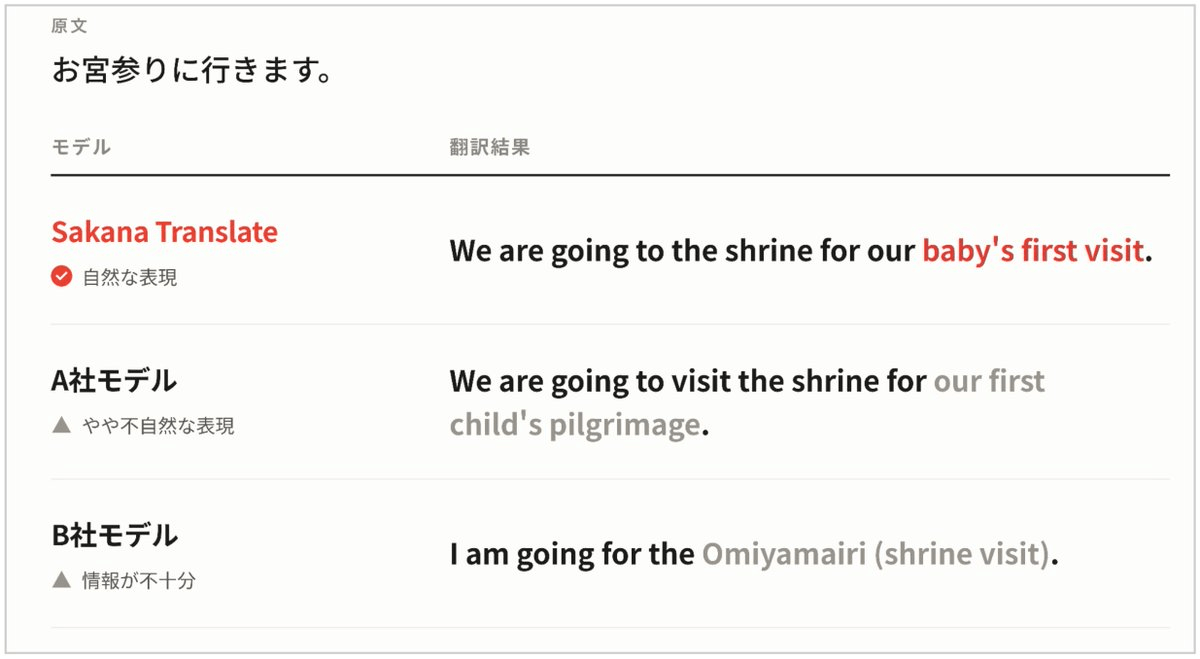
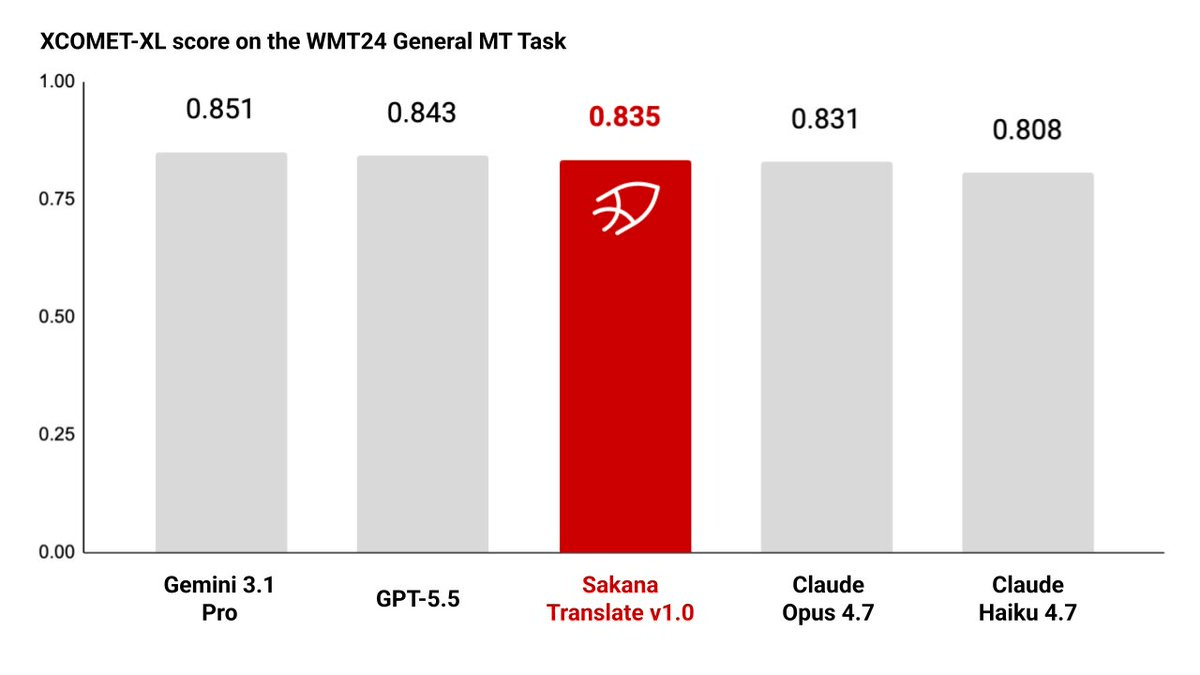
Sakana AI upgraded its free JP-EN-ZH translator to the new Namazu model, beating Google Translate, DeepL, and Claude Opus 4.8 in head-to-head evaluations.
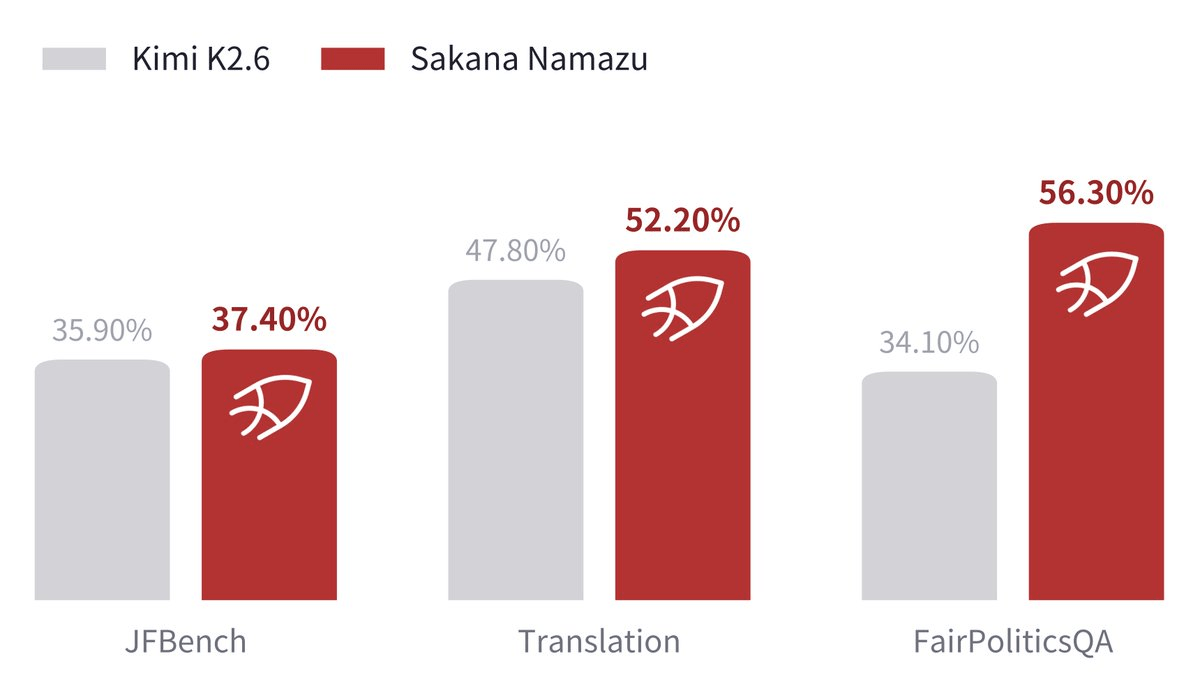
Sakana AI opens its Japanese-specialized Namazu LLM as an API, built on Kimi K2.6 with Japan-specific fine-tuning, built-in web search, and OpenAI-compatible endpoints.
Sakana AI and NYU release Dream-Cubed, a 30-billion-block Minecraft dataset and family of 3D diffusion models that generate infinitely large, fully playable worlds with block-level control.
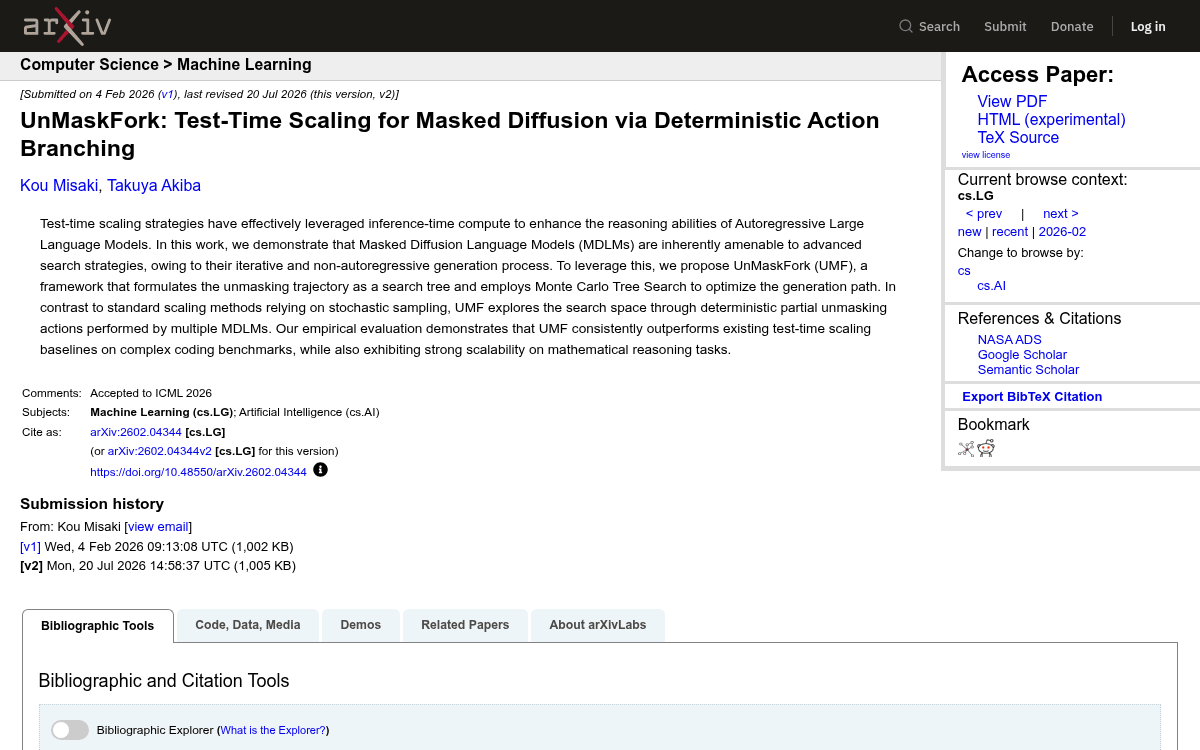
Sakana AI's UnMaskFork uses MCTS and multi-model collaboration to unlock test-time scaling for diffusion language models, beating all baselines on coding benchmarks without any extra training.
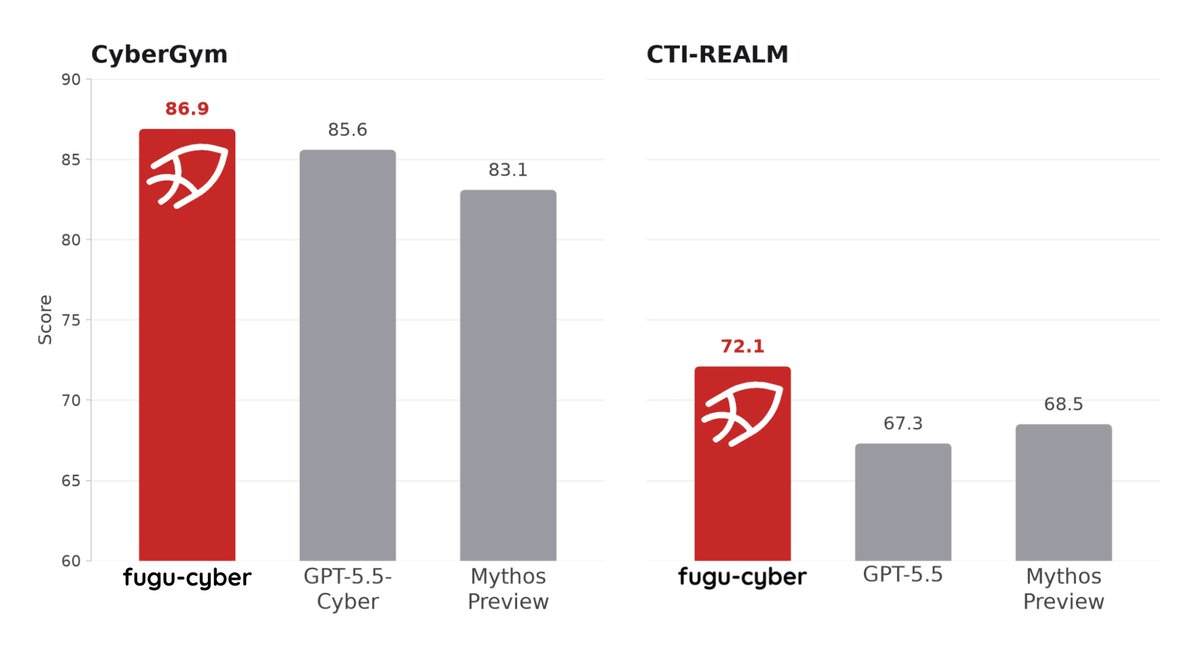
Sakana AI's Fugu-Cyber matches GPT-5.5-Cyber on security benchmarks by orchestrating specialist agents -- but argues raw scores are only half the story
A new paper accepted at ALIFE 2026 shows biologically constrained neural networks can learn competitively — without backpropagation's weight transport trick — across image classification and reinforcement learning.
Sakana AI integrates NVIDIA's Nemotron open model family into its Fugu multi-agent orchestrator, creating a feedback loop that could redefine how open models get deployed in production.
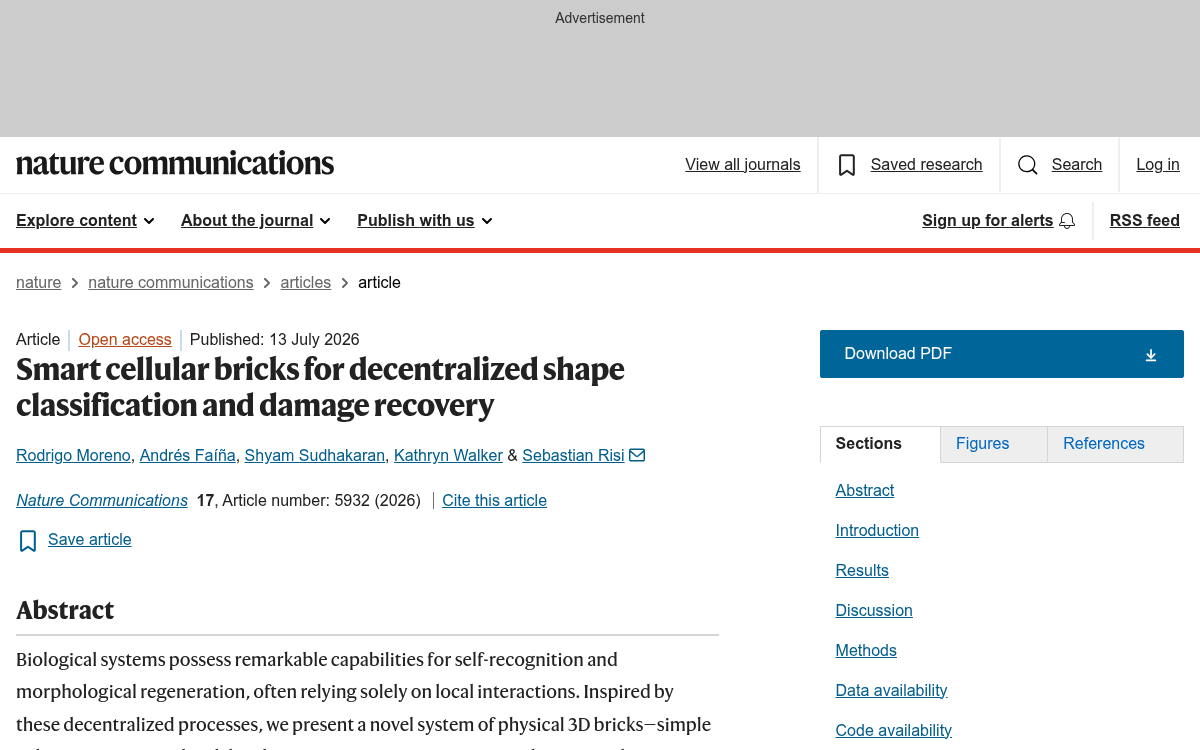
Sakana AI publishes in Nature Communications: physical bricks running identical tiny neural nets collectively recognize their own 3D shape and guide self-repair, with no central controller and no brick knowing its position.
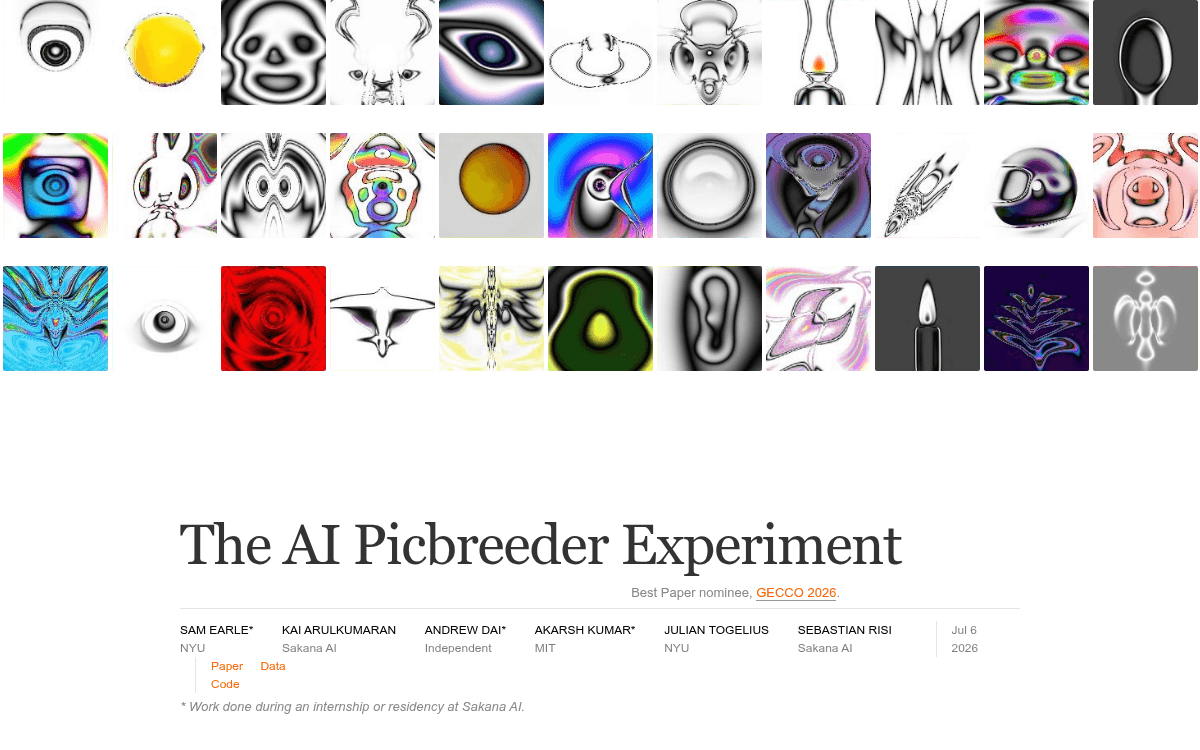
Sakana AI replaced human users in the classic Picbreeder image-evolution experiment with VLM agents, revealing a fundamental gap in AI open-ended creativity.
Sakana AI's Sheaf-ADMM fuses distributed optimization theory and algebraic topology to build transparent, coordination-native neural networks accepted at ICML 2026
Sakana AI's Fugu lands in OpenCode, the same tool used to build it — a multi-agent orchestration system that beats frontier models by coordinating them
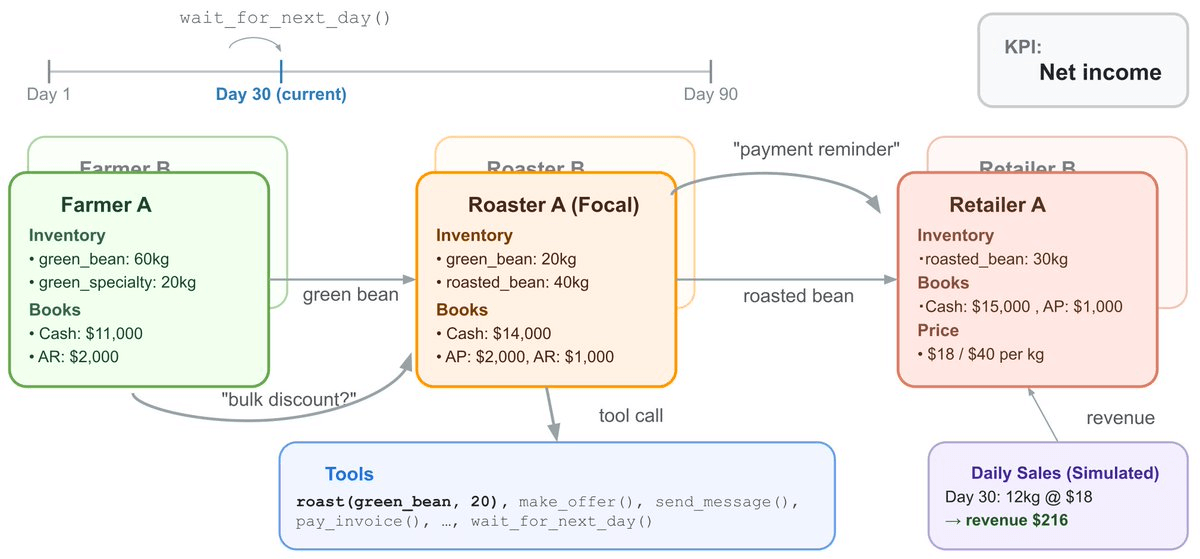
Sakana AI's CoffeeBench puts LLM agents in charge of a coffee supply chain for 90 days — and the results reveal surprising gaps in long-horizon decision-making
Sakana AI's Fugu Ultra is now on OpenRouter — a 7B orchestrator that routes across frontier models to match Claude Fable 5 and Mythos on benchmarks, without training a single frontier model.
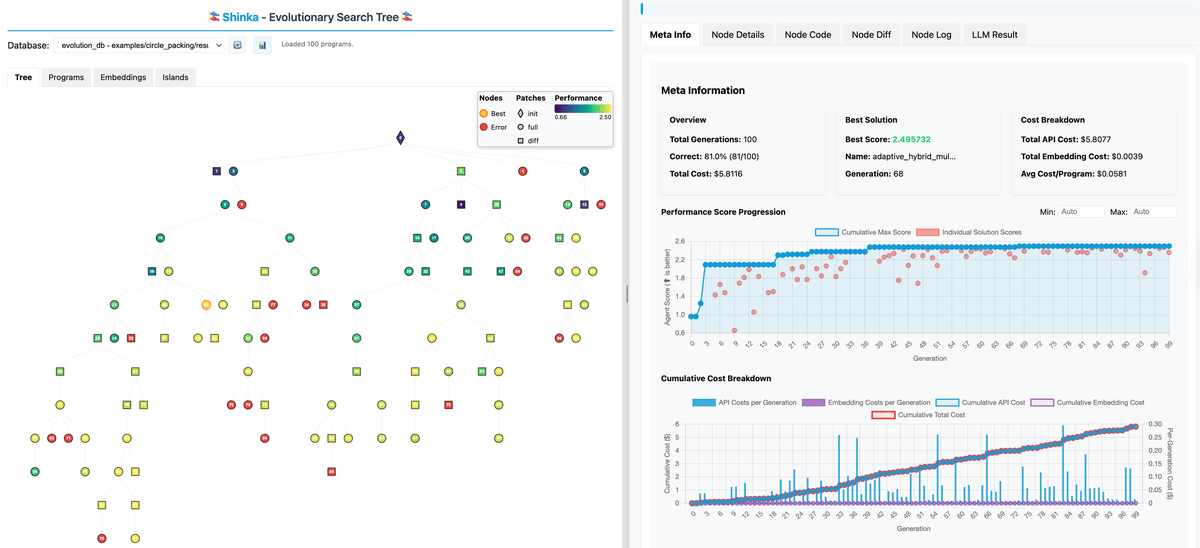
SakanaAI's open-source ShinkaEvolve uses LLM-guided evolution to discover state-of-the-art algorithms with orders of magnitude fewer evaluations than AlphaEvolve.
Sakana AI is consolidating two years of self-improving AI research into a dedicated Tokyo lab betting that sample efficiency, not raw scale, unlocks recursive self-improvement.
Sakana AI teams up with a private OSINT outfit run by two of Japan's best-known security analysts to scale satellite and open-source intelligence work.
Sakana AI's DiffusionBlocks trains neural networks one block at a time, cutting GPU memory proportionally while matching end-to-end performance across five architectures