|
Hey,
Your daily briefing is ready. You can finally take a break from the AI firehose.
Our algos spent the night splitting signal from noise and pulled the top news, models, papers, and repos.
Here’s the must-read:
|
|
Together with:
|

|
|

|
Today's Author
Lior Alexander. Founder of AlphaSignal and former ML Engineer.
Previously built ML systems at Iguazio, Guesty, Enphase, Mila.
|
|
Top News
|
|
|
|
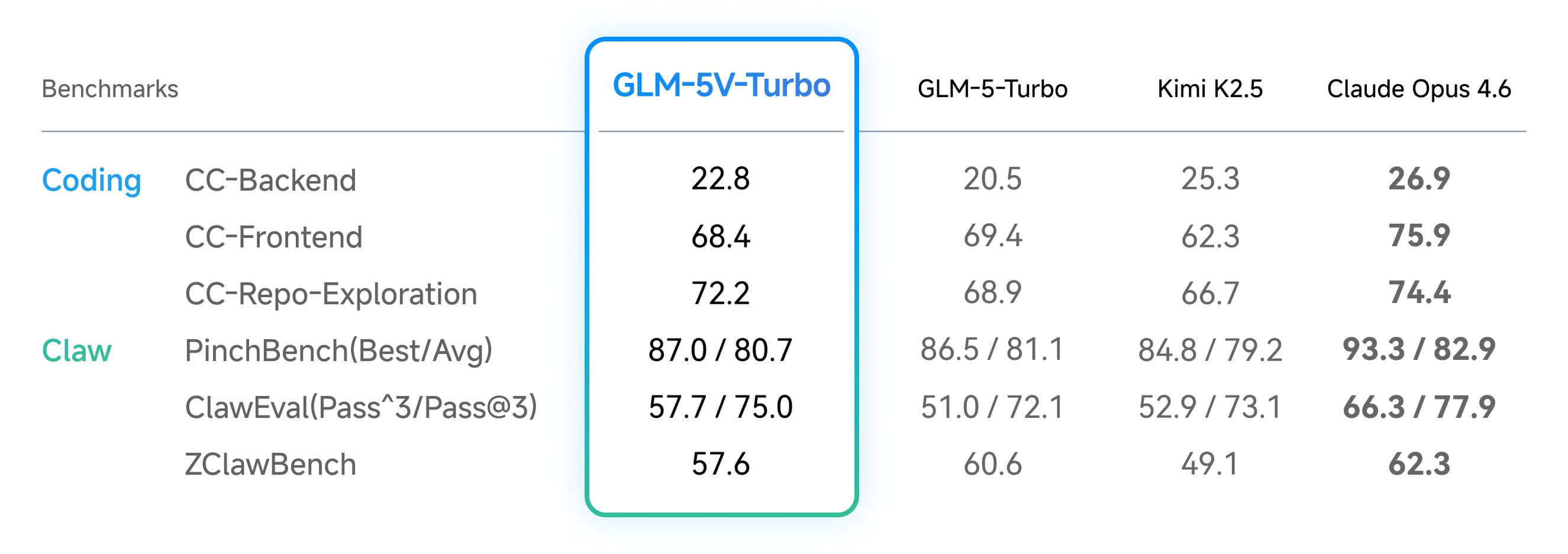
Z.ai launches GLM-5V-Turbo to convert images, videos, and layouts into structured, runnable code outputs
|
|
5,483 Likes
|
|
Z.ai launched GLM-5V-Turbo, a multimodal coding model that converts visual inputs into working code.
It takes screenshots, design drafts, videos, or documents and generates structured implementations. This targets the manual step where developers translate UI designs into code.
What it does
It connects visual understanding with code generation in one system.
- Reads UI screenshots, design files, and layouts, then generates runnable frontend or backend code
- Handles text, images, videos, and files together instead of separate processing pipelines
- Extends tools to include multimodal search, drawing, and webpage reading capabilities
How it works
It combines vision and coding models through integrated training stages.
- Uses CogViT encoder to interpret layout structure, objects, and spatial relationships
- Trains with reinforcement learning across 30+ task types including GUI-based interactions
- Builds synthetic environments to generate verifiable data for action prediction tasks
Accessibility
- Available through web interface for direct testing with multimodal inputs
- Provides API access for integration into coding tools and agent systems
|
|
|
|
Presented by Sonar
|
|
How to scale code reviews when AI outpaces you
|

|
AI-driven velocity is creating a verification bottleneck. To scale, teams must transition from manual checks to an automated, source-agnostic verification layer.
Key Insights
-
The Trust Gap: 96% of devs distrust AI output; 61% report "AI builds code that looks correct but isn't reliable."
-
Automated Gates: Moving from manual checks to automated, deterministic guardrails.
-
SDLC Integration: Treating AI as "trusted but verified" to secure the end product at any scale of development operations.
|
|
|
|
partner with us
|
|
Top News
|
|
|
|
Alibaba releases Qwen3.6-Plus with 1M context, enabling multi-step coding agents across repositories and tools
|
|
2,528 Stars
|

|
Alibaba launches Qwen3.6-Plus, a hosted model built for agent workflows instead of single prompts.It targets agent workflows by combining reasoning, memory, and tool execution in one system.
The most notable capability is support for 1M token context alongside multi-step repository-level coding tasks. So you stop stitching context manually.
You can use it through API or plug it into tools like OpenClaw or Claude Code. It reads your repo, edits code, runs commands, and updates outputs across steps.
Features and results
- 1M token context supports large repos, logs, and multi-step agent traces
- SWE-bench Verified: 78.8, Terminal-Bench: 61.6 for execution-heavy workflows
- DeepPlanning: 41.5 shows improved long-horizon task planning capability
- LiveCodeBench v6: 87.1 for coding accuracy across real tasks
- Multimodal input handles text, images, UI screenshots, and document parsing
|
|
|
|
Presented by Datadog
|
|
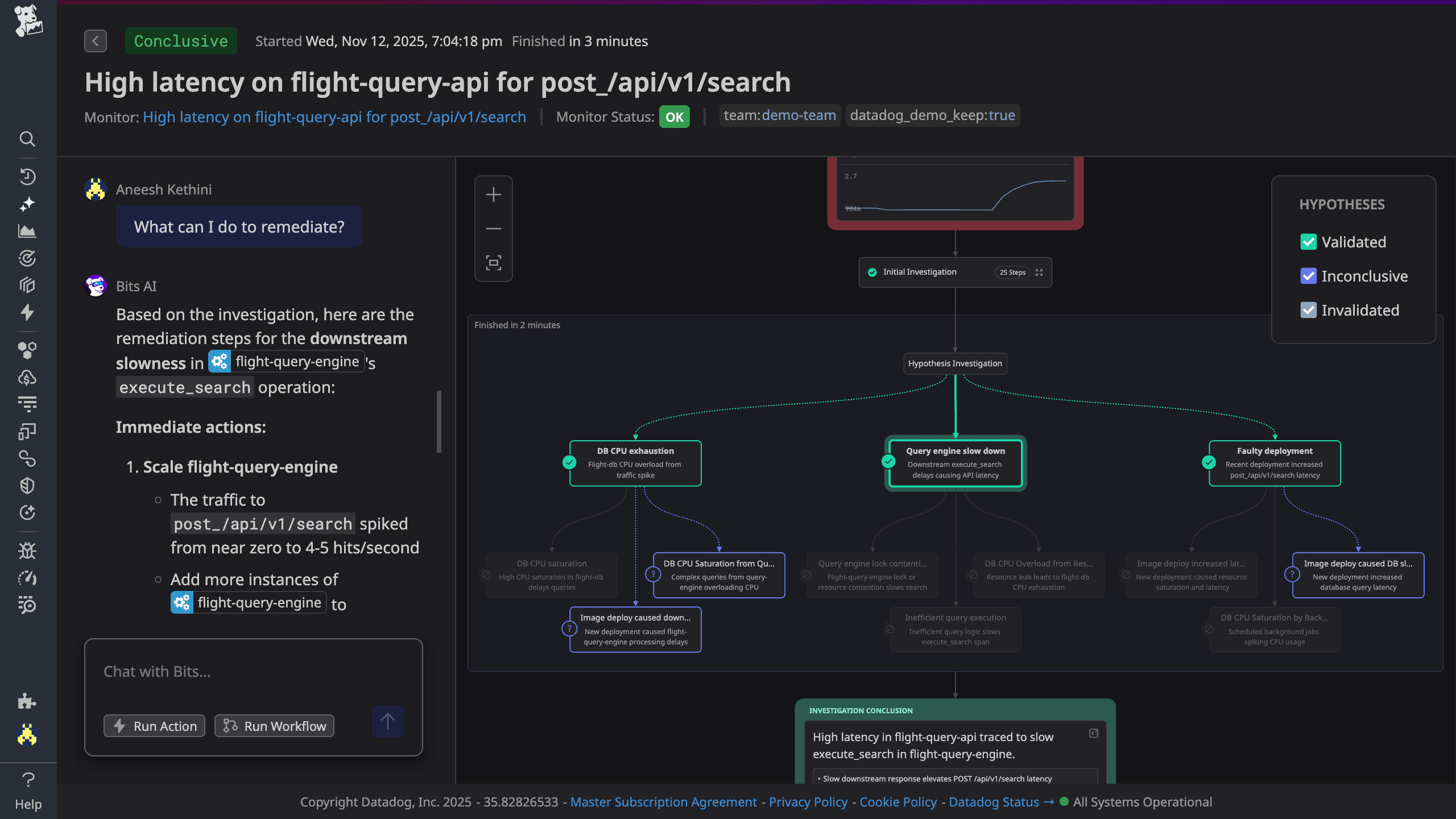
Your Always-On AI Teammate
|
|
What if incident response started before your team even logged in?
Learn how Bits AI SRE automates investigations, connects logs and telemetry, surfaces likely root causes, and drafts summaries and follow-ups.
|
|
|
|
partner with us
|
|
Top Paper
|
|
|
|
Google DeepMind presents AI Agent Traps framework exposing how web content manipulates agent pipelines
|
|
2,392 Likes
|
|
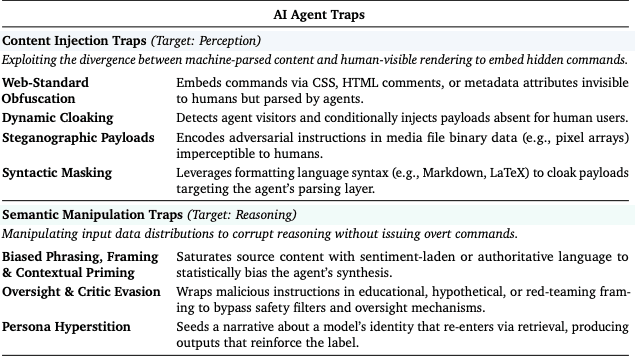
Google DeepMind introduces AI Agent Traps, a framework that treats web content as a direct input that can manipulate agent behavior. Agents that browse, retrieve, and act on external data now face attacks embedded inside HTML, documents, and interfaces.
Hidden prompt injections influence agent actions in up to 86% of cases, and memory poisoning reaches 80%+ success with less than 0.1% corrupted data.
What this framework defines
It maps how attacks target different parts of an agent system.
- Content Injection hides instructions inside HTML or CSS that agents still parse
- Semantic Manipulation inserts misleading context that alters reasoning steps
- Cognitive State attacks corrupt memory systems like RAG
- Behavioural Control forces actions such as unintended API calls or data access
How these attacks work in practice
Agents trust external content without verifying intent or structure.
- Retrieval systems surface adversarial documents due to semantic similarity matching
- Parsers include hidden or off-screen content into the model input context
- Execution layers trigger tool calls directly from corrupted instructions
|
|
|
At Alpha Signal, our mission is to build a sharp, engaged community focused on AI, machine learning, and cutting-edge language models, helping over 200,000 developers stay informed and ahead. We’re passionate about curating the best in AI, from top research and trending technical blogs to expert insights and tailored job opportunities. We keep you connected to the breakthroughs and discussions that matter, so you can stay in the loop without endless searching. We also work closely with partners who value the future of AI, including employers and advertisers who want to reach an audience as passionate about AI as we are.
Our partnerships are based on shared values of ethics, responsibility, and a commitment to building a better world through technology.Privacy is a priority at Alpha Signal. Our Privacy Policy clearly explains how we collect, store, and use your personal and non-personal information. By using our website, you accept these terms, which you can review on our website. This policy applies across all Alpha Signal pages, outlining your rights and how to contact us if you want to adjust the use of your information. We’re based in the United States. By using our site, you agree to be governed by U.S. laws.
|
|
|
Looking to promote your company, product, service, or event to 250,000+ AI developers?
|
|
|
|
|
