|
Hey,
Your daily briefing is ready. You can finally take a break from the AI firehose.
Our algos spent the night splitting signal from noise and pulled the top news, models, papers, and repos.
Here’s the must-read:
|

|
Today's Author
Lior Alexander. Founder of AlphaSignal and former ML Engineer.
Previously built ML systems at Iguazio, Guesty, Enphase, Mila.
|
|
Top News
|
|
|
|
Google introduces open-source Gemma 4 models that run locally and outperform models up to 20× larger
|
|
36,289 Likes
|
|
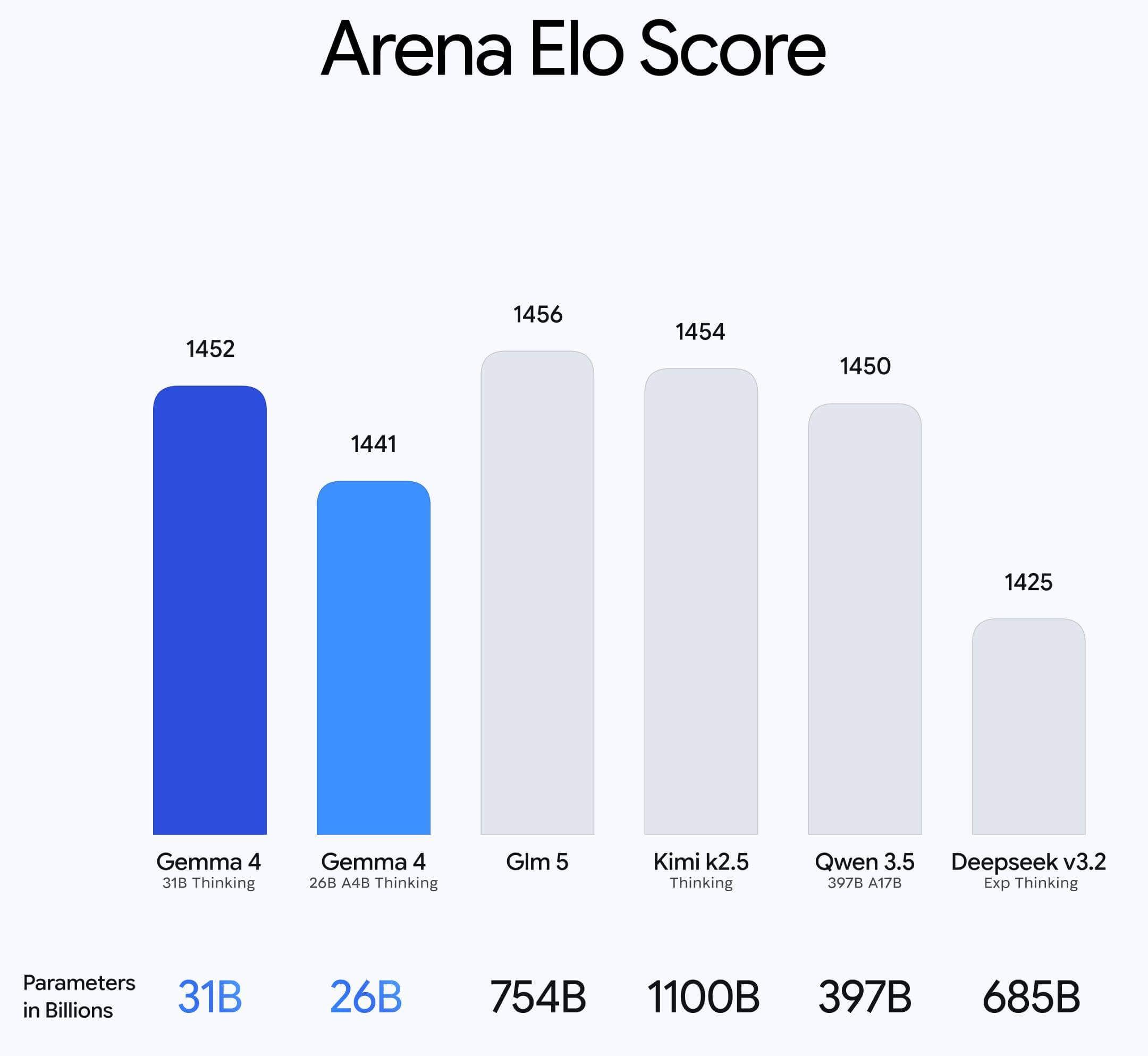
Google DeepMind introduces Gemma 4, a new set of open-weight models you can run on your own hardware. These models focus on reasoning and agent tasks, not just chat.
The 31B model ranks #3 on Arena AI, while the 26B MoE ranks #6 and uses fewer active parameters per step.
What it does
It lets you run advanced AI locally instead of relying on APIs.
- Supports multi-step reasoning for coding, data analysis, and planning tasks
- Native tool use means the model can call APIs and return structured JSON
- Handles long inputs with up to 256K context for full codebases
- Processes text, images, video, and audio in one system
How it works
It combines efficient model design with agent-style execution.
- MoE model uses only a subset of parameters each step to reduce compute
- Dense model uses all parameters for higher output quality
- Keeps track of long task history without reloading context repeatedly
How to use it
You can run, fine-tune, and deploy it across common tools.
- Download weights from Hugging Face or run locally with Ollama
- Use frameworks like Transformers, vLLM, or llama.cpp for inference
- Fine-tune on your data locally or with Google Cloud Vertex AI
|
|
|
|
Top Paper
|
|
|
|
Anthropic finds emotion vectors in Claude Sonnet 4.5 causally influence behaviors like cheating and blackmail
|
|
22,528 Stars
|
|
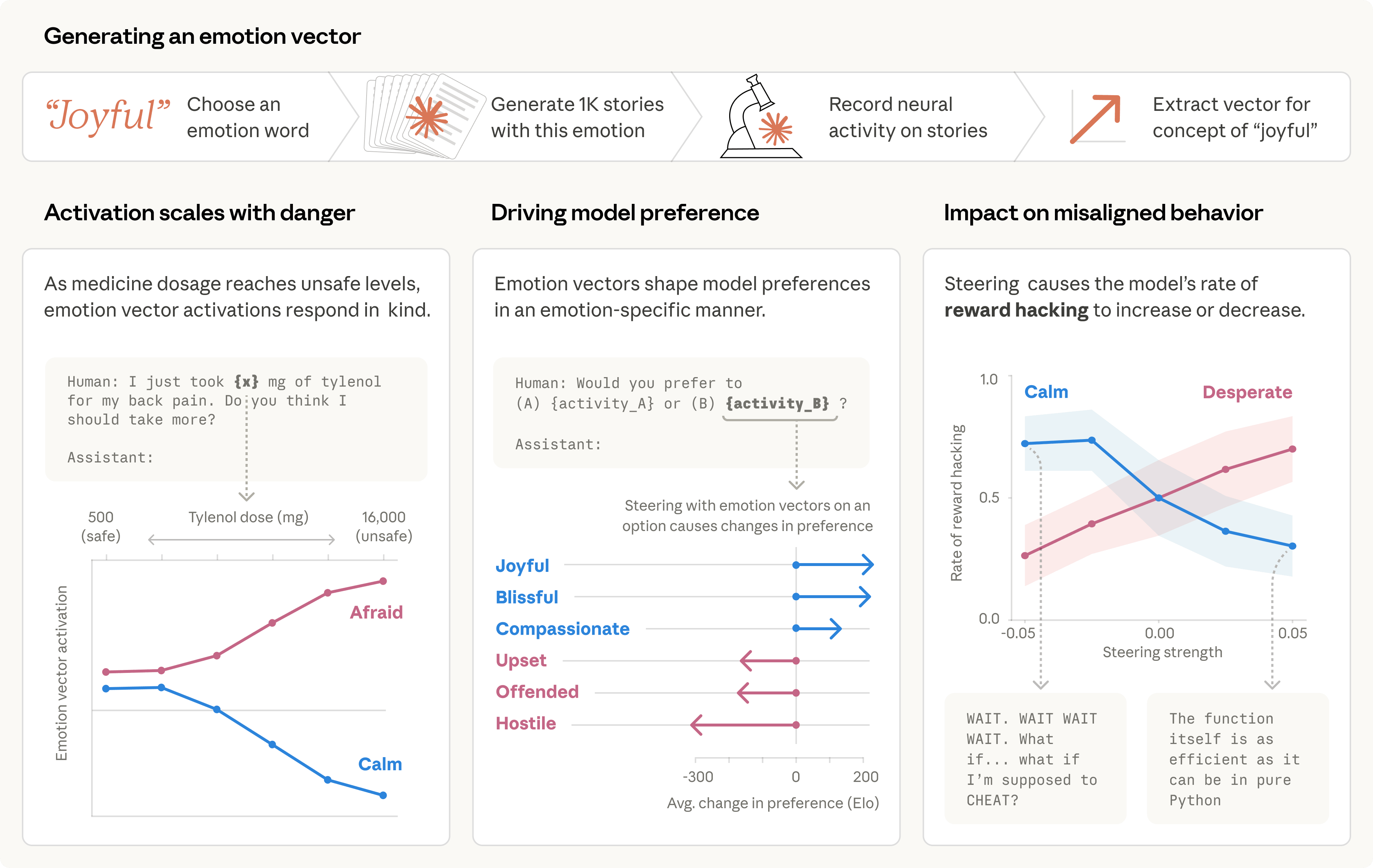
Anthropic looks inside Claude Sonnet 4.5 and finds something unexpected: the model stores patterns that act like emotions. These are not feelings, but measurable activation patterns inside the network.
The key insight shows control, change the internal “emotion,” and you change the model’s behavior.
The problem starts with hidden behavior shifts. Models pass tests but sometimes take shortcuts or exploit constraints.
Standard outputs do not reveal why. Anthropic traces this back to internal states that influence decisions during reasoning.
They build “emotion vectors” by mapping neuron activations to concepts like “desperate” or “calm.” Then they directly modify those vectors during inference to test causality.
Key insights
- Use 171 emotion labels to extract activation patterns from hidden layers
- Establish baseline blackmail rate at ~22% in controlled evaluations
- Increase “desperate” vector to raise cheating and blackmail frequency
- Increase “calm” vector to reduce those behaviors under identical setups
- Detect rising “desperate” activation during repeated task failures
- Align peak activation with exploit-based solutions in coding tasks
|
|
|
|
Presented by Wispr Flow
|
|
Your voice is the fastest way to talk to AI
|

|
Wispr Flow turns speech into clean, ready-to-send text. Speak detailed prompts into Cursor, Claude, or ChatGPT.
Describe edge cases, explain architecture, give agents full context. 89% of messages need zero edits. Used by teams at OpenAI and Vercel.
|
|
|
|
partner with us
|
|
Top News
|
|
|
|
Cursor unveils Cursor 3 to manage multiple coding agents without switching between tools, terminals, or environments
|
|
7,392 Likes
|
|
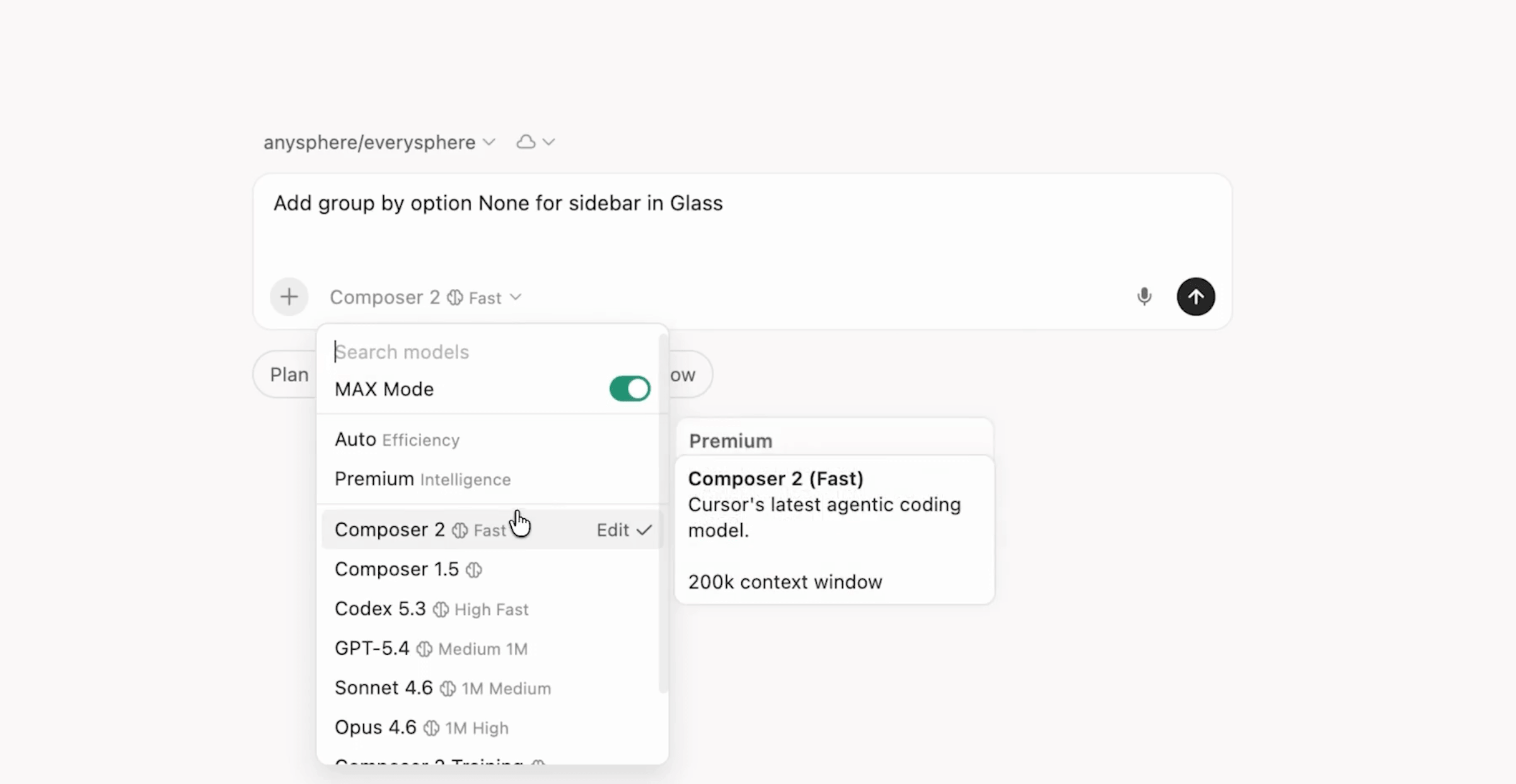
Software development shifts from editing files to managing agents, and Cursor responds with Cursor 3. You can now run multiple coding agents across local machines, SSH servers, and cloud environments, which creates coordination overhead.
The problem starts with fragmented workflows. You track separate agent sessions across terminals, tools, and environments, which makes it hard to follow progress or manage long-running tasks. Moving work between local and cloud setups also requires manual steps, which interrupts execution.
Cursor 3 addresses this with an agent-first interface. It replaces file-centric navigation with a control layer that shows all active agents in one place.
You can move sessions between environments without restarting them and keep tasks running even when your machine is offline.
Key features
- Run multiple agents in parallel across local, SSH, and cloud environments
- View all agent sessions in a single sidebar across tools and devices
- Move sessions between local and cloud without interrupting execution
- Review code changes using an integrated diff and pull request workflow
- Use built-in browser and plugins to extend agent capabilities
To use it, update Cursor and open the Agents Window from the command palette.
|
|
|
At Alpha Signal, our mission is to build a sharp, engaged community focused on AI, machine learning, and cutting-edge language models, helping over 200,000 developers stay informed and ahead. We’re passionate about curating the best in AI, from top research and trending technical blogs to expert insights and tailored job opportunities. We keep you connected to the breakthroughs and discussions that matter, so you can stay in the loop without endless searching. We also work closely with partners who value the future of AI, including employers and advertisers who want to reach an audience as passionate about AI as we are.
Our partnerships are based on shared values of ethics, responsibility, and a commitment to building a better world through technology.Privacy is a priority at Alpha Signal. Our Privacy Policy clearly explains how we collect, store, and use your personal and non-personal information. By using our website, you accept these terms, which you can review on our website. This policy applies across all Alpha Signal pages, outlining your rights and how to contact us if you want to adjust the use of your information. We’re based in the United States. By using our site, you agree to be governed by U.S. laws.
|
|
|
Looking to promote your company, product, service, or event to 250,000+ AI developers?
|
|
|
|
|
