|
Hey,
Your daily briefing is ready. You can finally take a break from the AI firehose.
Our algos spent the night splitting signal from noise and pulled the top news, models, papers, and repos.
Here’s the must-read:
|

|
Today's Author
Lior Alexander. Founder of AlphaSignal and former ML Engineer.
Previously built ML systems at Iguazio, Guesty, Enphase, Mila.
|
|
Top Paper
|
|
|
|
Stanford presents SleepFM, an open-source model forecasting long-term disease risk from one-night clinical sleep data
|
|
10,847 Likes
|
|
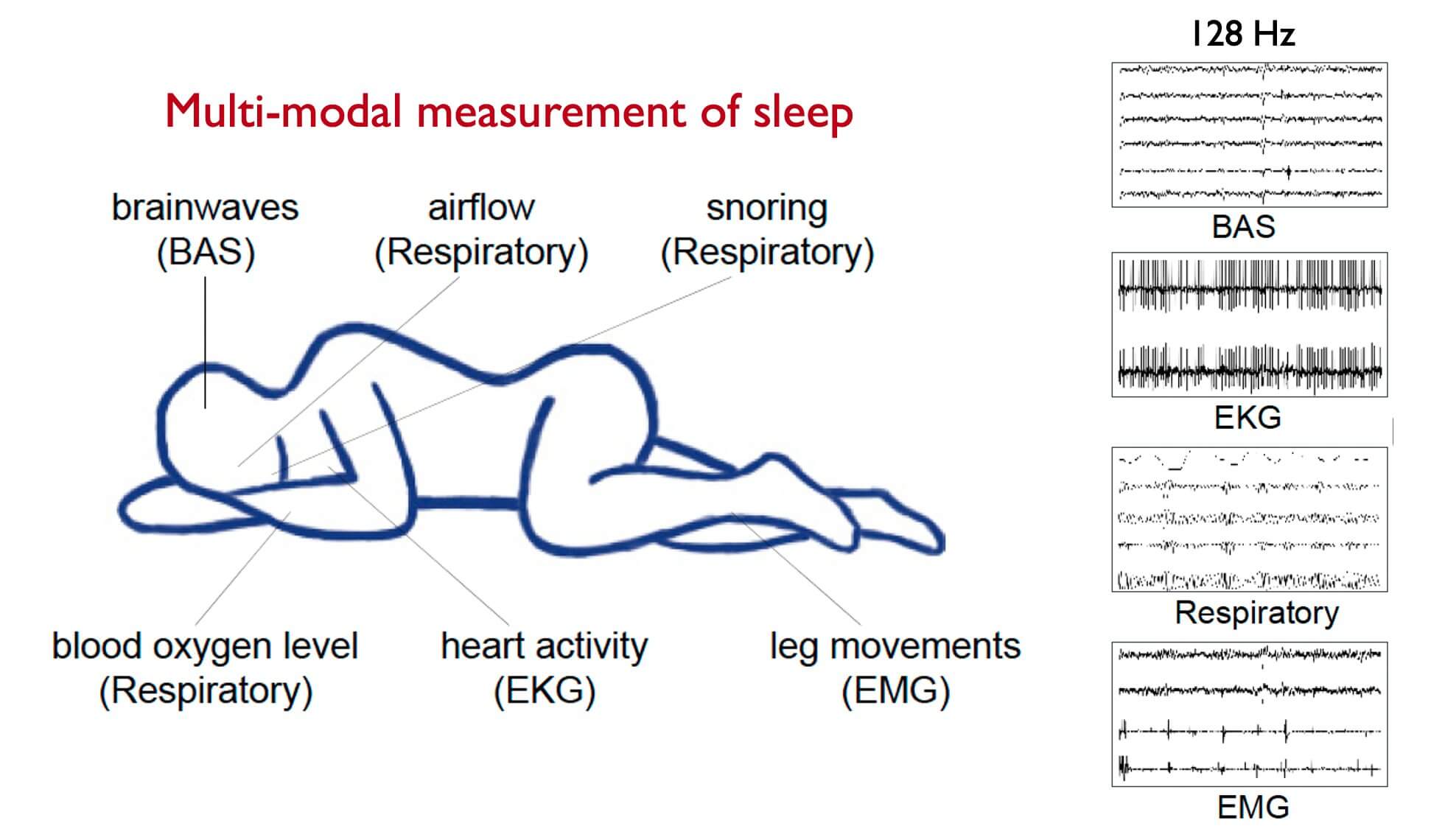
Published in Nature Medicine, the work starts from a gap: most sleep AI focuses on narrow tasks like staging, while rich multimodal signals remain unused.
The standout result shows that one overnight recording supports prediction of 130 diseases years before diagnosis.
The core insight views sleep as a synchronized system. Brain waves, heart rhythms, breathing, and muscle activity follow structured patterns over time.
When those patterns drift out of sync, long-term health risk rises. SleepFM learns this structure directly from raw clinical data.
The breakthrough comes from scale and design. SleepFM trains on 585K hours of polysomnography linked to decades of health records, then predicts future disease risk from one night of data.
Key features
-
CNNs extract local patterns from EEG, ECG, respiration, and EMG
-
Transformers aggregate information across time and modalities
-
Contrastive training handles missing or variable sensor setups
Key results
-
Predicts 130 diseases with C-index ≥0.75
-
Dementia 0.85, myocardial infarction 0.81, all-cause mortality 0.84
How to use it
You can use the open-source code to pretrain on PSG data or fine-tune representations for sleep or health prediction tasks.
|
|
|
|
Top News
|
|
|
|
NVIDIA debuts Nemotron Speech ASR, an open-source model with cache-aware streaming for low-latency voice recognition
|
|
3,794 Likes
|
|
Voice systems usually face a tradeoff: low latency breaks accuracy, and accuracy breaks latency at scale. NVIDIA targets that exact problem and reports 24 ms median time-to-final transcription, even under high concurrency.
Most “streaming” ASR systems reprocess overlapping audio chunks to preserve context. That design repeats computation, increases GPU memory usage, and causes latency drift as concurrency rises.
Nemotron Speech ASR changes this by using cache-aware streaming. The model stores encoder states and processes only new audio frames, so each frame runs once.
This shift shows up in benchmarks. On an H100 GPU, the model supports 560 concurrent streams, about 3× higher than buffered baselines, with stable latency. Accuracy scales with latency, improving from 7.84% WER at 160 ms to 7.22% at 560 ms.
Key architecture and results
-
FastConformer RNNT with 24 encoder layers and 8× downsampling
-
600M parameters, optimized for streaming inference
-
Runtime latency modes: 80 ms, 160 ms, 560 ms, 1.12 s
-
Bounded GPU memory growth under load
How to use it
-
Download model weights and code from Hugging Face
-
Enable cache-aware streaming via NVIDIA NeMo
-
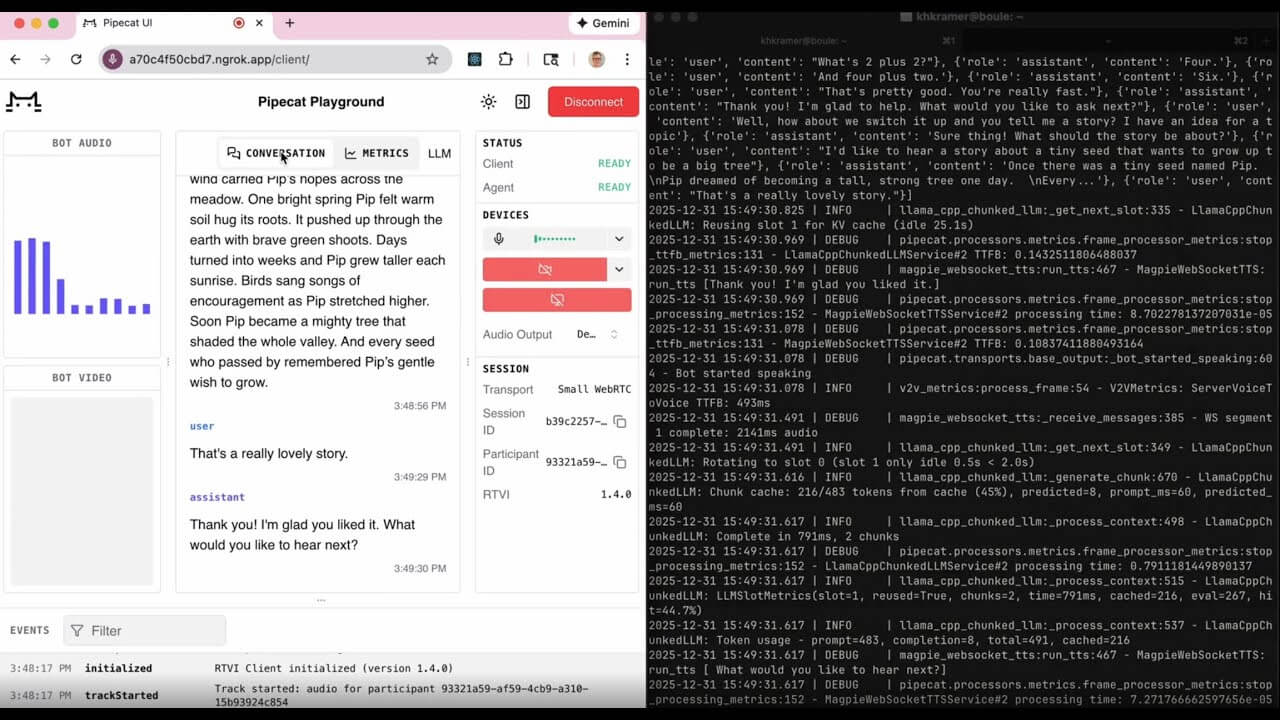
Integrate ASR into a voice agent pipeline with an LLM and TTS
-
Deploy on Modal or run locally on DGX Spark or RTX GPUs
|
|
|
|
Top News
|
|
|
|
Cursor introduces dynamic context discovery to cut agent token usage with file-based retrieval
|
|
2,927 Likes
|
|
Cursor changes how coding agents handle context by introducing dynamic context discovery, a shift away from large static prompts toward on-demand information loading.
As tasks get longer, prompts fill up with tool outputs, logs, and history. Context windows overflow, agents summarize, and details disappear. Cursor identifies the core issue: agents receive too much information too early.
The insight is instead of placing everything inside the prompt, Cursor stores context as files. The agent loads details only when it needs them, just like a developer opens a file only when required.
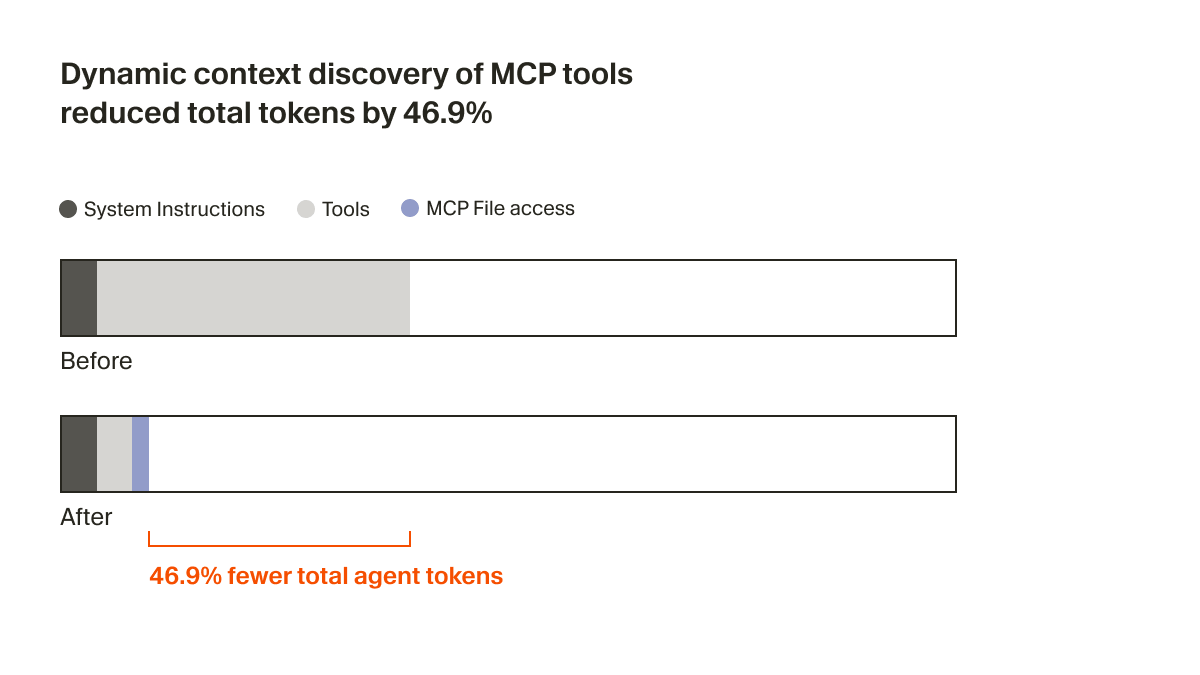
The breakthrough shows up in measurement. In internal A/B tests, Cursor reports a 46.9% reduction in total agent tokens in runs that call MCP tools, without task quality loss.
Key features
-
Writes large tool and shell outputs to files instead of prompt injection
-
Stores full chat history as searchable files after summarization
-
Loads Agent Skills dynamically through file search
-
Syncs MCP tool metadata to disk and fetches descriptions on demand
-
Saves terminal session output as files for targeted log inspection
How to use it
-
Expose search and file-read tools to the agent
-
Store logs, history, skills, and tool outputs as files
-
Inject only lightweight references such as names or paths
|
|
|
At Alpha Signal, our mission is to build a sharp, engaged community focused on AI, machine learning, and cutting-edge language models, helping over 200,000 developers stay informed and ahead. We’re passionate about curating the best in AI, from top research and trending technical blogs to expert insights and tailored job opportunities. We keep you connected to the breakthroughs and discussions that matter, so you can stay in the loop without endless searching. We also work closely with partners who value the future of AI, including employers and advertisers who want to reach an audience as passionate about AI as we are.
Our partnerships are based on shared values of ethics, responsibility, and a commitment to building a better world through technology.Privacy is a priority at Alpha Signal. Our Privacy Policy clearly explains how we collect, store, and use your personal and non-personal information. By using our website, you accept these terms, which you can review on our website. This policy applies across all Alpha Signal pages, outlining your rights and how to contact us if you want to adjust the use of your information. We’re based in the United States. By using our site, you agree to be governed by U.S. laws.
|
|
|
Looking to promote your company, product, service, or event to 250,000+ AI developers?
|
|
|
|
|
