|
Hey,
Your daily briefing is ready. You can finally take a break from the AI firehose.
Our algos spent the night splitting signal from noise and pulled the top news, models, papers, and repos.
Here’s the must-read:
|

|
Today's Author
Lior Alexander. Founder of AlphaSignal and former ML Engineer.
Previously built ML systems at Iguazio, Guesty, Enphase, Mila.
|
|
Top Paper
|
|
|
|
DeepSeek proposes a core transformer architecture change that modifies how residual connections work at scale
|
|
14,978 Likes
|
|
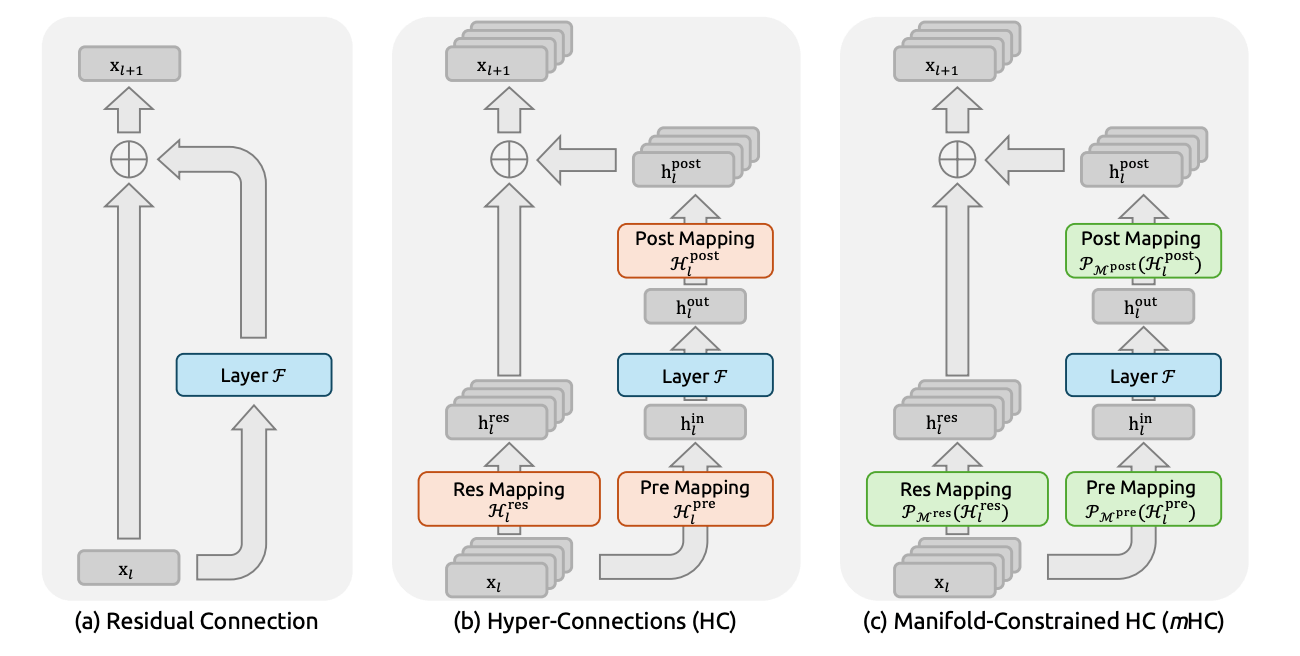
DeepSeek presents a paper that targets a quiet but costly failure mode in large transformers. The paper introduces Manifold-Constrained Hyper-Connections (mHC), an architectural change that stabilizes multi-lane residual networks.
The most striking result is numerical: worst-case gradient amplification stays near 1.6, instead of exploding to around 3000.
The story starts with Hyper-Connections. They replace the single residual stream with multiple parallel lanes so layers can mix information more flexibly.
That extra freedom improves capacity but removes the identity mapping that keeps residual networks stable. Over many layers, unconstrained mixing compounds and destabilizes training.
mHC adds one simple rule. Each layer must mix lanes using a doubly stochastic matrix, meaning it can reshuffle signal but cannot scale it up or down. Signal mass stays constant across depth.
Key features
-
Replaces one residual stream with n parallel lanes
-
Enforces non-negative lane mixing with row and column sums equal to one
-
Preserves residual magnitude across very deep stacks
Measured results
-
Tested on 3B, 9B, and 27B parameter transformers
-
Uses n = 4 lanes with ~6.7% added training cost
-
Reduces final training loss by ~0.02
|
|
|
|
Presented by Speechmatics
|
|
Speechmatics launches Startup Program for Voice AI builders
|
|
Speechmatics for Startups backs teams shipping voice features that work with accented and noisy audio, in 55+ languages. Get up to $50k in credits, priority support, and engineer office hours to reach production faster.
Credits can be used for speech-to-text, text-to-speech, and on-prem deployments. The first cohort is limited to 20 teams.
|
|
|
|
partner with us
|
|
Top News
|
|
|
|
NVIDIA presents Alpamayo, an open-source reasoning model, dataset and simulation tool for autonomous driving research
|
|
2,693 Likes
|
|
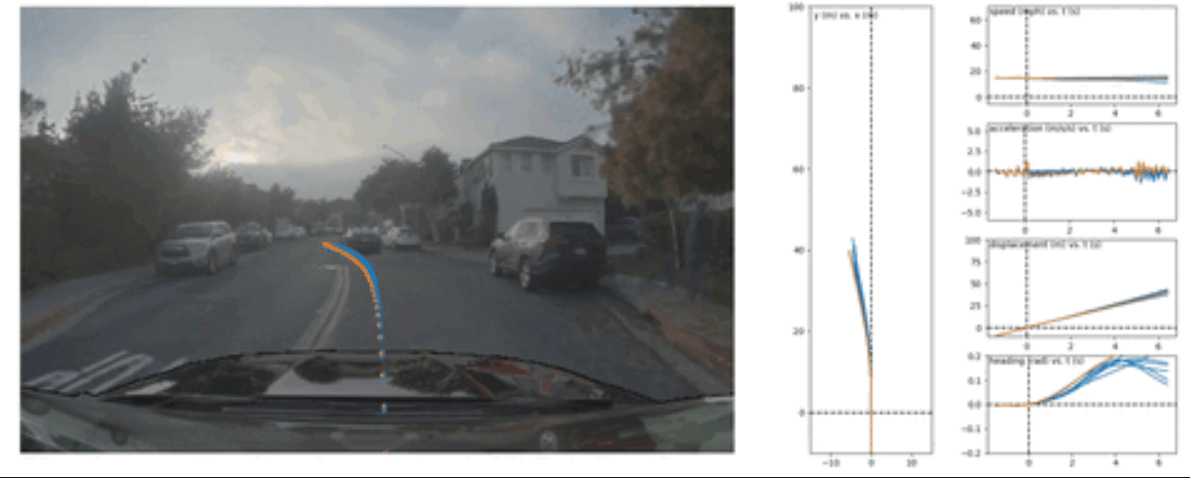
NVIDIA introduces Alpamayo, an open-source AI stack that treats autonomous driving as a reasoning problem instead of pure prediction.
Modern AV systems handle common cases well, but rare scenarios still break perception-planning pipelines and end-to-end models. Alpamayo addresses this gap by adding explicit step-by-step reasoning to driving decisions.
The insight behind Alpamayo is straightforward: long-tail driving failures often require causal thinking, not better pattern matching.
NVIDIA applies this idea through a vision-language-action model that explains why it chooses a trajectory, not just what it chooses. That explanation makes the system useful as a training and evaluation tool rather than a runtime driver.
What Alpamayo includes
-
Alpamayo 1, a 10B-parameter VLA model that outputs trajectories with reasoning traces
-
AlpaSim, an open-source simulator for closed-loop autonomous driving evaluation
-
Physical AI Open Datasets with 1,700+ hours of real-world driving data
How you use it
-
Use Alpamayo 1 as a teacher model, not inside vehicles
-
Distill trajectories and reasoning into smaller deployable models
-
Test edge cases and policies inside AlpaSim
|
|
|
|
Top News
|
|
|
|
Alibaba improves Qwen-Image with sharper faces, better details, and stronger prompt accuracy
|
|
2,692 Likes
|
|
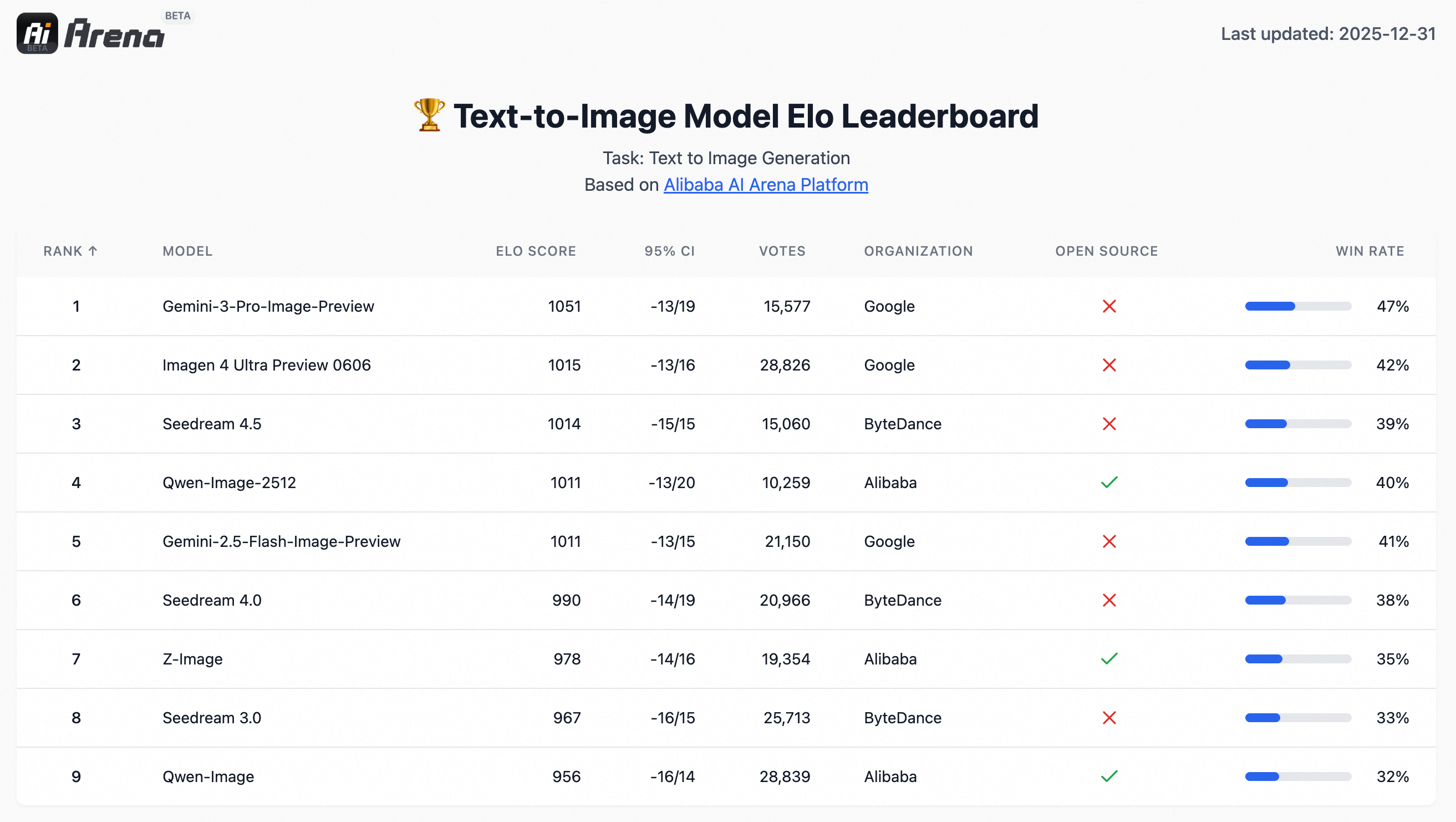
Alibaba released Qwen-Image-2512 as the latest update to its Qwen-Image text-to-image model. The original release worked but struggled with faces, fine textures, and embedded text.
This update targets those weaknesses and posts a concrete result: more than 10,000 blind evaluations on AI Arena rank it as the strongest open-source image model.
Image models fail when they blur structure. Qwen-Image-2512 focuses on preserving fine visual detail and following prompts more precisely.
What improves
-
Renders human faces, hair strands, wrinkles, and age cues with higher fidelity
-
Follows pose, posture, and scene constraints more accurately than earlier versions
-
Improves landscape detail, including water flow, mist, foliage density, and color gradients
-
Produces sharper animal fur with visible layering and consistent texture
-
Improves text spelling, alignment, and layout inside generated images
How to use it?
|
|
|
At Alpha Signal, our mission is to build a sharp, engaged community focused on AI, machine learning, and cutting-edge language models, helping over 200,000 developers stay informed and ahead. We’re passionate about curating the best in AI, from top research and trending technical blogs to expert insights and tailored job opportunities. We keep you connected to the breakthroughs and discussions that matter, so you can stay in the loop without endless searching. We also work closely with partners who value the future of AI, including employers and advertisers who want to reach an audience as passionate about AI as we are.
Our partnerships are based on shared values of ethics, responsibility, and a commitment to building a better world through technology.Privacy is a priority at Alpha Signal. Our Privacy Policy clearly explains how we collect, store, and use your personal and non-personal information. By using our website, you accept these terms, which you can review on our website. This policy applies across all Alpha Signal pages, outlining your rights and how to contact us if you want to adjust the use of your information. We’re based in the United States. By using our site, you agree to be governed by U.S. laws.
|
|
|
Looking to promote your company, product, service, or event to 250,000+ AI developers?
|
|
|
|
|
