|
Hey,
Your daily briefing is ready. You can finally take a break from the AI firehose.
Our algos spent the night splitting signal from noise and pulled the top news, models, papers, and repos.
Here’s the must-read:
|
|
Together with:
|

|
|

|
Today's Author
Lior Alexander. Founder of AlphaSignal and former ML Engineer.
Previously built ML systems at Iguazio, Guesty, Enphase, Mila.
|
|
Top News
|
|
|
|
Anthropic adds classifier-based auto mode to reduce manual approvals while filtering risky actions during execution
|
|
35,285 Likes
|
|
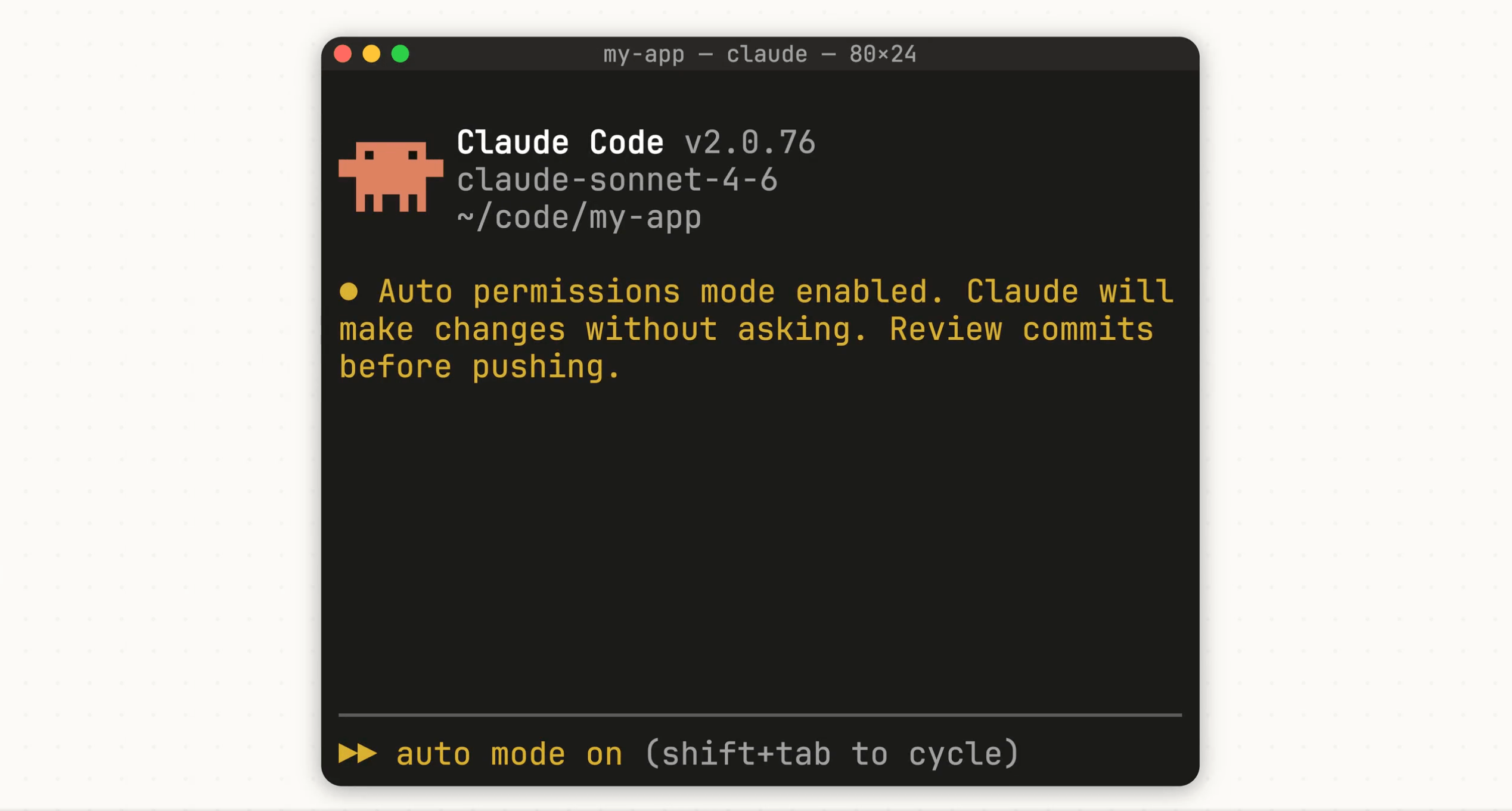
Claude introduces auto mode in Claude Code, a new setting where the model decides whether to run file writes and shell commands. It removes the need to approve every action while avoiding fully skipping safeguards.
You can now run longer coding tasks without constant prompts, while a system checks each step before execution.
What it does
Auto mode handles permission decisions using a classifier that filters actions.
- Reviews each command before execution to detect destructive or sensitive operations
- Allows safe actions to run automatically without manual approval during sessions
- Blocks risky actions and forces the model to try a different method
- Prompts the user only after repeated blocked attempts
How to use it
You enable and switch modes directly inside Claude Code environments.
- Run claude --enable-auto-mode to activate auto mode in CLI sessions
- Press Shift+Tab to cycle through available permission modes
- Available in Team plan as research preview, expanding to other plans
- Use in isolated environments due to incomplete risk detection coverage
|
|
|
|
Presented by Lightfield
|
|
A CRM Agent That Writes & Runs Code
|

|
Lightfield stores every interaction as structured, queryable memory - not flat CRM records.
Here's what that unlocks:
-
Reasons across transcripts, emails, and deal history, then executes code to produce deliverables
-
Pipeline analyses, competitive battle cards, personalized outreach at scale
-
Schema-less architecture
-
Full API and MCP server
-
Migrate from any CRM in under an hour with our CSV import agent
|
|
|
|
partner with us
|
|
Top News
|
|
|
|
Figma introduces AI agents that design directly inside canvas using MCP tools and structured skills
|
|
9,727 Likes
|
|
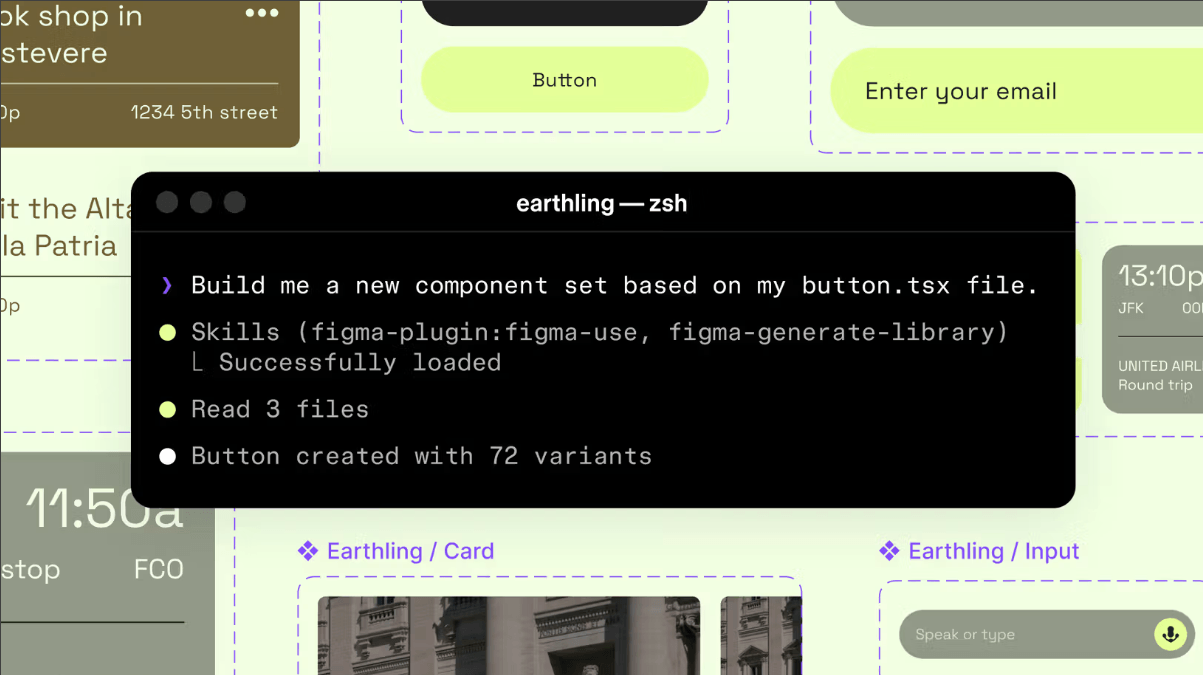
Figma released a new use_figma tool in open beta that allows AI agents to create and edit designs directly inside Figma files. Earlier, agents generated code or static UI, but could not work inside real design systems.
Now, agents access components, variables, and layouts, so outputs stay consistent with how teams already design.
Key features
This adds direct design execution capabilities to AI agent workflows.
- Agents operate on real Figma files, not exported or generated mockups
- Works with MCP clients like Claude Code, Codex, Cursor, and Copilot CLI
- generate_figma_design converts HTML into editable Figma layers
- Supports multi-agent workflows across design and implementation tasks
How it works
MCP (Model Context Protocol) connects tools so agents can act on real systems.
- use_figma lets agents create or modify layers, components, and layouts
- Skills (markdown instructions) define steps, rules, and design conventions
- Base /figma-use skill teaches agents how Figma structure works
- Agents follow these rules to produce consistent, structured outputs
|
|
|
|
Presented by Wispr Flow
|
|
The fastest way to document AI experiments
|
|
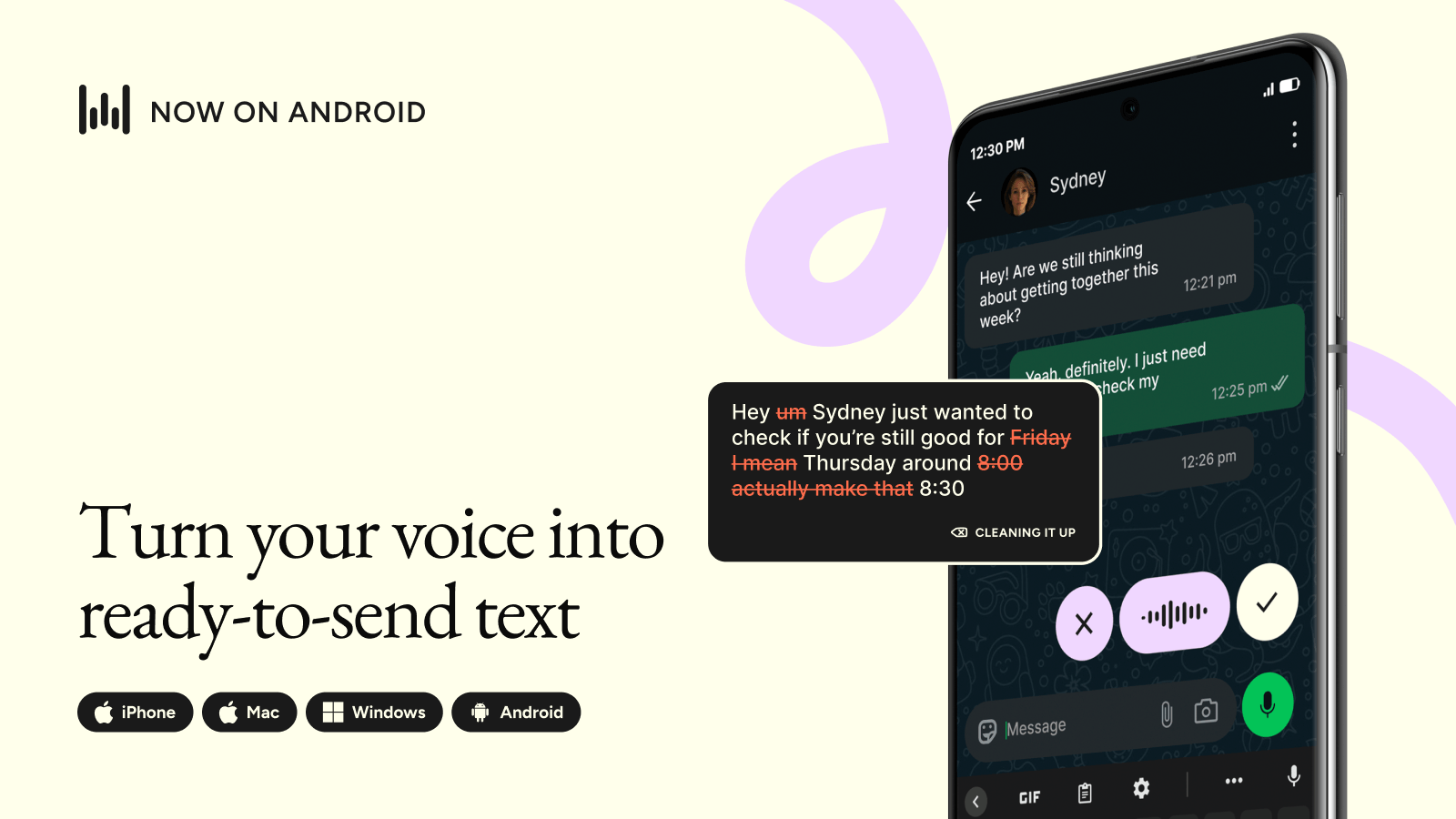
Wispr Flow lets you speak your findings and get publication-ready notes. Describe experiments, explain edge cases, capture insights - all by voice.
Works in Notion, Google Docs, Linear, Slack, your IDE. Speak naturally and Flow cleans it up.
Used by researchers at OpenAI, Vercel, and Clay. Available on Mac, Windows, iPhone, and Android.
|
|
|
|
partner with us
|
|
Top Paper
|
|
|
|
Google introduces TurboQuant, improves LLM efficiency with KV cache compression
|
|
11,486 Likes
|
|
LLMs slow down as context grows because the KV cache stores every token and consumes memory fast.
Google Research introduces TurboQuant to fix this bottleneck without changing model behavior. It cuts KV cache size by ≥6x and speeds up attention by up to 8x on H100 GPUs, while keeping accuracy unchanged.
The problem sits in how models store vectors, which are high-dimensional arrays that represent meaning. Standard compression reduces size but adds error or overhead.
TurboQuant splits the task: compress most information first, then fix the small errors.
The breakthrough combines two methods:
- PolarQuant converts vectors into magnitude and direction for efficient storage
- QJL stores residual errors as simple sign bits and corrects distortion
- Runs at ~3–4 bits per value instead of 16-bit or 32-bit formats
- Requires no retraining or fine-tuning on existing models
It changes how you run long-context models and vector search systems:
- Reduces memory pressure in long conversations and agent workflows
- Improves attention compute speed directly, not just storage efficiency
- Maintains accuracy across LongBench, RULER, and ZeroSCROLLS benchmarks
- Works with models like Gemma and Mistral without architecture changes
|
|
|
At Alpha Signal, our mission is to build a sharp, engaged community focused on AI, machine learning, and cutting-edge language models, helping over 200,000 developers stay informed and ahead. We’re passionate about curating the best in AI, from top research and trending technical blogs to expert insights and tailored job opportunities. We keep you connected to the breakthroughs and discussions that matter, so you can stay in the loop without endless searching. We also work closely with partners who value the future of AI, including employers and advertisers who want to reach an audience as passionate about AI as we are.
Our partnerships are based on shared values of ethics, responsibility, and a commitment to building a better world through technology.Privacy is a priority at Alpha Signal. Our Privacy Policy clearly explains how we collect, store, and use your personal and non-personal information. By using our website, you accept these terms, which you can review on our website. This policy applies across all Alpha Signal pages, outlining your rights and how to contact us if you want to adjust the use of your information. We’re based in the United States. By using our site, you agree to be governed by U.S. laws.
|
|
|
Looking to promote your company, product, service, or event to 250,000+ AI developers?
|
|
|
|
|
