|
Hey,
Your daily briefing is ready. You can finally take a break from the AI firehose.
Our algos spent the night splitting signal from noise and pulled the top news, models, papers, and repos.
Here’s the must-read:
|
|
Together with:
|

|
|

|
Today's Author
Lior Alexander. Founder of AlphaSignal and former ML Engineer.
Previously built ML systems at Iguazio, Guesty, Enphase, Mila.
|
|
Top News
|
|
|
|
Anthropic introduces desktop automation where Claude operates apps step by step using visible screen interactions
|
|
105,382 Likes
|
|
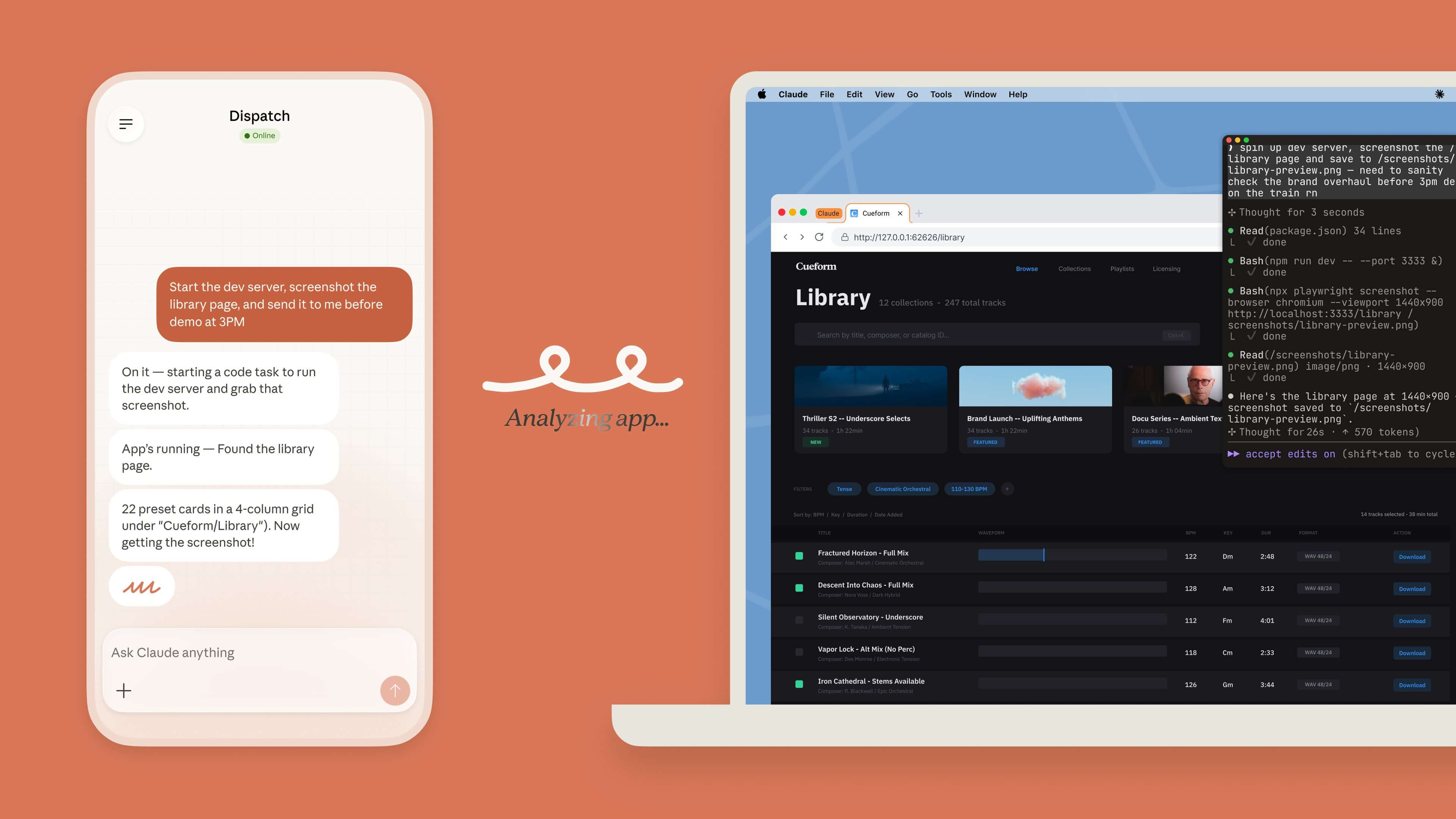
Claude now operates your computer by controlling the mouse, keyboard, and screen directly. It works inside Claude Cowork and Claude Code Desktop, where it interacts with apps the same way you do.
This removes the need for APIs, so it can automate tools that normally require manual input.
It solves the gap between AI tools and real desktop workflows. Instead of writing scripts or integrations, you can ask Claude to perform actions across any application.
It uses connectors like Slack first, then switches to direct control when no integration exists, asking permission before proceeding.
You can use it by updating the desktop app, pairing it with your phone, and assigning tasks in natural language. Claude executes them step by step on your machine, even when you are away if used with Dispatch.
Key features
- Controls mouse, keyboard, and screen to operate any desktop application
- Executes tasks inside legacy software without requiring APIs or automation hooks
- Runs scheduled workflows like email checks or report generation at defined times
- Supports debugging by interacting with native apps during execution
- Operates slowly and deliberately, reflecting the current early-stage system design
Available as a research preview in Claude Cowork and Claude Code on macOS only.
|
|
|
|
Presented by QA.tech
|
|
When AI velocity breaks your QA
|
|
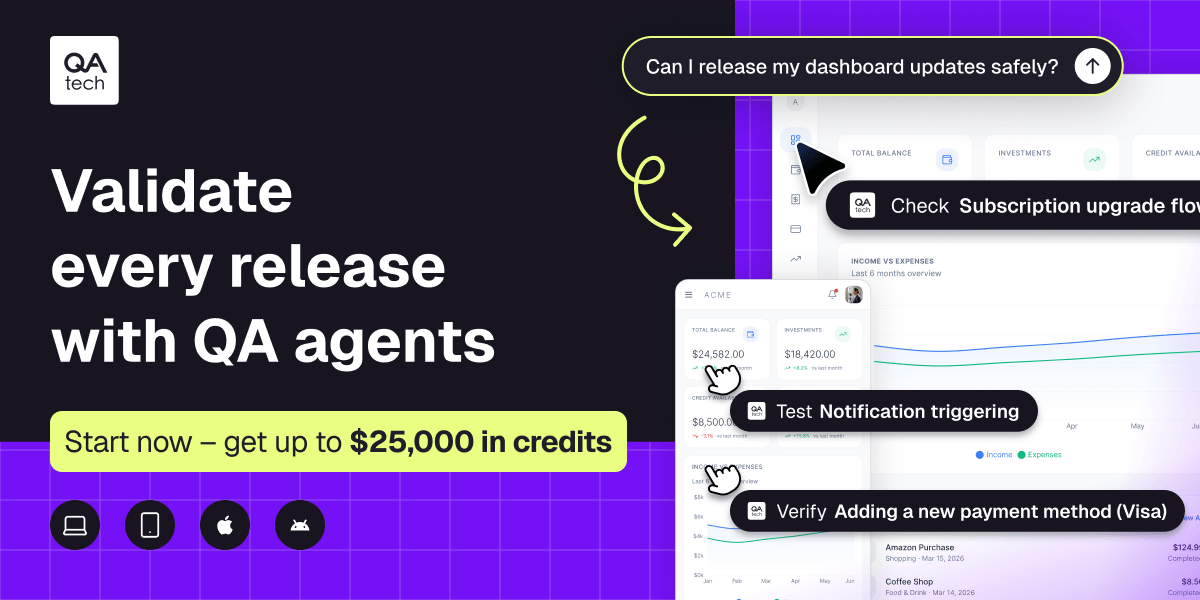
Your team needs to validate release quality faster than ever. Manual testing is dead weight, and now even test automation is starting to break.
AI-powered workflows require QA solutions that can keep up.
Teams like AstraZeneca, Nordea, and Pricer cut thousands of QA hours each month, reduce spend, and ship faster using QA.tech.
Companies adopting agentic QA gain up to 529% ROI with a 3-month payback.
The first 20 AlphaSignal teams this week can claim up to $25,000 in test credits after requesting a guided PoC.
|
|
|
|
partner with us
|
|
Top Paper
|
|
|
|
Yann LeCun’s team builds a 15M parameter JEPA that plans under one second on one GPU
|
|
7,027 Likes
|
|
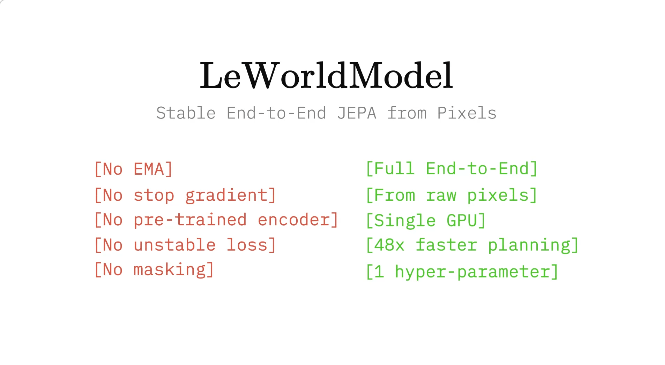
LeWorldModel introduces a Joint Embedding Predictive Architecture (JEPA) that trains end-to-end from raw pixels without the usual stability tricks.
Earlier JEPA systems rely on techniques like EMA or stop-gradient to avoid collapse, where all representations become identical.
This work replaces those with a simple two-term loss and still achieves stable training, while running full planning in under one second.
JEPA learns a “world model,” which predicts how a system evolves over time using compact latent representations instead of raw pixels. LeWorldModel simplifies this process so you can train and deploy it with minimal setup.
Key features
- Uses a simple loss to predict future states and keep representations stable
- Removes complex training tricks used in earlier JEPA models
- Shrinks input data into much smaller representations for faster processing
- Runs planning much faster than prior models (~48× speedup)
- Matches or beats existing models on control tasks
- Solves tasks using only images, without extra sensor inputs
Availability
- Code and pretrained checkpoints are available
- Paper and project page include experiments, configs, and visualizations
|
|
|
|
Presented by Innovating With AI
|
|
Zero to 6 Figures with AI Consulting
|
|
Dan spent months tinkering with AI before getting paid for it. His first prospects all said no.
Then he found a system that clicked. Discovery calls, tangible deliverables, warm network outreach.
Within a year he landed a Fractional Chief AI Officer retainer worth $50K-$70K and started building a team.
|
|
|
|
partner with us
|
|
Top News
|
|
|
|
Luma releases Uni-1, a unified model that reasons through prompts while generating images in one pipeline
|
|
4,792 Likes
|

|
Luma AI introduces Uni-1, a model that handles text and images in one system instead of separate pipelines.
Most image models generate pixels first and reason later, which limits control and consistency. Uni-1 changes that by planning and generating at the same time.
How Uni-1 works
It uses a single transformer that treats text and images as one sequence.
- Combines language and vision into one stream instead of separate encoder-decoder systems
- Plans composition before rendering, then updates decisions during generation
- Models space, time, and logic together inside one architecture
Key capabilities
It focuses on controllable generation and structured editing tasks.
- Performs reference-based edits with grounded controls tied to input images
- Handles infographics, layouts, and multi-step visual instructions with consistent structure
- Applies common-sense checks to maintain plausible objects and scenes
- Ranks first in human preference for style, editing, and reference tasks
How to use it
You provide prompts, references, or structured instructions through the API. Generate outputs at ~2K resolution for about $0.09 per image.
|
|
|
At Alpha Signal, our mission is to build a sharp, engaged community focused on AI, machine learning, and cutting-edge language models, helping over 200,000 developers stay informed and ahead. We’re passionate about curating the best in AI, from top research and trending technical blogs to expert insights and tailored job opportunities. We keep you connected to the breakthroughs and discussions that matter, so you can stay in the loop without endless searching. We also work closely with partners who value the future of AI, including employers and advertisers who want to reach an audience as passionate about AI as we are.
Our partnerships are based on shared values of ethics, responsibility, and a commitment to building a better world through technology.Privacy is a priority at Alpha Signal. Our Privacy Policy clearly explains how we collect, store, and use your personal and non-personal information. By using our website, you accept these terms, which you can review on our website. This policy applies across all Alpha Signal pages, outlining your rights and how to contact us if you want to adjust the use of your information. We’re based in the United States. By using our site, you agree to be governed by U.S. laws.
|
|
|
Looking to promote your company, product, service, or event to 250,000+ AI developers?
|
|
|
|
|
